
RE is delivered in accordance with The Agreed Syllabus for Religious Education in Norfolk – 2019, the 1988 Education Reform Act and the subsequent DES Professional Paper ‘Religious Education and Collective Worship’ Circular 1/94.
RE is taught as a multi-disciplinary subject and is planned so that pupils can see religion and worldviews through different lenses. Each block of work is planned with an Enquiry question which is approached through one of these three academic lenses.
- (Thinking through believing). It is about asking questions that believers would ask. It requires pupils to think like theologians, or to look at concepts through a theological lens. Pupils explore questions and answers that arise from inside religions and worldviews.
- (Thinking through thinking). It is about asking questions that thinkers would ask. It requires pupils to think like philosophers, or to look at concepts through a philosophical lens. Pupils will explore questions and answers raised through considering the nature of knowledge, existence and morality.
- Human/Social Sciences (Thinking through living). It is about asking questions that people who study lived reality or phenomena would ask. It requires pupils to think like human and social scientists, or to look at concepts through a human/social science lens. Pupils will explore questions and answers raised in relation to the impact of religions and worldviews on people and their lives.
Pupils take part in an in-depth investigation of Christianity, Judaism and Hinduism during their time at the Infant School and have time to reflect on other worldviews and faiths. At the Juniors the children build on their RE learning, focusing also on Islam, Sikhism and Humanism.
RE teaching and learning enhances the children’s spiritual, moral cultural and social development by developing their ability to reflect on and respond to their own and others’ experiences in the light of their learning about religion. RE links well to our Golden Rules, PSHE and British Values teaching, and impacts on all areas of school life where children are encouraged to develop an understanding of, and tolerance and respect for the views and practices of other people.
Our RE teaching is focused on learning about and from religion, by helping pupils to develop a positive attitude towards other people, respecting their right to hold beliefs and values different from their own, and towards living in a society of diverse religions and beliefs. In Key Stage 2 we encourage our pupils to explore and discuss challenging questions, e.g. how do people express commitment to a religion? What do Muslims believe about God? Why is there suffering?
RE Summer Term 2026
Reception
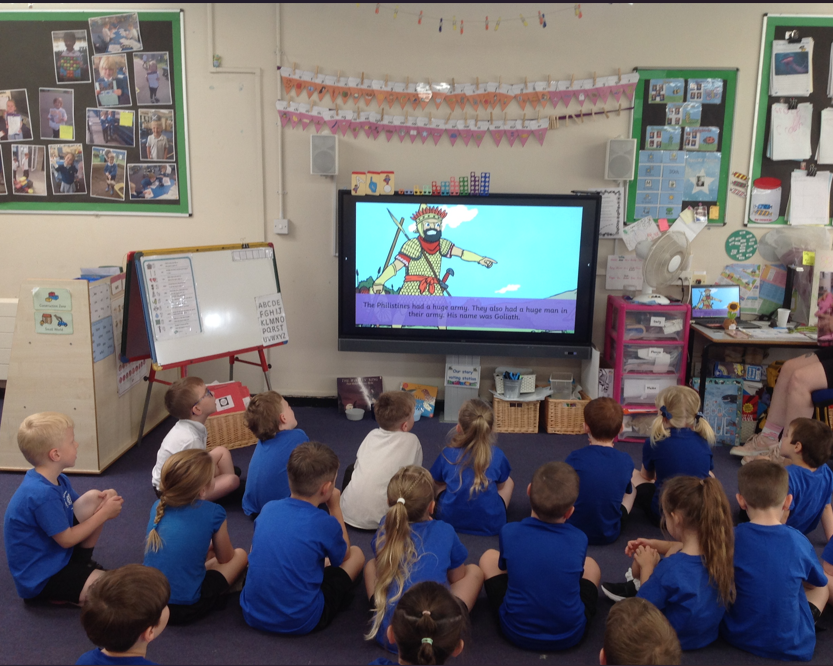
This term we shared the story of David and Goliath. We discussed the events in the story and how David was very brave when he chose to fight Goliath. The children discussed why David had chosen to fight. We linked this bravery to the children’s experiences including that they need to be brave when faced with something new. We also discussed being resilient and not giving up when being faced with a challenge.
Year 1
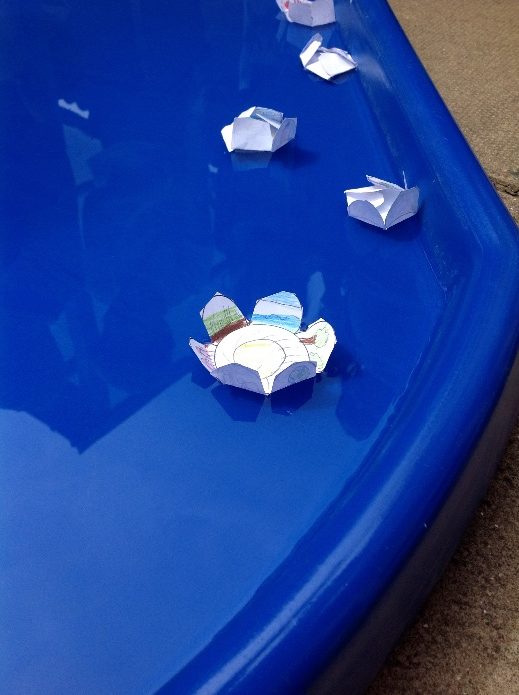
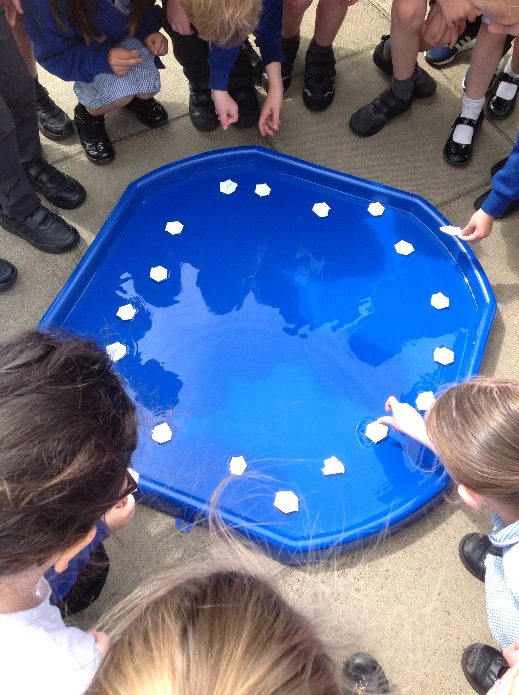
This term, Year 1 have been exploring creation stories from Christianity and Hinduism. The children learnt about the Christian Creation Story from the Book of Genesis and discovered how Christians believe God created the world in seven days. They then compared this with the Hindu creation story, exploring similarities and differences between the two beliefs. They loved making their own colleges of the days that Christians believe that God created the World and creating their own lotus flower that opened up to represent how Hindus believe the world was created.
They have also consolidated their learning from the whole year discussing the exploration of a range of beliefs and stories from Christianity, Judaism and Hinduism, developing their understanding of how people express their faith and values. Through discussion, storytelling, visitors and creative activities, the children have learnt about important religious stories, celebrations and traditions, showing curiosity, respect and thoughtfulness when considering different beliefs and their own ideas about the world around them.
Year 2
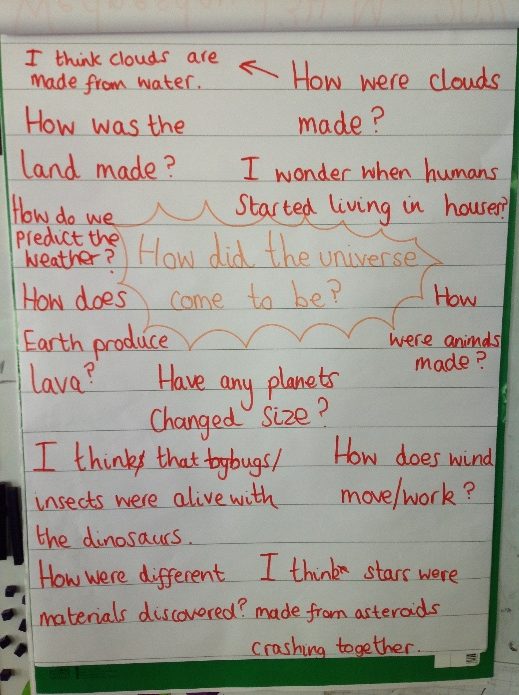
This term the children have investigated why people have different views and different ideas of God. The children learnt that the word ‘God’ is a name, and how people’s behaviour is connected to their view of God. The children explored how the views of Christians, Muslims, Hindus, Jews and Humanists differ. They thought about morals for each of these religions and discussed things which are important in their religion, for example animals and being kind/respectful. The children listened to videos created by Ian Gardner (who often comes into school for assemblies) and Marsha and Todd (who visit us during the Spring term in Year 1 and 2 to discuss Judaism) too.
RE Spring Term 2026
Reception
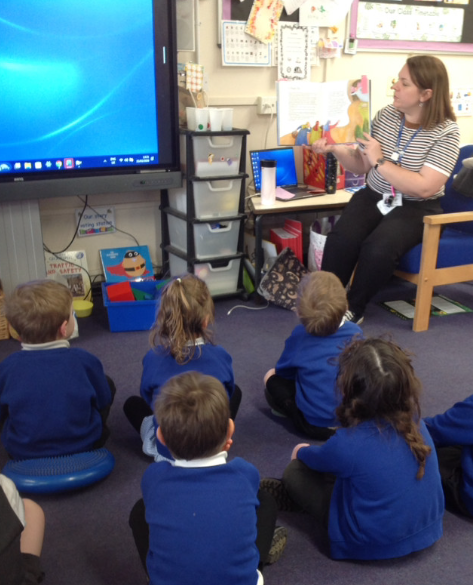
This term we revisited how the Bible is a special book for Christians and includes many different stories. Several children shared that they have Bibles at home. We shared the story about Easter, titled ‘A happy day’. The children enjoyed hearing about the angel appearing to tell Jesus’ friends that he was alive again!
Oscar said ‘Jesus died and he came back to life’.
Martin said ‘his three friends went to see him and there was an angel’.
We discussed how many families choose to celebrate Easter and we might all have different traditions. The children enjoyed sharing how they celebrate Easter with their families.
Year 1
This term Year 1 have investigated two enquiry questions:
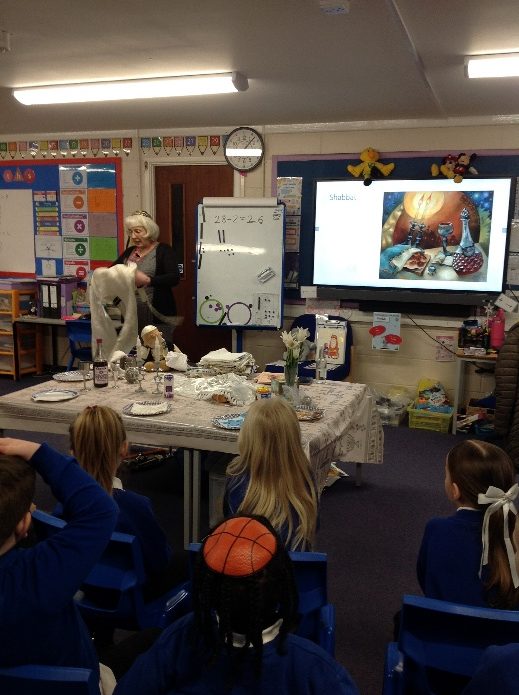
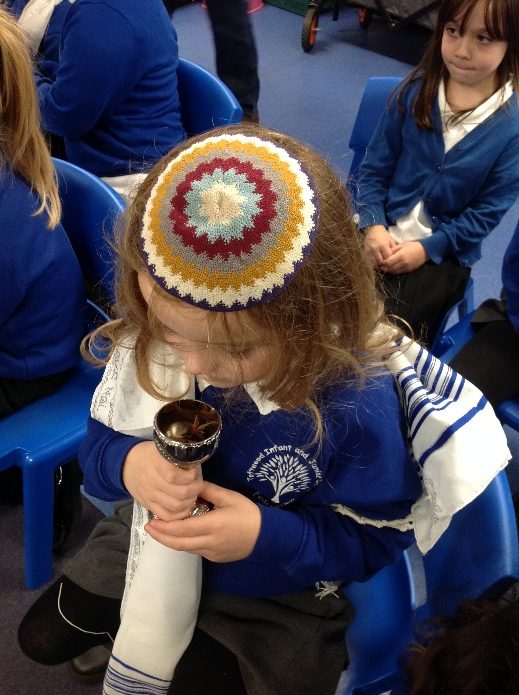
- What do Jewish people remember on Shabbat?
- What does the cross mean to Christians?
When enquiring on the first the children saw lots of pictures of a Shabbat meal taking place. They were able to discuss these pictures and highlight what they noticed, where it was taking place and who was in the images. The children were also able to compare this Jewish creation story (after listening to it) with the Christian creation story. Year 1 were also able to have Marsha and Todd in to further deepen their knowledge of Shabbat.
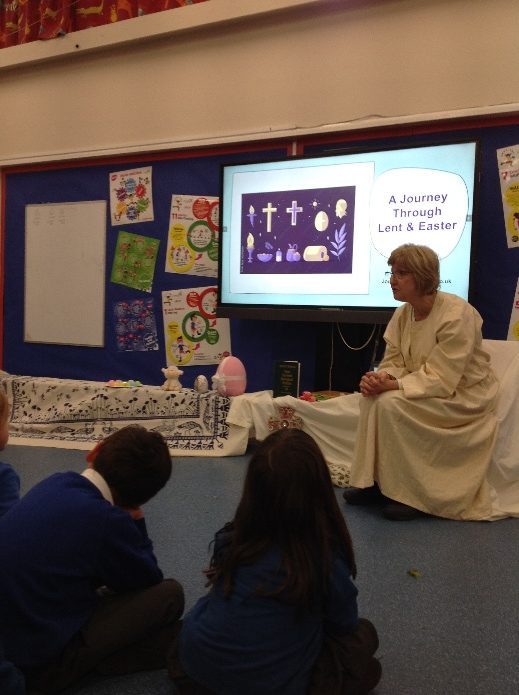
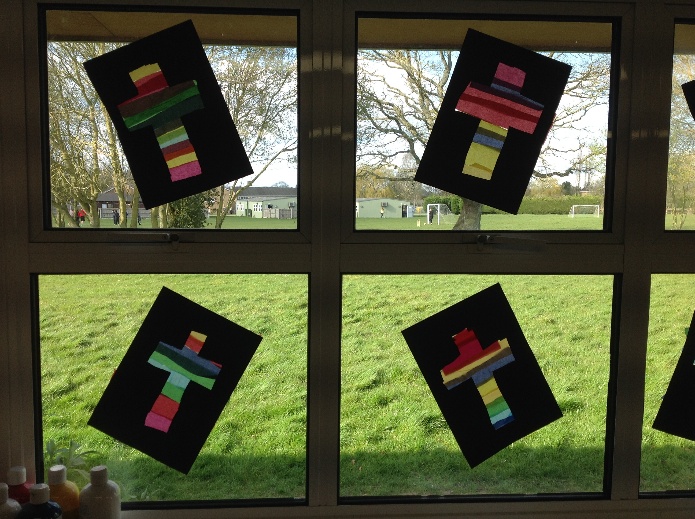
During Spring 2 the children had a session led by Janet Marshal all about the Easter story. The children were able to get into role as the people in story and retell this through Janet’s storytelling style. The children learnt how Christians believe that Jesus was crucified on a cross and came back to life (resurrection) on Easter Sunday.
Year 2
This term the children have investigated two enquiry questions:
- How do Christians belong to their faith family?
- How do Jewish people celebrate Passover?
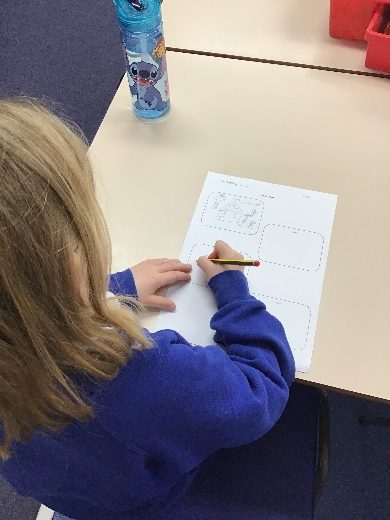
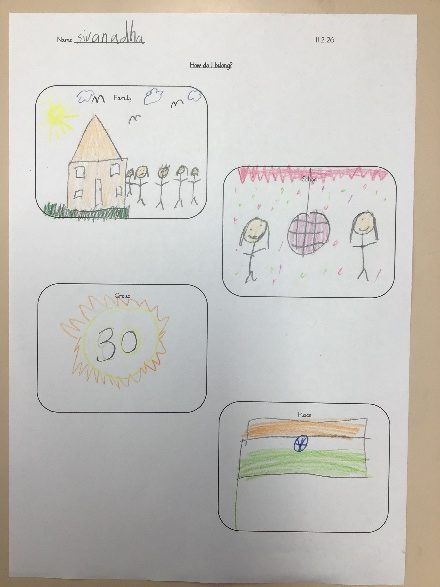
The children were able to ask, listen and respond to lots of questions around these two questions. In Spring 1 the children have looked at different celebrations that Christians celebrate such as Christenings, weddings and Holy Communions. They have also thought about other ways they show belonging, such as attending church, reading the bible and writing prayers. The children were able to reflect on these Christian traditions and some children were able to reflect on how these beliefs may be different to their own.
In Spring 2 the children have had a visit from Marsha and Todd, who came to speak to the children about the celebration of Passover. The children learnt about the story of Moses and thought about what each part of the Seder plate means. The children tried some of these different parts, such as; parsley with salt water, grape juice and matzah bread.
RE Autumn Term 2025
Reception
This term we have looked at the story ‘A Good Shepherd’ from the bible. We found out that the bible is a book that is special to Christians. We learned that one day a shepherd counted his sheep to find that one was missing. Instead of forgetting about his sheep he looked everywhere for it until he found it. We talked about how this shows that all of the sheep were special to the shepherd. We then thought about how we were like the sheep and that we are all important.
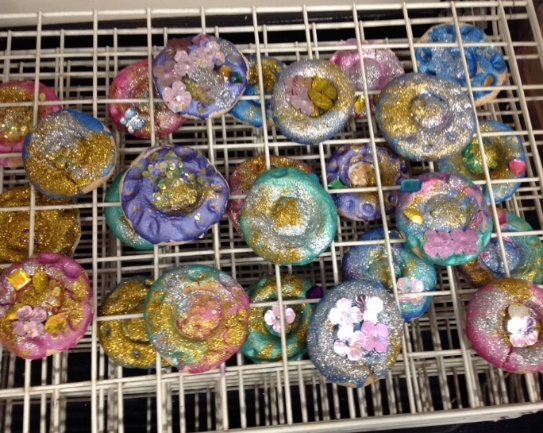
We then learned about Diwali, the Hindu festival of light, and took part in a workshop with Miss Helen. We found out about the story of Rama and Sita and enjoyed retelling the story together, dressed in traditional clothing, danced to some music and made our own diva lamps out of clay.
Year 1
This term the children covered two enquiry questions:
“What do my senses tell me about the world of religion and belief?” and “How does a celebration bring a community together?”
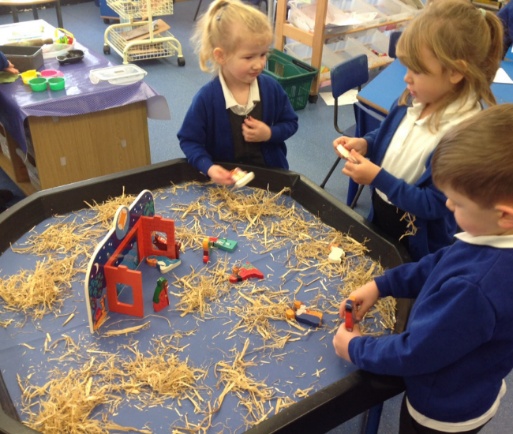
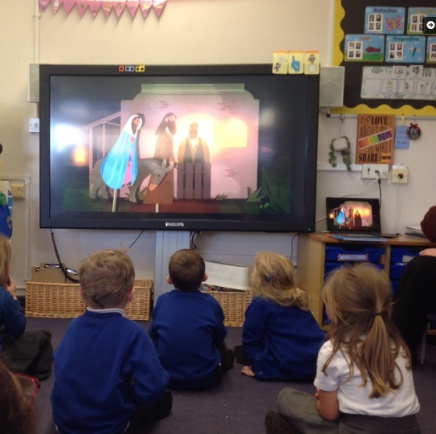
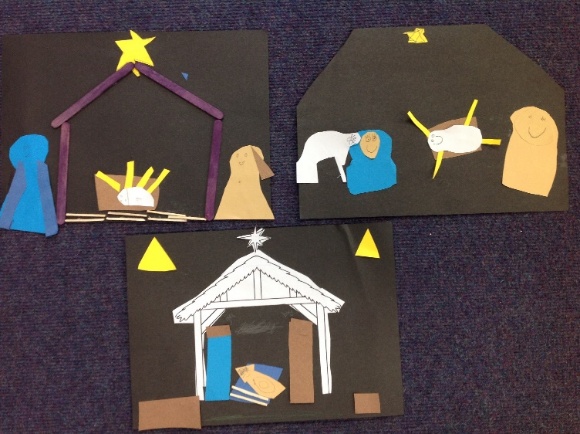
The children have thought about celebrations throughout the year and the upcoming celebration of Christmas. The children shared what Christmas meant to them and the traditions that happen in their household. They discussed how families can celebrate in different ways and took this opportunity to research how countries around the world celebrate Christmas and spoke about how some religions don’t celebrate Christmas. The children retold the Christmas story too. The children also learnt about the Jewish celebration of Hannukah and the story behind the celebration and how Jewish people celebrate Hannukah. We brought our community together by inviting parents in to listen to Christmas songs and poems that we learnt to perform.
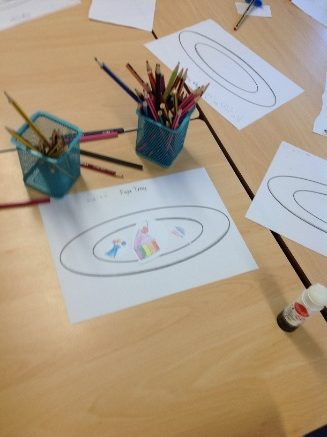
The children also explored their senses and how people of Christian, Hindu and Jewish faith can use their senses in their religion and daily practices.
Year 2
This term the children have covered two enquiry questions:
“Why is light an important symbol for Christians, Jews and Hindus?” and “What does the nativity story teach Christians about Jesus?”
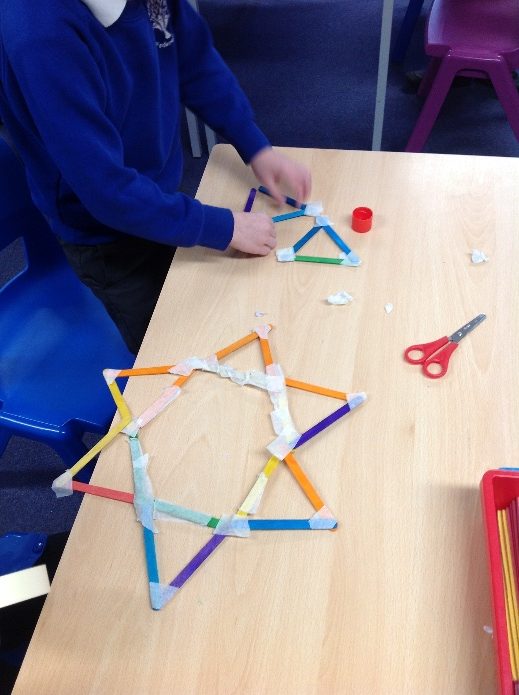
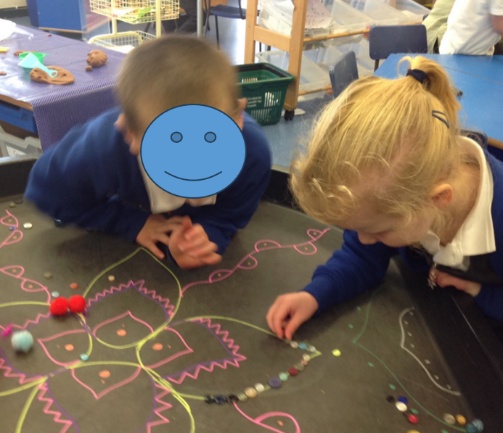
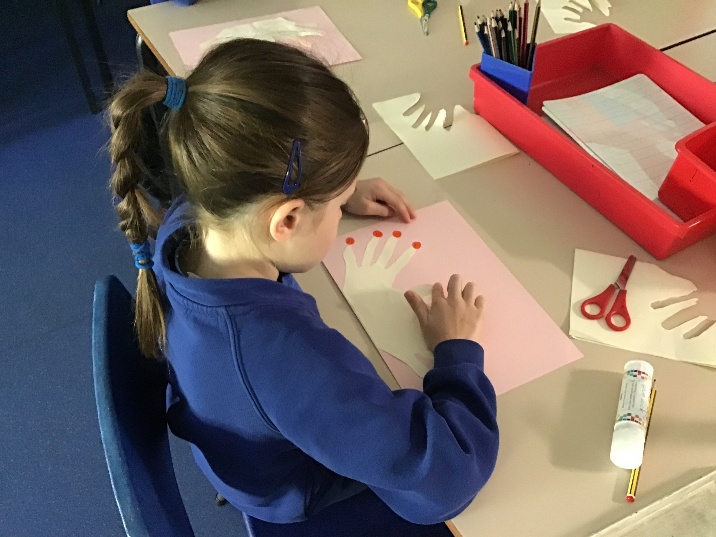
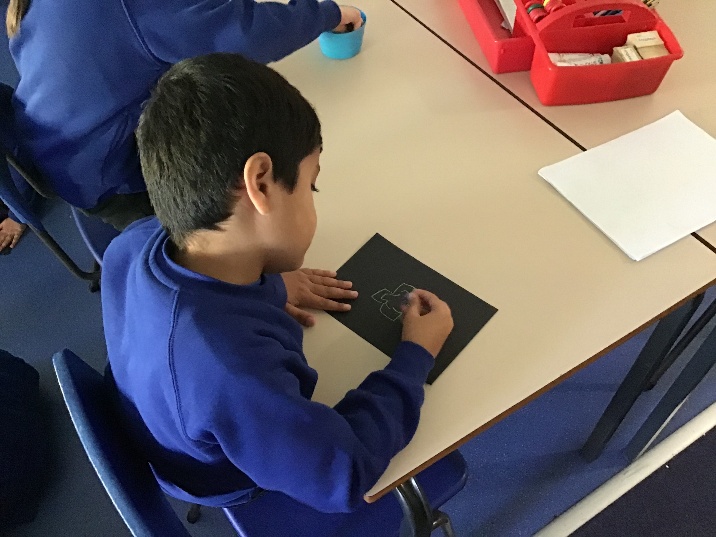
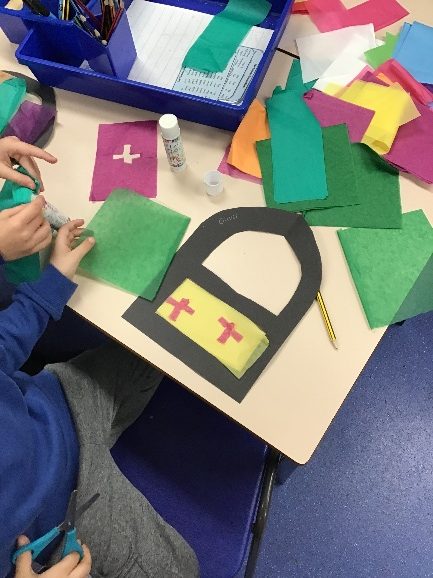
The children have thought about how Christians believe that Jesus/God are light, and how light is always around. They thought about how darkness can be scary and that light can keep us safe. Some children were able to correlate this to how Christians believe that God can keep them safe. The children have drawn some rangoli patterns and discussed the Hindu story of Rama and Sita. The children were able to retrieve their knowledge of the Star of David from Year 1, and the children built on this by learning that Jews believe God is in the sky looking down and protecting them. Just like the stars are in the sky looking down, God is light and he keeps them safe.
In Autumn 2 the children were able to discuss and re-visit the nativity story. They were lucky enough to have a visit from Janet Marshall too, to discuss Christmas journeys. The children spoke about advent, incarnation and how Christians celebrate and remember the nativity story.
RE – Reception Summer 2025
This term we shared the bible story ‘A special promise’. We discussed how the Bible is a special book for Christians and contains many different stories. The children enjoyed hearing how God spoke to Noah and how Noah prepared for the great flood.
Gracie said “God was sad, people were mean and hurting each other”.
We discussed how God wanted to start again.
Rowan recalled afterwards that “God wanted to clean the world, the rainbow was a promise”.
We discussed how God sent the rainbow as a promise not to send any more floods. We shared some promises that we had made before.
RE Summer Term 2026
Year 3
In RE this term, Year 3 have been exploring philosophy, focusing on ‘how people make moral decisions’ in different situations. As part of us RE focus day, pupils have been learning about how both Christians and Humanists decide what is right and wrong, considering the beliefs and values that guide their actions.
The children have engaged thoughtfully with a range of real-world scenarios, discussing what they would do and explaining their reasoning. This has helped them to develop their understanding of morality, empathy and respect for different viewpoints, while building confidence in expressing their own ideas.
Year 4
This term in RE, Year 4 explored the question: “Why is there so much diversity within Christianity?” Through discussions and investigations, the children considered the concepts of trust and belief and reflected on how faith can influence people’s actions and decisions.
As part of our learning, we studied the life of Martin Luther King Jr. and examined how his Christian beliefs inspired and guided his campaign for equality and justice. The children learnt about the importance of standing up for what is right and the role faith can play in creating positive change.
We also explored the different denominations within Christianity and discovered how Christians can share the same core beliefs while worshipping in different ways. The children compared and contrasted how important Christian festivals and celebrations are observed across denominations, developing their understanding of the rich diversity found within the Christian faith.
RE Spring 2025
Year 3
In spring term, Year 3 have really enjoyed learning about the Trinity! The children were very fortunate to be visited by Janet Marshall, who led an interactive day all about how Christians believe God is infinite and he has no beginning or end, and will last forever. The children were invited to join in with numerous activities such as forming the Trinity symbol with their bodies, designing new Trinity symbols, and even dressing up like religious figures! The children greatly enjoyed their visit from Janet.
Year 4
Throughout this half term, the children answered 2 big questions in RE. The first big question was what do we mean by the truth? The children learnt about stories from the Bible and expressed their view on whether the story was an axiom or an opinion. The children enjoyed participating in our role play activity where they had to act out a court case considering reliability and where the burden of proof actually lies.
The 2nd big question was how do religious groups contribute to society and culture in the local area and beyond? The children participated in lots of discussion and wrote any thoughts or questions onto our wonder wall. We returned to this at the end of our lesson to see how many queries we could answer. The children learnt about some inspirational people and how they had a positive impact on our society therefore changing the world around us. The children enjoyed creating a newspaper article about someone who inspires them.
Year 5
Year 5 have been looking at the enquiry question of ‘What does the Resurrection mean to Christians?’. Year 5 started their RE day by thinking about what things they thought might be worth holding a celebration about. Year 5 then compared different gospel accounts of the death and resurrection of Jesus. The children then read Luke 24 and wrote a script in groups to react this scene. Year 5 then investigated how Good Friday and Easter Sunday are celebrated in different ways by Christians and discussed whether Easter is a festival of new life or sacrifice? Year 5 finished their RE day off by writing a leaflet explaining the Christian belief in the resurrection of Jesus for non-believers.
Year 6
In this half term, Year 6 considered the big question; Creation and Science – conflicting or complementary? We began the unit by looking at some of the natural and manmade wonders of the world before recapping our learning from year 3 on the creation story in Judaism and Christianity, and how it may conflict or complement scientific theories of the beginning of the world; this also went alongside their science topic of evolution. The children wrote some lovely poems about different aspects of creation.
We had some fantastic discussions about how people interpret their religious texts and leads to differing viewpoints, even within the same religion.
RE Autumn 2 2024
Year 3:
Year 3 participated in a drop down R.E. day to learnt more about Islam and explore the big question: ‘What difference does being a Muslim make to daily life?’
The children learnt about the religious relics that are prevalent in the Islamic faith and we discussed their purpose and uses. The children then had the opportunity to explore them respectfully. They were fascinated by the geometric designs of the Islamic prayer mats and the patterns that adorned the many mosques that they saw in the presentation and they used these for inspiration in creating their own Eid Mubarak cards. They learnt about Eid and how it is an important festival within the Muslim world.
Building on from their knowledge of Islam from the Infant school, they learnt about the Five Pillars of Islam and how these were pivotal in the Islamic faith. Some children created a poster, some a leaflet and some added to a booklet.
They took part in a quiz to demonstrate their new found knowledge of Islam and ended the day by creating a mind map to answer the big question.
Year 4:
This term in Year 4, we have been focusing on where religious beliefs come from. The children explored a range of different artefacts from a variety of religions which raised the question of why we have so many different religions. It was fantastic to see the children so engaged throughout our RE lessons.
We focused on Sikhism to answer our big question. The children enjoyed investigating how their own beliefs have shaped religion and were able to use community examples and life experiences to support their reasoning. Additionally, the children enjoyed researching some different festivals associated with the Jewish calendar and created a poster about their favourite ones.
Year 5:
In Autumn 1, Year 5 focussed on Humanism and explored the big question ‘Is believing in God reasonable?’. Individually, we completed a quiz to assess our beliefs on honesty, truth, how we should treat animals and respect. There were 10 questions with 4 choices of answers for each. We discussed that religious people try to be “good with God”, but others think you can be “good without God”. We then looked at the Golden Rule – treat others the way you want to be treated. We each created a comic strip to show a situation where we had wished:
- Someone had followed the Golden Rule.
- We had wished someone had followed the Golden Rule.
After that, Year 5 read some fact files around the room and retrieved information about Humanist thinkers. We read about Margaret Knight, Jim Al-Khalili, Alice Roberts, Jawaharlal Nehru, Richard Dawkins, Bertrand Russel, Albert Einstein and Sam Harris. To finish our RE day, we created a class piece of artwork symbolising the Happy Human symbol. We collected resources from outside and worked collaboratively.
Year 6:
In RE we learnt about Judaism, and the suffering of the Jewish population of Europe during the Holocaust. We thought about how different people turn to God in various ways during times of suffering, using texts from the Old Testament and reading the writing of Anne Frank and Simon Winston – two Jews who lived through the Holocaust. Simon Winston survived but Anne Frank sadly, did not.
In autumn 2, we discussed what happiness looks like, sounds like and feels like to us. We made a list of the values that we share at Toftwood Junior School and the ones that we felt were most important. Each table created a diamond nine of the values that they ranked most important to least. We looked at Humanism and what this means for certain people in society. We learnt about their values and key messages. As Humanists do not have a holy book or sacred place to visit, we discussed where they could turn to during times of difficulty. We looked at some dilemmas and spoke about what we would do if we were faced with these challenges.