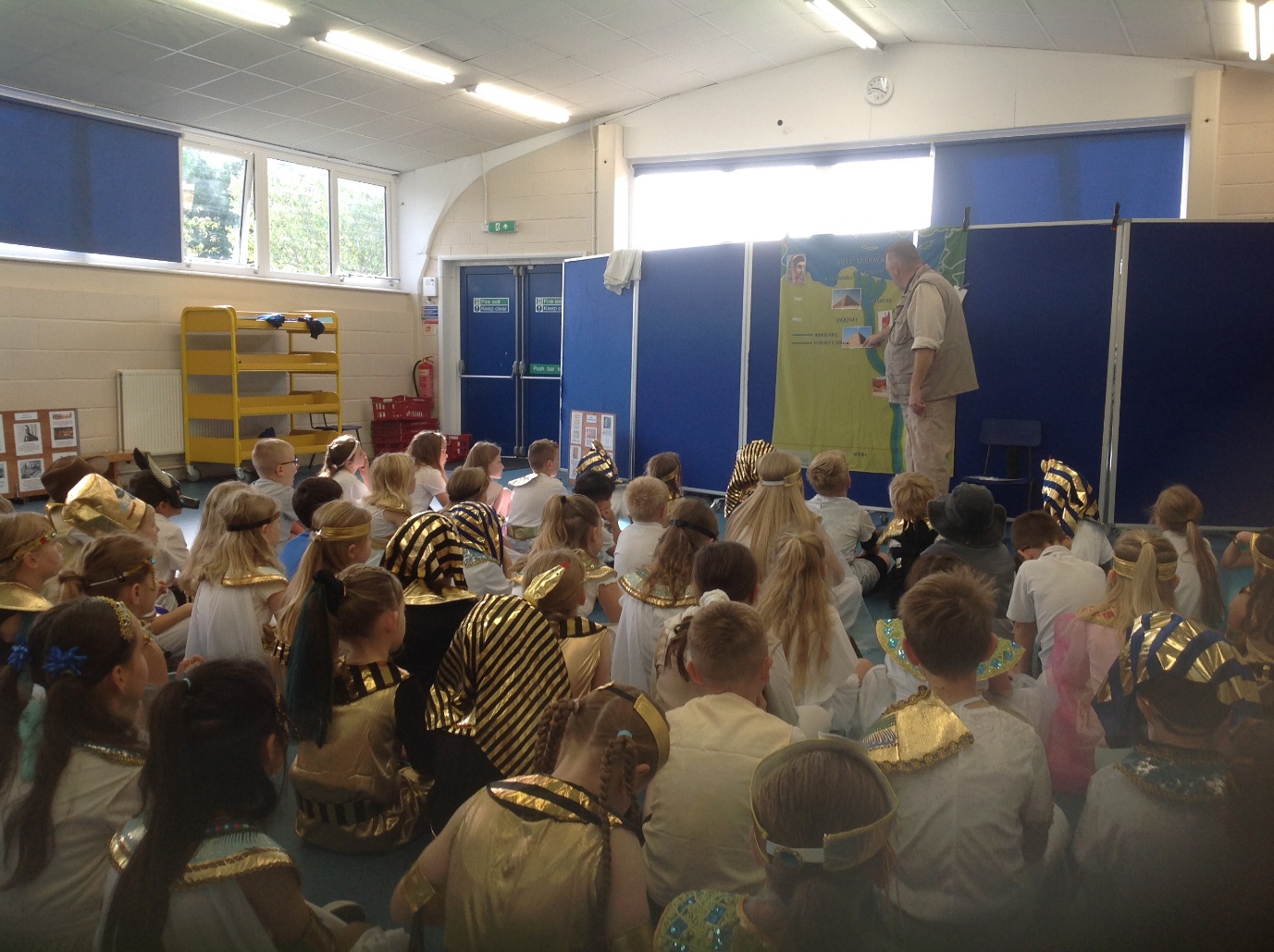
Year 3 Ancient Egyptian Day

16th September 2026

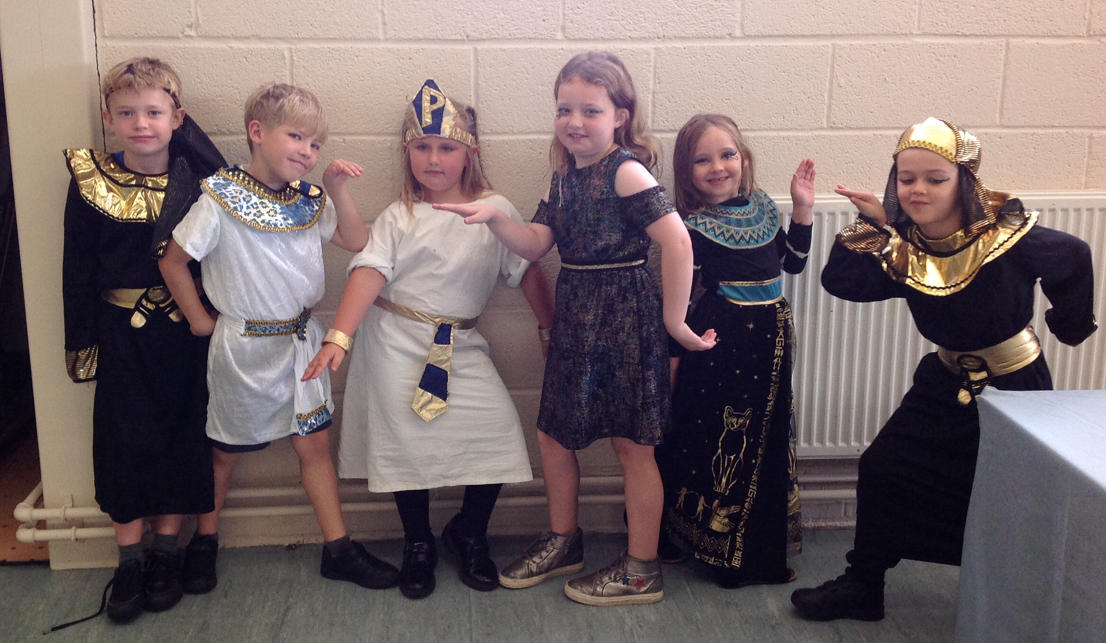
Year 3 stepped back in time as we enjoyed an exciting Ancient Egyptian Day! The children looked fantastic dressed as Ancient Egyptians and archaeologists and were ready for a day of hands-on history, discovery and plenty of fun.

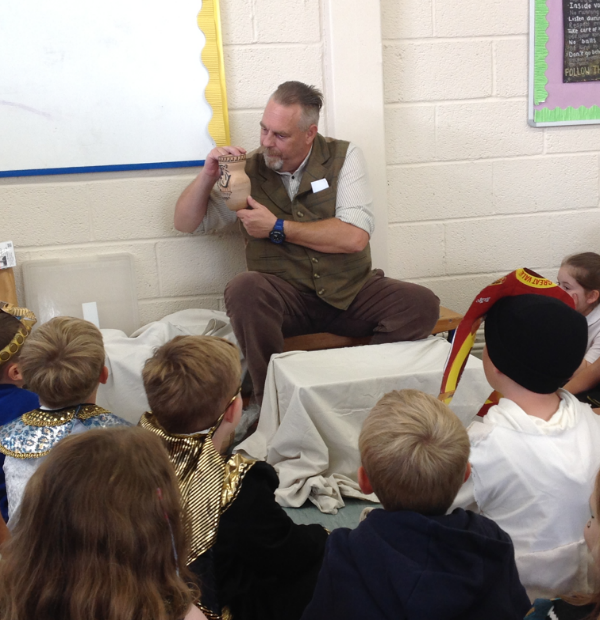
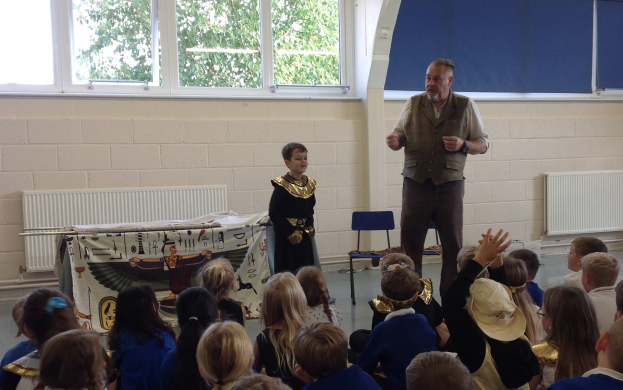
We were delighted to welcome a visitor from Portals to the Past, who took the whole year group on a fascinating journey through the history of Ancient Egypt. We learnt about everyday life in Ancient Egypt, how Lower and Upper Egypt were united, and the story of Cleopatra, the last Pharaoh of Ancient Egypt. We also discovered how the arrival of the Romans, including the involvement of Julius Caesar, contributed to the end of Egyptian rule.

The children were particularly excited to explore a fascinating collection of ancient artefacts and replicas. These included tiny beads and decorative studs, make-up palettes and pots used for holding oil, candles and make-up. We discovered why Ancient Egyptians wore black kohl around their eyes, with the children learning that this was partly their ancient answer to sunglasses! We also saw a bronze spearhead and fibres from a mummy believed to be around 4,000 years old. The children used clues from the objects to make sensible suggestions about what they might have been used for, just as historians and archaeologists do.

We then put our new knowledge to the test with an interactive Ancient Egypt quiz. The children learnt lots of fascinating facts about Egyptian life, the pyramids, Gods and Goddesses and the importance of the River Nile. They also considered how different invasions and cultures, including the Persians, Greeks and Romans, influenced Ancient Egyptian life, beliefs and language.

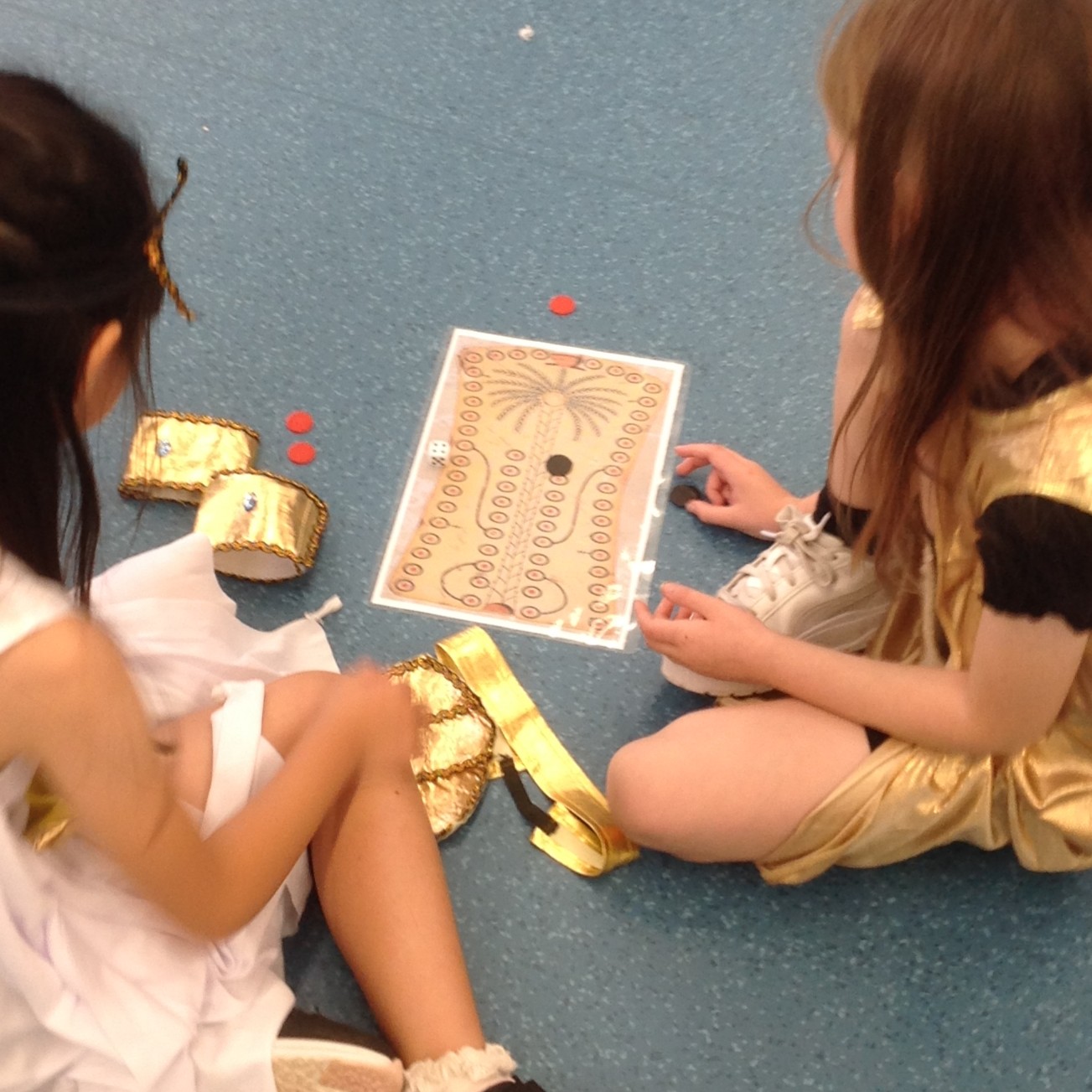
There was plenty of competitive fun when the children played the ancient Egyptian game Hounds and Jackals in pairs. This game was enjoyed by people from both wealthy and poorer households thousands of years ago. The children enjoyed playing the game and comparing it with games that we play today, such as snakes and ladders.

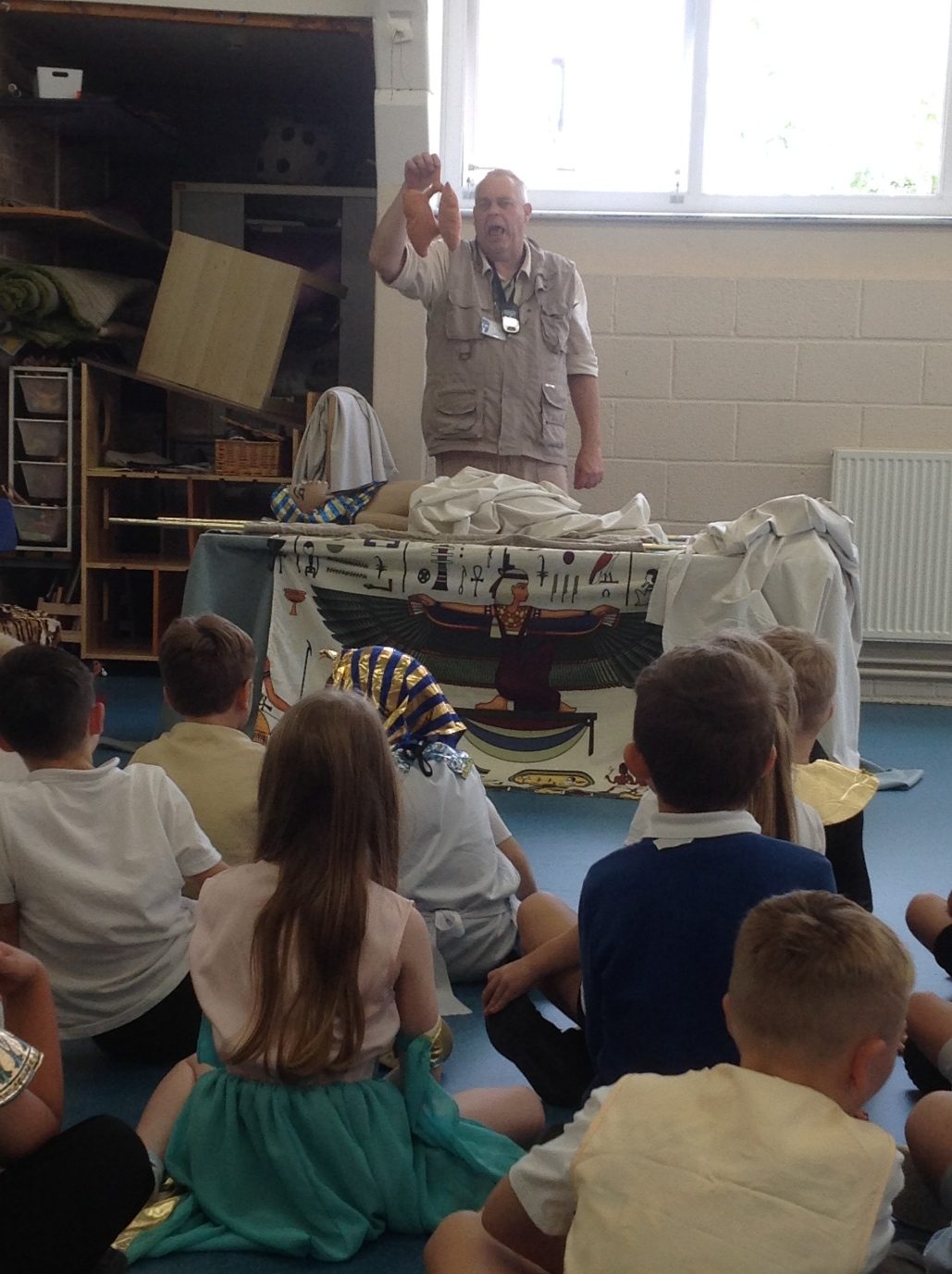
In the afternoon, we brought our learning to life even further with a role-play of the mummification process. The children watched each stage being acted out using a life-sized dummy and learnt about the different people and roles involved in preparing a Pharaoh for the afterlife. We also had the opportunity to see a replica sarcophagus, helping the children to visualise this important part of Ancient Egyptian culture.

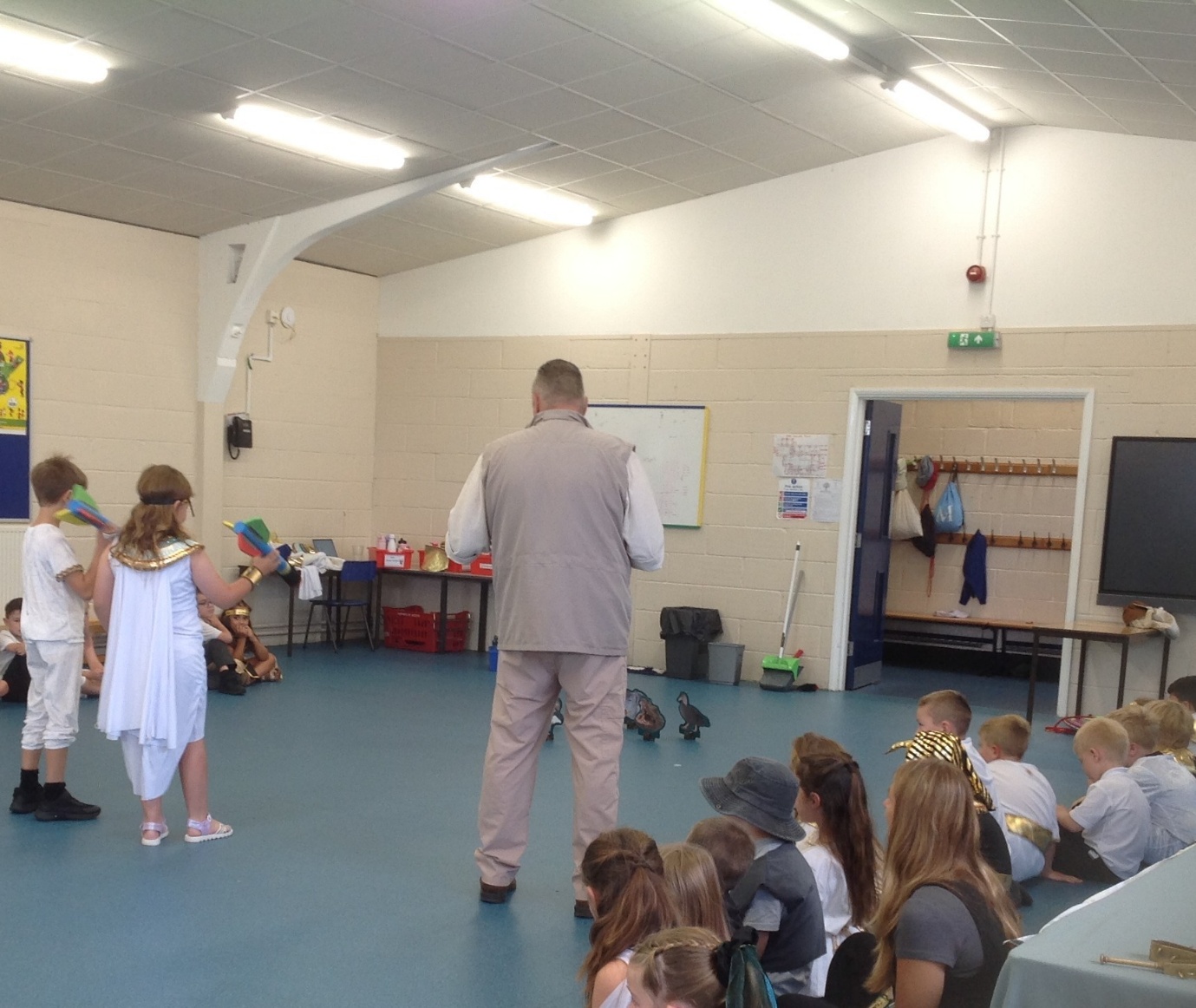
To finish our day, we headed to the River Nile for a whole-year-group challenge! Armed with foam arrows, the children had to try to catch ducks, mimicking how Ancient Egyptians may have hunted for food along the river. There was plenty of excitement, laughter and some very impressive aiming!

It was wonderful to see the children’s enthusiasm throughout the day. They had the opportunity to handle artefacts, ask questions, play an ancient game, take part in role-play and apply their historical knowledge in a range of exciting ways.

A fantastic day of learning, exploration and fun, bringing our Ancient Egypt topic to life!

Year 3 Summer Term 2026

PSHE
This term, children learned how to stay healthy, safe and confident. They explored healthy lifestyles, the importance of sleep and wellbeing, and how emotions can change over time. Pupils celebrated their individual strengths, discussed ways to overcome challenges, and learned about safety, including recognising hazards, managing risks and fire safety.

English
Year 3 developed their writing skills through persuasive writing and non-chronological reports. They wrote persuasive letters using powerful language and rhetorical questions, then designed fantastical beasts and created detailed reports about them. In Guided Reading, pupils enjoyed Daisy: Eat Your Peas, I Wanna Iguana and A Pebble in My Pocket, developing their comprehension and understanding of characters and themes.

Computing
Pupils explored stop-motion animation, recreating scenes from Jack and the Beanstalk. They planned, captured and edited animations while developing their understanding of sequencing and digital storytelling. Online safety and responsible use of AI were also reinforced.

RE
In RE, children explored how people make moral decisions, focusing on Christian and Humanist perspectives. Through discussions and real-life scenarios, they developed their understanding of empathy, respect and different viewpoints.

Science
Children learned about animals, humans and plants. They explored animal groups, skeletons and nutrition, and investigated plant growth, pollination and reproduction. Pupils also identified different parts of plants and developed their scientific enquiry skills.

Maths
This term, pupils strengthened their understanding of fractions, money and time. They also explored shape and statistics, identifying properties of shapes and interpreting charts and graphs. The children worked hard and made excellent progress across all areas of maths.

Geography
This term, children learned about volcanoes, including the different types and key features such as the crater, magma chamber and vent. They compared volcanic regions around the world and explored the differences between volcanic and non-volcanic areas. Pupils also discussed the advantages and challenges of living near a volcano, linking their learning to guided reading. This topic helped develop their geographical knowledge and understanding of how environments influence people’s lives.

Art
This term, children explored the work of Esther Mahlangu and Antoni Gaudí. Inspired by Mahlangu’s colourful geometric designs, they created sewn bookmarks while practising running stitch and overstitch. Later, they studied Gaudí’s mosaic artwork and used recycled materials to create junk model sculptures decorated with mosaic-style patterns.

D.T.
This term, children focused on healthy eating and food preparation. They created healthy pizza posters, learning about nutritious foods, food groups and the Eatwell Plate. They also made Egyptian flatbread (ka’ak), linked to their History learning, while developing safe food preparation skills and confidence in the kitchen.

PE
This term, Year 3 focused on athletics, practising running, relays and race preparation. Although race day was cancelled, pupils showed great enthusiasm and teamwork. More recently, they have developed their cricket skills, including batting, bowling, fielding and teamwork.

Music
This term, pupils continued developing their ukulele skills, improving chord changes and playing with greater confidence. They also worked on singing skills, focusing on pitch and rhythm. By combining singing and playing, they have developed coordination, musicality and enjoyment of performance.

Year 3 Spring Term 2026

Year 3 began the term by learning about rocks and their properties. This involved many scientific skills including identifying, classifying and grouping as the children were tasked with comparing different rock samples and observing their differences in size, colour and shape. The children enjoyed learning about igneous, metamorphic and sedimentary rocks, linking this to our Guided Reading text ‘A Rock is Lively’. They also explored the process of fossilisation and how this occurs over time.

Then, we moved onto our next unit about Mary Anning. The children loved hearing about the palaeontologist and how she was responsible for developing humans’ understanding of prehistoric creatures through her numerous discoveries. In classes, the Year 3s have produced a timeline detailing Mary Anning’s life and work, followed by a task detailing the process of piecing together fossilised pieces of an ichthyosaur skeleton! We have completed our learning by creating a double-page spread sharing all of the information the children have gathered about Mary Anning and detailing her contributions to science.

Year 3 Spring Term

At the beginning of the term, Year 3 were introduced to colours in Spanish and used their knowledge to complete lots of fun activities, one being to design their own character. Later on in the term, the children were introduced to classroom items using the items around them to help build on their understanding. Finally, focussing on the gender of nouns, linking to items in the classroom. The children particularly loved diving into a Spanish dictionary and navigating these.

Spring 1 2026, Year 3 School Trip

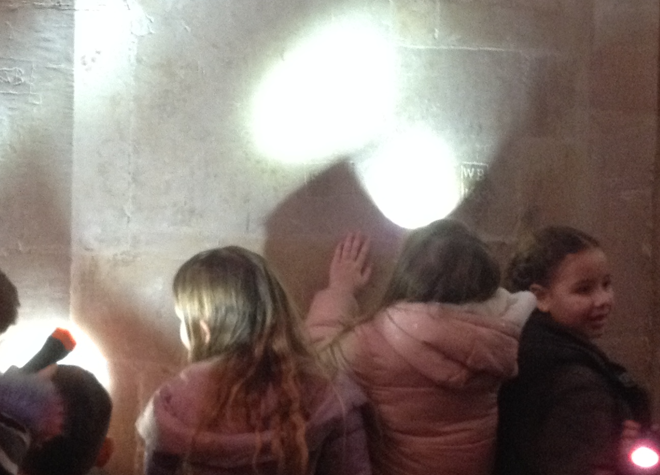
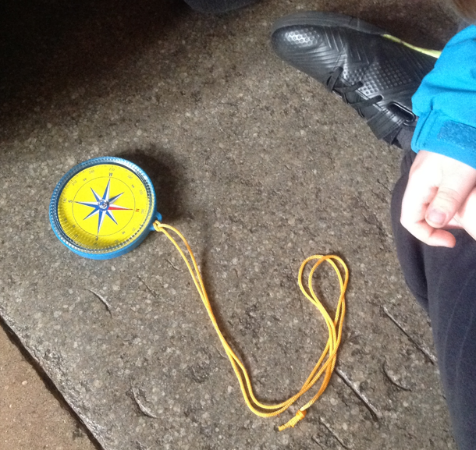
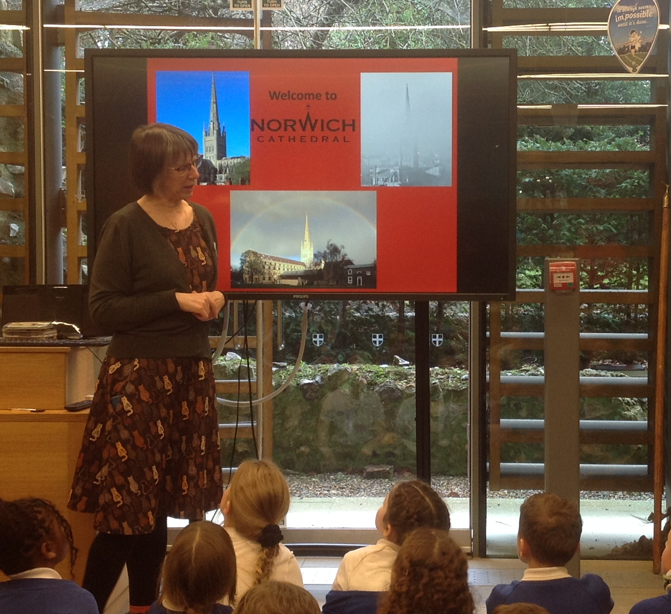
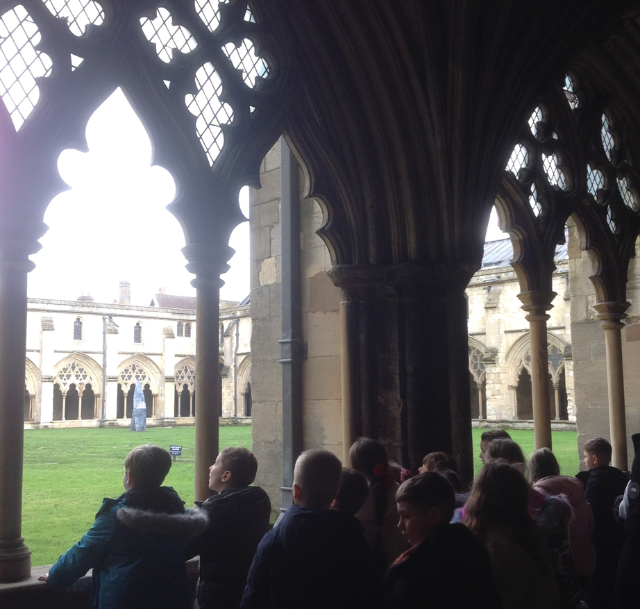
On Tuesday 20th January, Year 3 visited Norwich Cathedral and participated in their Sacred Science programme of study. We explored different aspects of Science and learned all about the history of why the cathedral was constructed and how long it took. We recapped our geographical learning with compass points and absorbed the magnificence of the cathedral as a historic building.

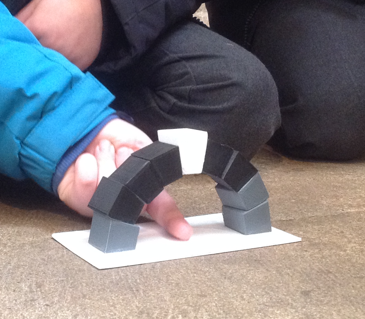
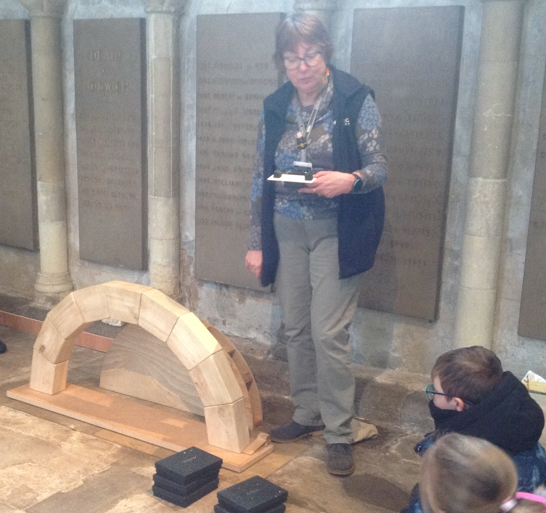
As part of our first Science unit, Forces, we explored how effective the force of gravity was in the construction of the cathedral during William the Conqueror’s reign. In teams, the children used the medieval mason’s template to re-create an archway. They worked together beautifully to create their arches, and displayed many of our Toftwood Values including resilience, collaboration and kindness which enabled them to be successful medieval stonemasons.

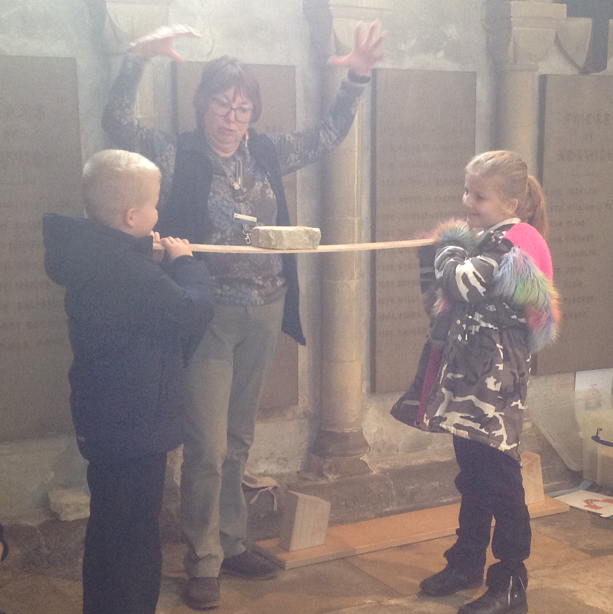
Following on from our previous Science unit, Light, the children recapped the definitions of transparent, translucent and opaque, and explored how shadows can be made using our bodies and light. We then examined the effect of stained glass on light, by exploring the translucent qualities that create the vibrant colours of the cathedral windows. We compared the stained-glass windows with the clear glass of the modern section of the cathedral and observed that it was transparent.

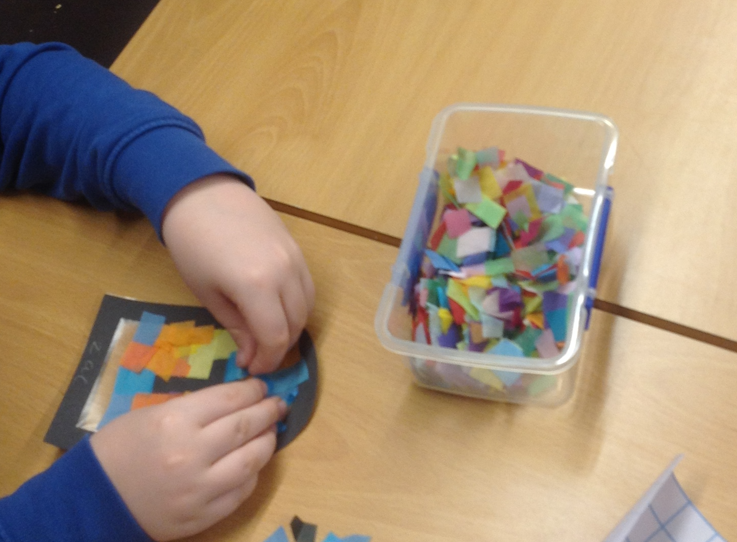
The children loving having the opportunity to create their own stained glass window, using opaque and translucent materials. We explored depth of colour, and, during the process, we discovered the effect of light on our own creations.

After learning so much new information, including that the cathedral has its own cat, Budge (who was so excited to see us, he ran over one of our children’s toes!), we left at the end of the day able to talk about our fabulous experience. We are very grateful to the wonderful staff at the cathedral for welcoming us and leading such an exciting day for our children, and we were incredibly proud of Year 3 for representing the school so beautifully.

A group of children standing next to a wall with a light on it

AI-generated content may be incorrect. A compass on the ground

AI-generated content may be incorrect. A person playing with a toy

AI-generated content may be incorrect.

A person standing in front of a screen

AI-generated content may be incorrect.
A person standing in front of a group of people

AI-generated content may be incorrect.
A group of people standing next to a person holding a stick

AI-generated content may be incorrect.

A group of people looking out a window

AI-generated content may be incorrect.

A child making a mosaic

AI-generated content may be incorrect.


Year 3 Spring Term 2025

Year 3 have had a fabulous Spring term and the children have shown great dedication and focus throughout. Here’s a brief summary of our learning.

English

In English, we started the term by reading different versions of ‘Jack and the Beanstalk’ then the children created their own innovation. Some of the children chose to alter the setting, whilst others decided to change the characters or object.

Our next unit of learning was to create a recount of our Year group trip to Norwich Cathedral. The children learnt about the features of a recount and then planned their own using these as a guide. They used some fabulous language, as they were very enthusiastic about the subject!

On our return from the half term break, the children again used Jack and the Beanstalk as their inspiration but this time they created their own Haiku. They found the 5-7-5 syllable pattern worked well with their chosen subject and created some great Haikus.

Our first focus in Spring 2 was to look at biographical features and then plan and write a biography of Mary Anning who is our Year 3 Scientist. The children were fascinated by her life story and baffled over her exclusion from joining the Geological Society because she was a woman and from a working class background.

We completed the term, by working in groups to create poetry with rhyming couplets. We looked at Shakespeare’s ‘Macbeth’ and Roald Dahl’s ‘George’s Marvellous Medicine’ then created our own poetry based on food, holidays or the seaside.

Maths

This term we have continued our learning from Year 2 with the units below.

We started the term recapping Multiplication and Division looking at the formal methods to calculate alongside using bar models and manipulatives to support our learning.

We then focussed on Shape – we learnt more about 2D and 3D shapes and their properties before moving on to Fractions where we used Fraction cubes and fraction walls to help us consolidate our learning of equivalent fractions, as well as adding and subtracting fractions with the same denominator.

We completed the term by learning about Money, understanding the relationship between pens and pounds, knowing how to add, subtract and find change.

Science

We started the year with our unit ‘Rocks and Fossils’ where we learnt about igneous, sedimentary and metamorphic rocks as well as classifying rocks based on their properties.

We completed the term by learning about our Year 3 Scientist: Mary Anning and creating timeline of the key points and discoveries in her life.

R.E.

This term we have focused on Christianity and the Trinity. The children found it beneficial to have a visitor: Janet Marshall, explain the trinity to them and enjoyed the hands on activities that supported their learning and understanding of such a tricky concept.

P.E.

As well as continuing with Real P.E. focussing on Balance, retrieving and throwing, the children have also participated in Dance and Tennis. With the warmer weather, they were very pleased to be active outside, and enjoyed learning tennis skills. Initially, they focussed on accuracy and footwork, as well as partner work and control. By the end of the term, they were able to use these skills to admiration – by taking part in a volley with their partner.

Art

We have focussed on our Year 3 focus artist: Georgia O’Keeffe this term, creating a viewfinder and then enlarging a part of a flower in the style of Georgia O’Keeffe. We have sketched the flower using sketching pencils into our sketchbooks, and then chosen our preferred image, to recreate using paints. As part of our printing unit, we chose one of our sketches to draw an outline of a magnified part of a flower, and copied this onto a polystyrene tile. We then created a repeating pattern of our chosen tile in our sketchbooks. The overall effect was eye catching and the influence of Georgia O’Keeffe’s work was very clear in the artwork the year group created.

History

This term we have focussed on the three-age system – Stone Age, Bronze Age and Iron Age. The children have created a time line for each period, highlighting key events in each time period. They have also learnt about the settlement of Skara Brae, and closer to home about the flint mines at Grimes Graves.

Geography

We have looked at our local area and its land use. We started by learning about the local areas that were originally settled in prehistoric times and explored physical features that may have made them desirable as places to settle. We learnt how some settlements grew with the onset of the Industrial Revolution and how this caused a change to land use.

We completed our unit on land use, by becoming town planners and creating a future settlement – looking at the changing factors of energy production, transport, school and houses. The children worked in groups and were keen to create their future settlement, some chose to pedestrianise the whole town, some focussed on the natural environment and created numerous nature reserves within their town as well as green places for people to enjoy, others chose to use trams and rickshaws for town transportation. All the children removed petrol stations – some had electrical charging points whilst others decided to have H2O stations.

Design and Technology

This term, the children have been very busy! They have used their knowledge of Prehistoric shelters to create their own model. They worked together in pairs and thought carefully about the materials they chose as well as how to design it. All the children knew they would have to make it water and wind proof as they tested their final product at the end of the project. Most shelters proved to be wind proof and a few were waterproof. All the children could identify how to improve their shelter.

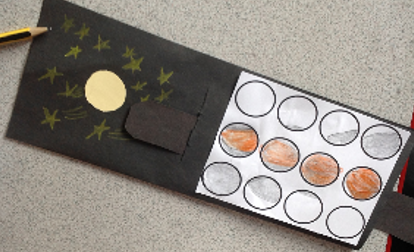
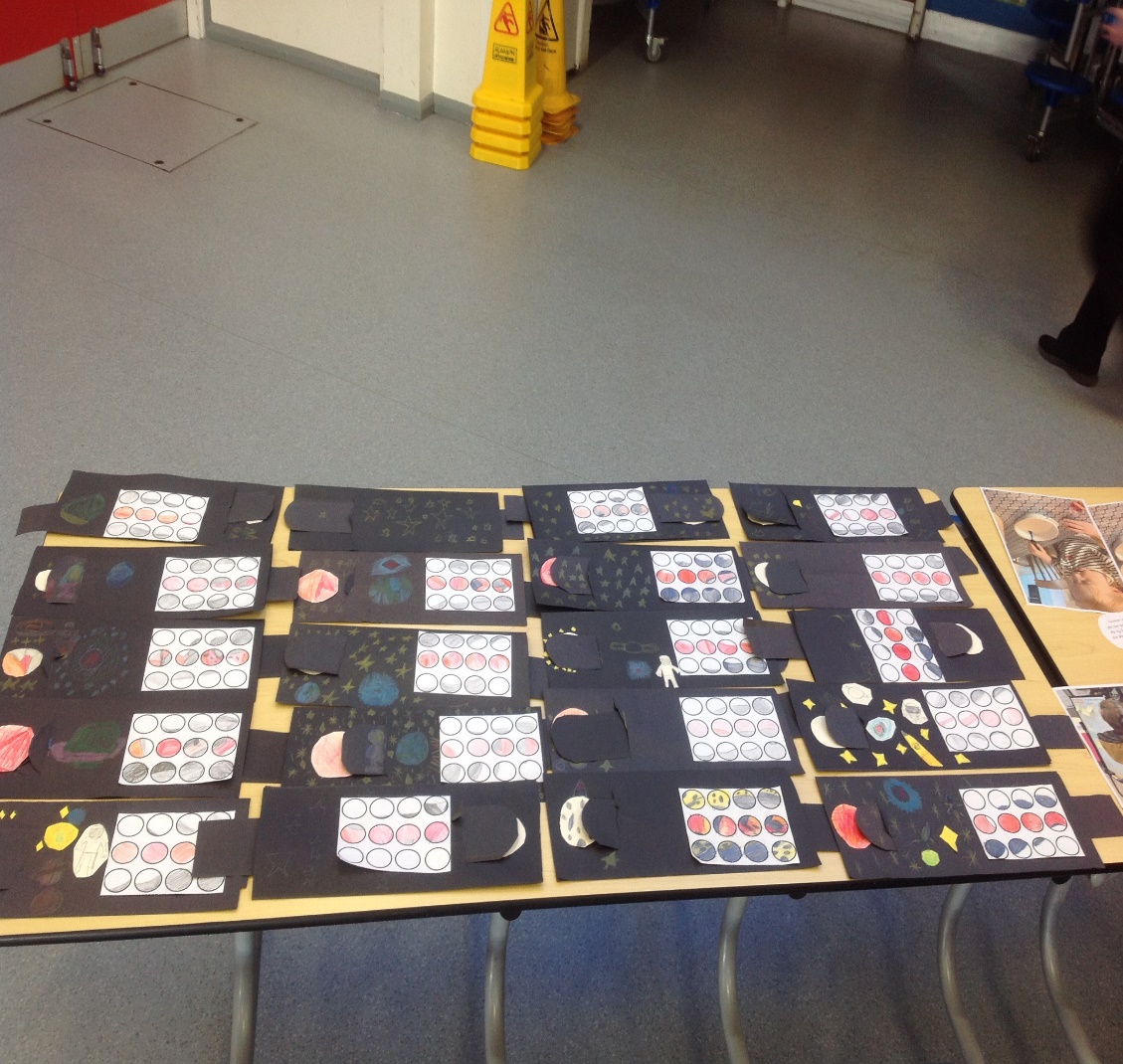
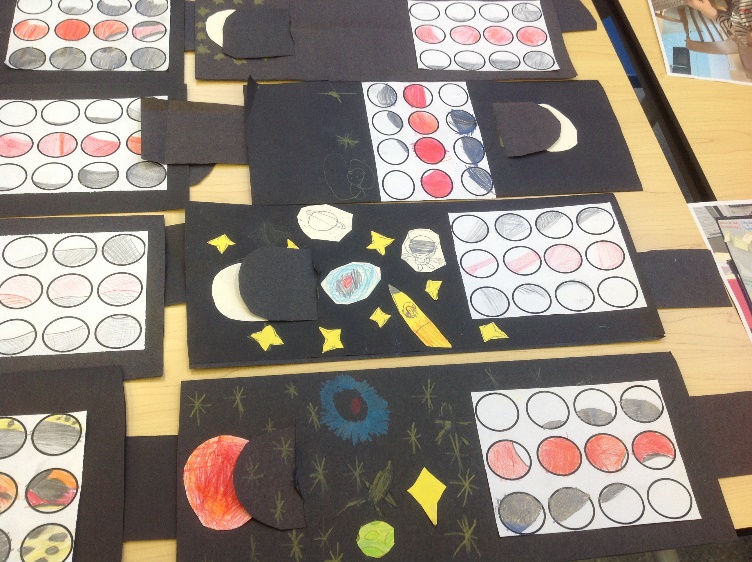
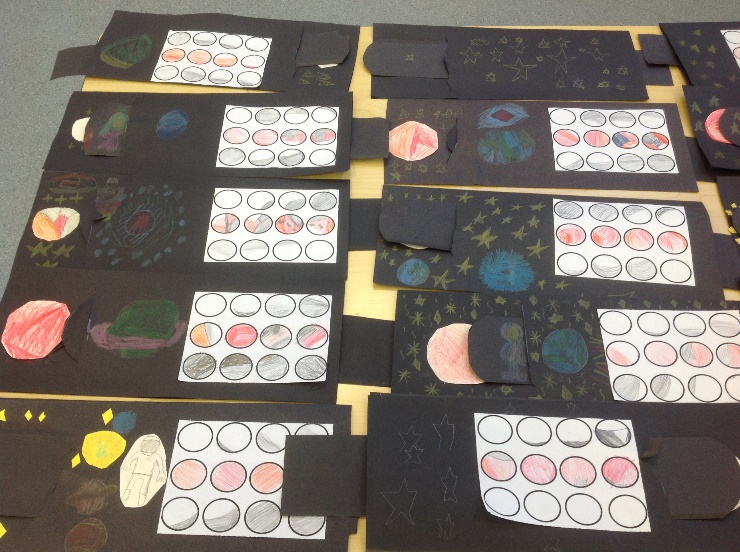
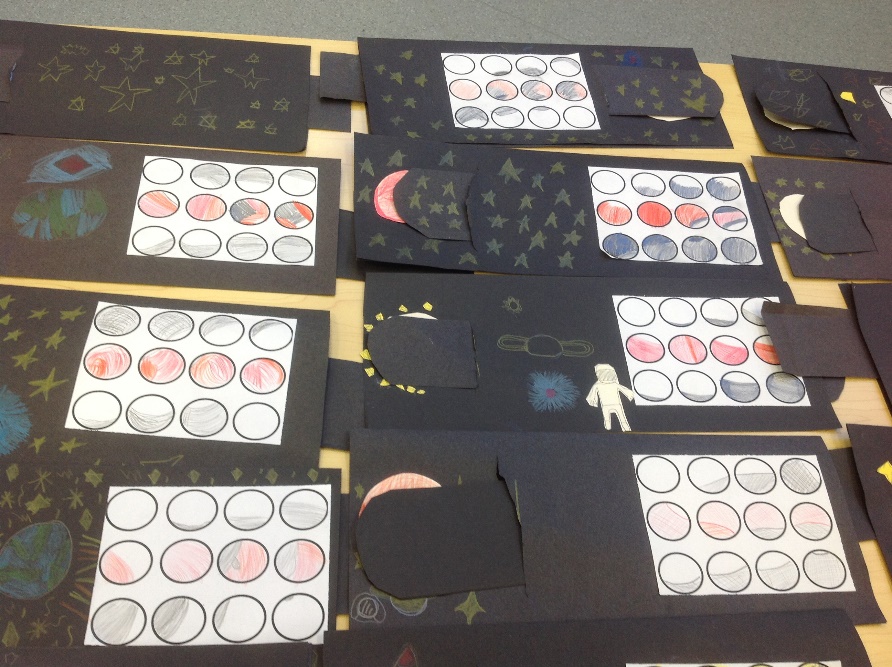
As part of their Science week project, they also created a slider system lunar eclipse poster. They worked independently to create the slider system and were able to evaluate it once they had completed the project.

Finally, the children also took part in Food Technology project. They worked in groups to make healthy flapjacks – they added different types of seeds and fruits. They smelt delicious and the children were keen to try them.

Computing

The children have learnt about coding through the program Scratch and have created a conversation between two or more sprites, changed the background, made the sprites larger and smaller as well as using programming to make them travel around the screen

In the final half of this term, they built on their Year 2 knowledge of Stop Motion. Working in groups, the children made their resources and created a stop motion film of a plant’s life cycle, from seed to bloom.

Music

The children’s focus switched from the ocarinas to the ukuleles this term. They learnt to strum and finger pick the strings – learning a variety of picking and strumming patterns. The children have practised songs using the chord C and have just started to learn songs using the chord: Am.

MFL

In Spanish, the children have learnt how to say different colours as well as taking part in short conversations. They have also started to learn the names for stationery equipment. They have really enjoyed the interactive nature of Spanish sessions and have started to work independently on Language Nut – honing their skills and understanding of topics already covered this academic year.

PATHS

The children have continued to learn about comfortable and uncomfortable feelings. They have discussed how to cope with these and what strategies they could use / already use to support them. The children have enjoyed the class discussions and have had a respectful attitude towards each other during these sessions.

British Science Week 2025

A group of people in a classroom

AI-generated content may be incorrect.

Year 3 have had an amazing Science Week this year!

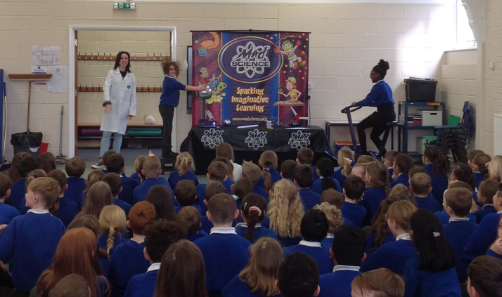
We started the science fun with a visit from Dr DNA to get us ready for Science Week where we learned all about electricity.

Dr DNA connected her exercise bike up to the Van de Graaff generator. One child pedalled the bike while Dr DNA touched the generator with a metal ball – sparks flew! She then placed a pile of metal cake tins on top of the Van de Graaff and when the pedalling started, they all flew up into the air. Another child placed both hands on the Van de Graaff and their hairs stood on end. Then, Dr DNA showed how electricity could come out of people’s fingertips. The children were very respectful and enjoyed her visit very much.

Our Federation focused theme for this week was Space, so we began the week by watching an exciting live lesson from real-life astronaut Tim Peake for astronaut training! Tim spent 173 days living on the International Space Station and discussed the effects of space on our bodies. We explored what effect it has on our bones, how astronauts manage food and hydration, and even how they go to the toilet.

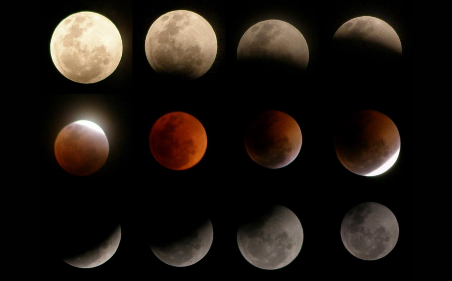
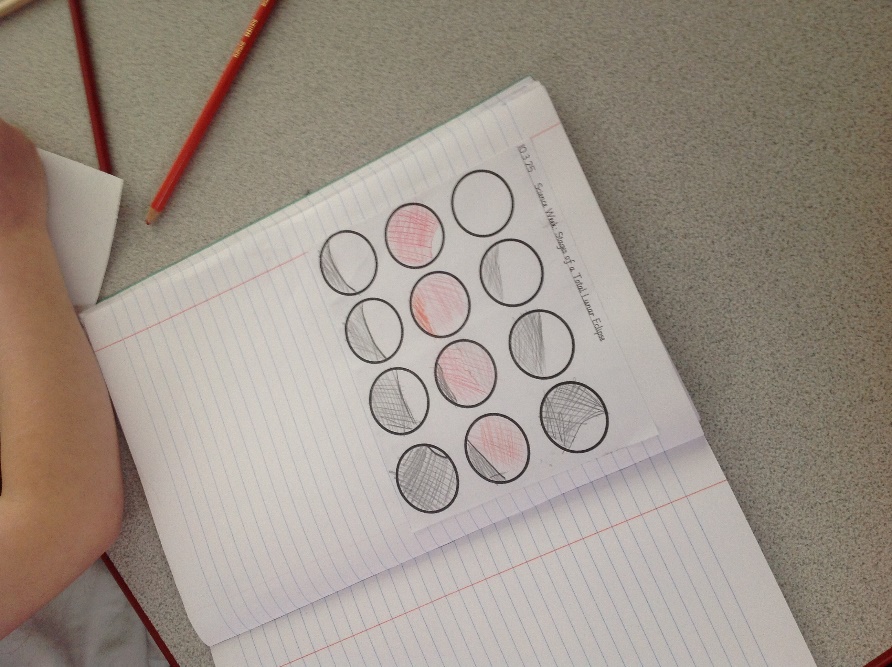
Year 3 have been focusing on lunar eclipses this week by understanding the twelve stages of these, including the three different types:

  • Total lunar eclipse
  • Partial lunar eclipse
  • Penumbral lunar eclipse.

C:\Users\LMakins\AppData\Local\Microsoft\Windows\INetCache\Content.Word\IMG_4902.JPG

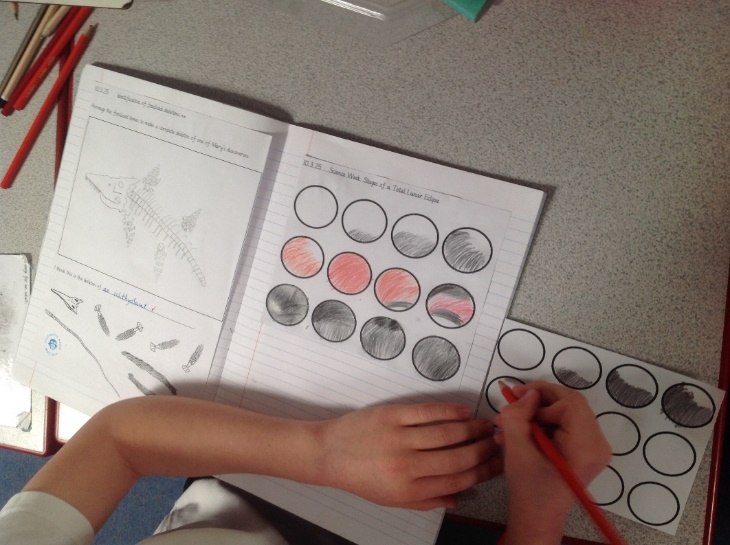
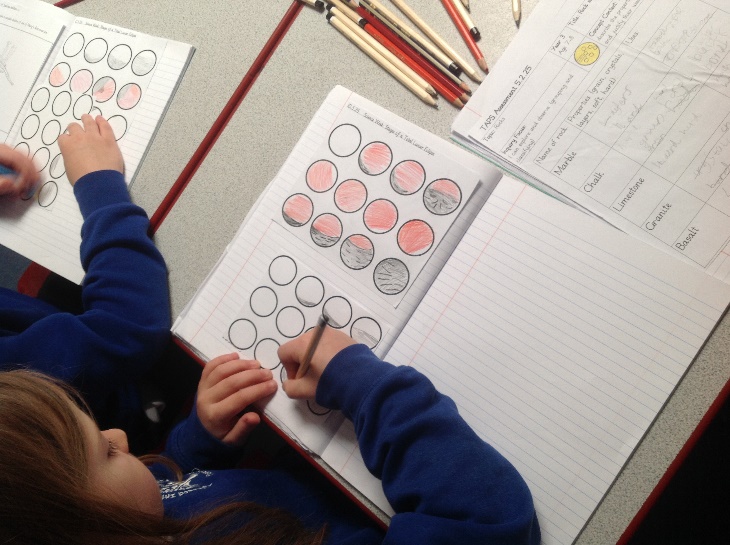
We used various shading techniques learned from our autumn term Art sessions to accurately shade the stages of a lunar eclipse.

Then, we built upon our knowledge of lunar eclipses by creating an amazing pulley card, utilising a slider system to show which a lunar eclipse in action! The children loved making these and showing their classmates how a lunar eclipse works, as well as building on their understanding of the twelve stages to a lunar eclipse. As a challenge, they questioned their partners about which stage their slider was showing. Miss Jacobs and Miss Goddard were thrilled to place some of the pulley cards on display at the Science Fair.

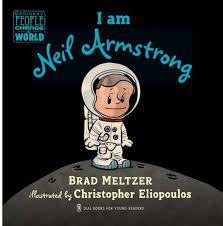
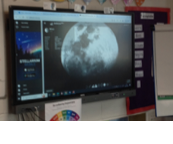
During the week, Year 3 read Neil Armstrong’s biography in our reading for pleasure book, which links to our current English unit about biographies. The children also explored the online Stellarium where they could look at images of planets and stars, learning about many areas such as constellations.

It has been a fabulous week for Year 3!

C:\Users\LMakins\AppData\Local\Microsoft\Windows\INetCache\Content.Word\IMG_4903.JPG
C:\Users\LMakins\AppData\Local\Microsoft\Windows\INetCache\Content.Word\IMG_4899.JPG

C:\Users\LMakins\AppData\Local\Microsoft\Windows\INetCache\Content.Word\IMG_4910.JPG
C:\Users\LMakins\AppData\Local\Microsoft\Windows\INetCache\Content.Word\IMG_4911.JPG
C:\Users\LMakins\AppData\Local\Microsoft\Windows\INetCache\Content.Word\IMG_4913.JPG
C:\Users\LMakins\AppData\Local\Microsoft\Windows\INetCache\Content.Word\IMG_4912.JPG

Year 3 Autumn 2 2024

English

Following last half-term’s History unit on Ancient Egypt, we built upon our prior learning to produce an excellent piece of descriptive writing about a character from ‘The Egyptian Cinderella’, a text which places a modern twist on the traditional tale! The children greatly enjoyed using a wide range of adjectives, nouns, prepositions, verbs and adverbs to provide detail and depth to their character descriptions. Then, we started exploring poetry, with a special Christmas theme this year – we have so loved reading the children’s Haikus! Their learning about Haikus will be particularly useful later in the year when the children revisit them in a later unit, with another exciting topic…

Maths

This half-term, we have completed our Addition and Subtraction unit and begun our first Multiplication and Division unit. Building on our prior learning on multiplication in Year 2, the children have developed their knowledge of repeated addition and using arrays to represent their multiplications, as well as using bar models to show their division calculations. We have also started to learn our times tables in earnest, beginning with the 2s, 5s and 10s, and progressing to the more challenging 3s, 4s and finally the 8s. Over Christmas, we encourage the children to keep up their excellent Times Table Rockstars practice – there is always a trophy at stake each week between the classes!

Guided Reading

In Guided Reading, we have explored two very different but exciting texts! We began our half-term by reading ‘The Velveteen Rabbit’ by Margery Williams. The children hugely enjoyed reading about his adventures in the nursery and his quest to become real. Their knowledge of the story helped them to write fabulous book reviews of the text! Following this, we have enjoyed reading ‘Hansel and Gretel’ by Anthony Browne, where we have continued to use our VIPERS skills (Vocabulary, Infer, Predict, Explain, Retrieve, Summarise). The children’s understanding of this fairytale will benefit them with next term’s learning, when we explore how to write a fairytale as one of our upcoming English units!

Art

T:\Planning\Year 3\2024-2025\LM3\Photos\IMG_4634.JPG In Art, the children have begun to explore what a collage is! After they learned about the famous collage artist Susan B. Schenk, the children designed and created their own Christmas cards using the art techniques learned.
RE

Year 3 participated in a drop down R.E. day to learnt more about Islam and explore the big question: ‘What difference does being a Muslim make to daily life?’

The children learnt about the religious relics that are prevalent in the Islamic faith and we discussed their purpose and uses. The children then had the opportunity to explore them respectfully. They were fascinated by the geometric designs of the Islamic prayer mats and the patterns that adorned the many mosques that they saw in the presentation and they used these for inspiration in creating their own Eid Mubarak cards. They learnt about Eid and how it is an important festival within the Muslim world.

Building on from their knowledge of Islam from the Infant school, they learnt about the Five Pillars of Islam and how these were pivotal in the Islamic faith. Some children created a poster, some a leaflet and some added to a booklet.

They took part in a quiz to demonstrate their new found knowledge of Islam and ended the day by creating a mind map to answer the big question.

Computing 

In Computing, the children have been introduced to networks and have been exploring each week how they operate. This has included learning about the features of a device and considering the inputs, processes and outputs a device may have. The children have consolidated their understanding of the purposes of different digital devices, as well as comparing artwork created in real life to one created digitally.

Music

In Music this term, children have been continuing to learn tunes on the ocarina. They have learned the traditional carols Good King Wenceslas. They have been encouraged to look at the sheet music, comparing the two time signatures (Common Time and 3/4) and taking notice of the different note lengths of crotchets and minims and how that changes the rhythm. We are really impressed with their developing dexterity and musicality as they have got to grips with these songs! The children have also been very keen to take part in the Christmas performance for their grown-ups. They sang the following songs: ‘Twelve Days of Christmas’ (Traditional and Rock), ‘Santa is Coming to Town’, ‘Merry Christmas Everyone’, ‘White Christmas’ ‘Feliz Navidad’ and ‘I want a Hippotamus for Christmas’ they completed their performance with a beautiful rendition of ‘Twas the Night before Christmas.

MFL

Year 3 have been learning how to count to 20 in Spanish, working collaboratively in groups to assemble a challenging puzzle to reinforce their learning. They have learned to ask how old someone is and to answer with their own age. They have continued to practise holding simple conversations using vocabulary they have learned. The children have enjoyed playing games and activities on Purple Mash to strengthen their recall of Spanish numbers. Children looked at some Spanish Christmas traditions and compared this with their own celebrations.

Science

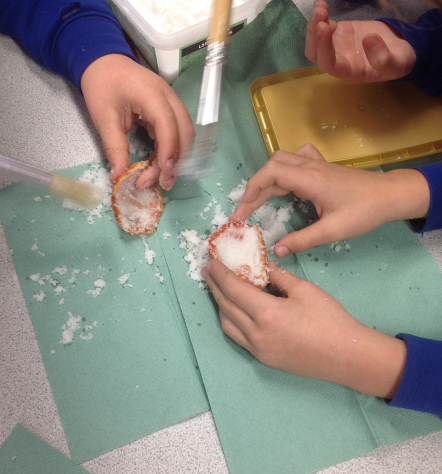
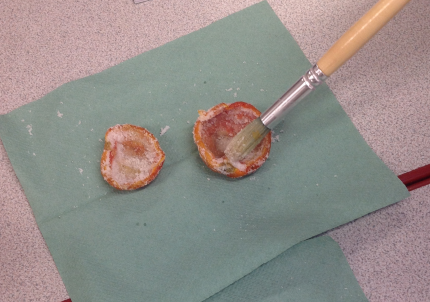
Year 3 began this half-term by looking at their exciting experiment from Autumn 1 – mummifying tomatoes! The children were very pleased to see that their preservation techniques had worked and the tomatoes had survived being buried in salt for 2 weeks. Following this, they have been learning about light sources and their necessity in our everyday lives. They have completed many investigations including classification of light sources and reflective materials. They also investigated patterns in shadows when manipulating the light source.

PE 

In Gym this half-term, the children in Year 3 have been learning, developing and applying flight and balance on the floor, on low apparatus. The children have been learning how to be supportive and patient with their peers during activities. We have been impressed with how hard the children worked on the challenges and how the children persevered. In Core PE, the children have been focusing on their balance through a sequence of moves using jumps and lands.

Geography

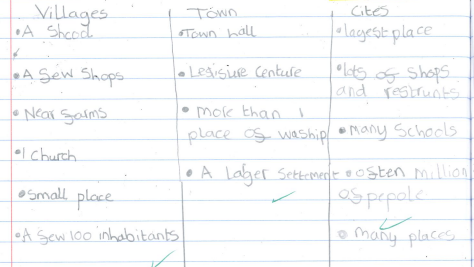
Our unit this half-term has been ‘Around the World’, revising our Year 2 knowledge on continents and countries. We have then learned about places in the UK and developed our understanding of different settlements such as cities, towns and villages. Then, we compared two UK cities (Norwich and Birmingham), and even challenged ourselves further by extending our map skills while learning about grid references.

Year 3 Autumn 2024 Ancient Egyptian Day

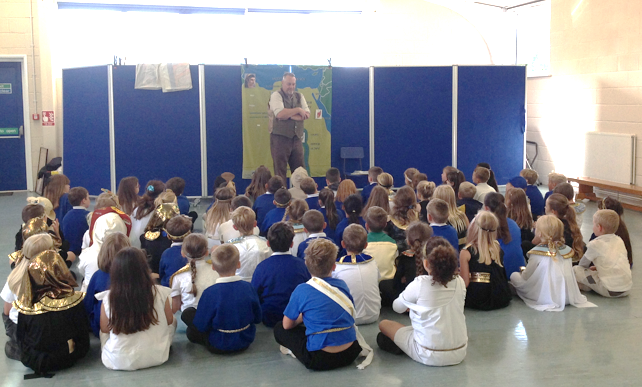
On Monday 16th September, Year 3 had a visitor from Portals to the Past to develop our understanding of Ancient Egypt. The visitor brought many resources with him that enabled us to visualise and use some of the objects in the same way as the Egyptians!

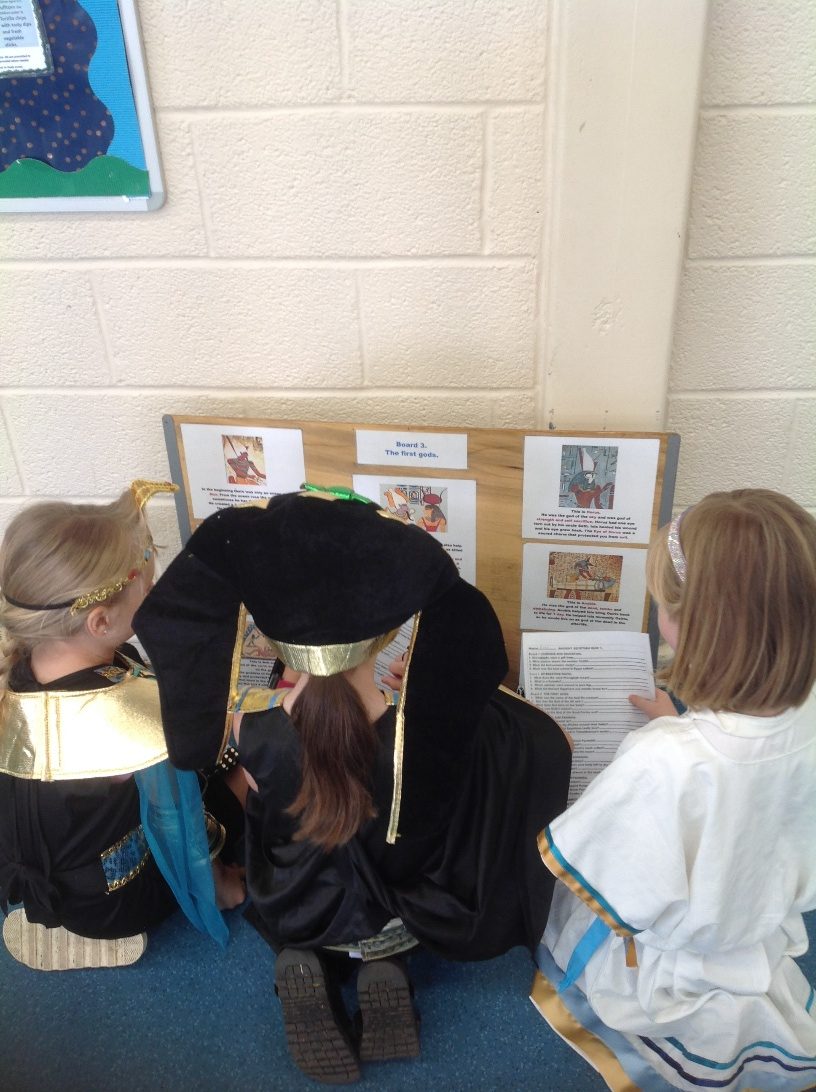
Firstly, the whole year group had an introductory talk about Ancient Egyptians and their everyday life. We discovered how Lower and Upper Egypt were united and all about the demise of Cleopatra – the last Pharaoh and how the Romans conquered the territory. Afterwards, we had a number of activities (artefacts, quiz boards and an Ancient Egyptian game) that each group explored throughout the morning.

From the exploration of the artefacts, the children discovered how enormous the ear piercings were for Ancient Egyptians and the stone decorative studs that they wore, as well as the make-up palettes and the reason the Egyptians wore black make up under their eyes – Ancient Egyptian’s answer to sunglasses! The children were able to give plausible explanations about what they thought the objects were for by considering the clues given e.g. A make-up palette for mixing make up on, a small pot used to hold kohl, amulets and versions of alabaster pottery.

From the quiz boards, we learnt about everyday life; the pyramids and how Cleopatra’s relationships caused the demise of Egyptian rule. We applied the skill of researching from the information boards and learnt some facts about many things, including why Gods and Goddesses were so important, but no longer worshipped in the same way. The things we found out on the information boards and from our visitor helped the children to conclude that Cleopatra’s love stories played a significant part in the demise of the Egyptian rule. It was interesting for the children to consider how invasions from other cultures, such as the Persians and the Greeks, had an influence on their faith and that once the land became Roman led, the land became Christian, then later Muslim and Egyptians ceased to worship their old gods and goddesses. We also learnt about the influence of some of these invasions on the language used, such as the word “pyramis” which translates to “wheat cake” as the pyramids reminded them of the shape of their wheat cakes with a pointed top.

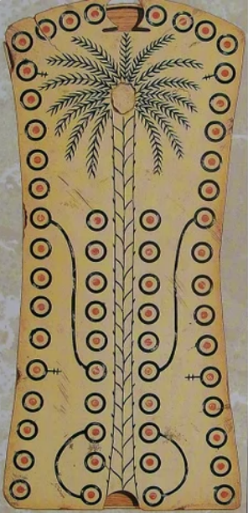
By playing the game ‘Hounds and Jackals’, the children brought alive the fun and excitement from the Ancient Egyptian period as this was a popular game, played in the poorest and the wealthiest households of the time.

The children were able to apply their historical understanding skills and discuss similarities to games developed and played today, like snakes and ladders! They were pleased and unhappy in turns about the snake and ladder on the board (the black curvy lines that you can see in the photo).

In the afternoon, we took part in and watched a role-played version of the life and death of a pharaoh, including his mummification! We watched the process that we had learnt and discussed the job roles of different people that were employed in the process. Watching this on a life size dummy allowed us to really visualise the process and consider the significance of this event in their culture on history.

Finally, we played a whole year-group game of Hounds Versus Jackals. The objective of which was to aim for the animals that would have been present in Ancient Egypt. Each animal had different points for their temperaments and importance in Ancient Egyptian life.

We so enjoyed seeing the children’s enthusiasm for learning and their joy at dressing up as Ancient Egyptians and archaeologists!

Year 3 Autumn 1 2024

History Day

Year 3 really enjoyed the journey back in time to Victorian schooling!

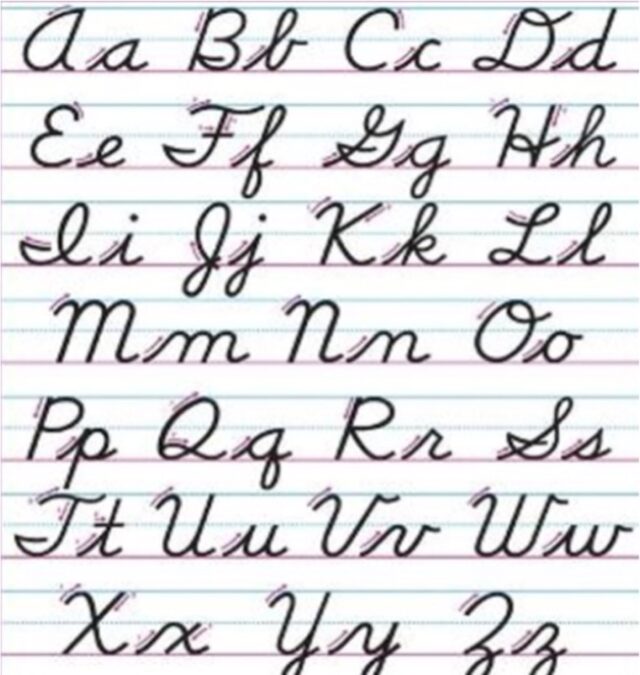
The children practised using cursive handwriting to form letters of the alphabet.  There was much hilarity and mirth at some of the letters, particularly – f, s, g, with the children insisting they could not find them on the board!

Once the year group had honed their skills with the alphabet, some of them copied a well-used Victorian school phrase:

Good, better, best,
Never let it rest,
Til your good is better,
And your better, best.

and some wrote their names using their best handwriting.

The children learnt all about corporal punishment – the Dunce’s hat and the cane.  We learnt how everyone had to be right handed and how left handed children were taught to write with their other hand. 

We explored the local area and looked at how it had changed over time – using maps of the local area.  The children were fascinated to learn that Toftwood Social Club was the original local school.

We also took part in a Physical Training session.  It was very different to our normal PE sessions and the children thought it was enjoyable – though they are pleased we have our PE lessons, not Victorian ones, twice a week!