In our Federation we aim for our children to develop a range of skills and knowledge that will enable them to ask geographically accurate questions, carry out enquiries and learn about the world in a way that deepens their understanding of the world. It explains where places are, how places and landscapes are formed, how people and their environment interact, and how a diverse range of economies, societies and environments are interconnected.
In the Early Years Foundation Stage children are given opportunities to develop their knowledge about the world through child centred and play led learning activities, including use of the outdoor environment. This is part of the Understanding the World area of The Statutory Framework for the Early Years Foundation Stage. Staff respond swiftly to the children’s own child initiated learning experiences.
Geography is planned and delivered at Key Stage 1 and 2, in line with the National Curriculum. We aim to enthuse pupils with an interest and awareness in other of cultures (including British values SMSC).
The threads have been introduced across the federation so that children build on their prior learning. Our federation threads are locational knowledge, place knowledge, environmental, physical and human geography and geographical skills and fieldwork. Each time a thread is revisited it reinforces their understanding. Children are encouraged to think like geographer through the variety of activities they are provided with.
Geography Autumn 20263
Reception
Reception children have been finding out about how birthdays are celebrated in other countries. They have also talked about other countries when finding out how Christmas is celebrated around the world
Year One
Our School Grounds
The children in year 1 explored their school grounds. They looked at aerial maps of the school and talked about the different rooms in school our school grounds.
In pairs, the children explored some of the areas of the school including the school field, hall and year 2 garden. They navigated through the school building to teach these places and when there discussed what they could hear, smell, touch and see, making some notes in a table.
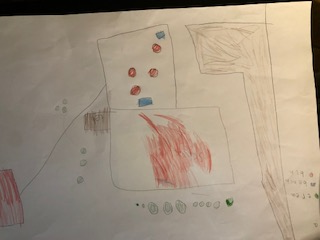
In groups, the children selected a way to make their own aerial view of the school. Some children used construction, some drew their own aerial map, some even made their own key and label.
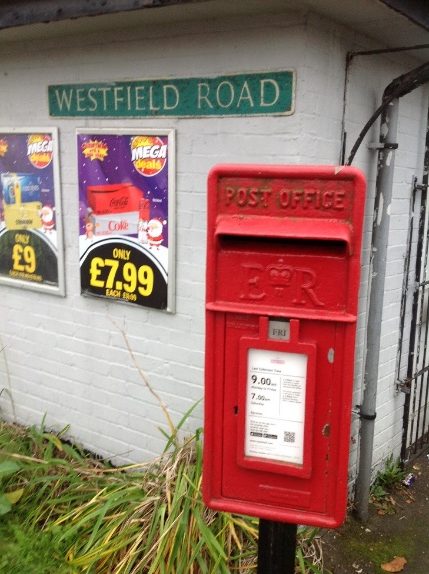
Walk Around Toftwood– See separate post
Year Two
Geography Thread – Locational Knowledge (knowing where places are in the world and where they are in relation to each other)
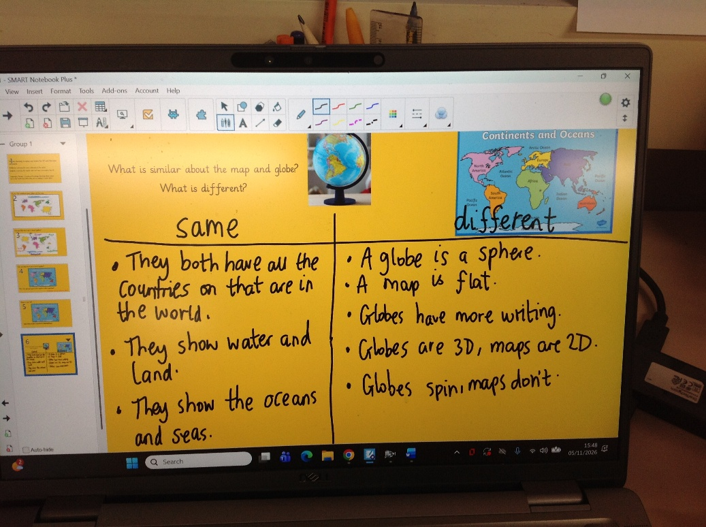
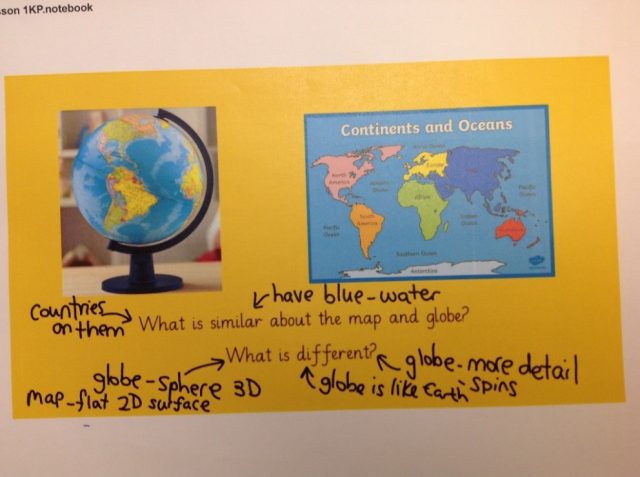
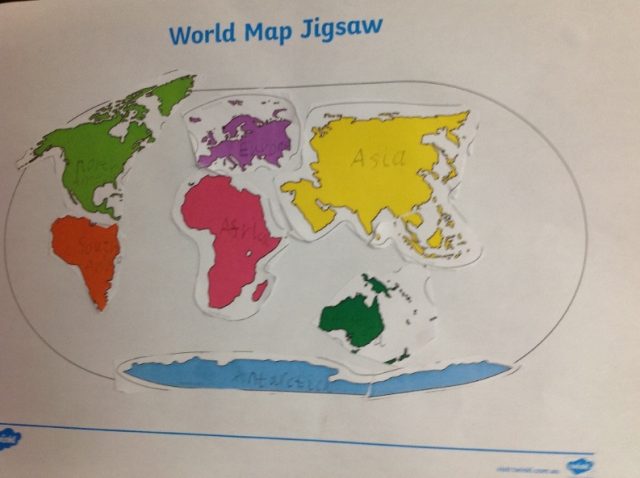
The children began our Geography learning by using globes and maps to locate the 7 continents. They compared globes and maps, talking about the similarities and differences between them. They looked at the map together and talked about the location of the continents and where they were positioned in relation to each other. The children then worked together to place the continents in the correct places on the map.
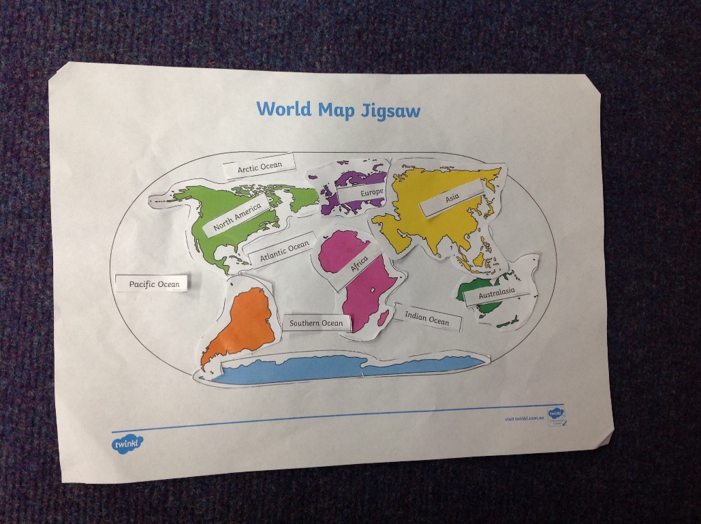
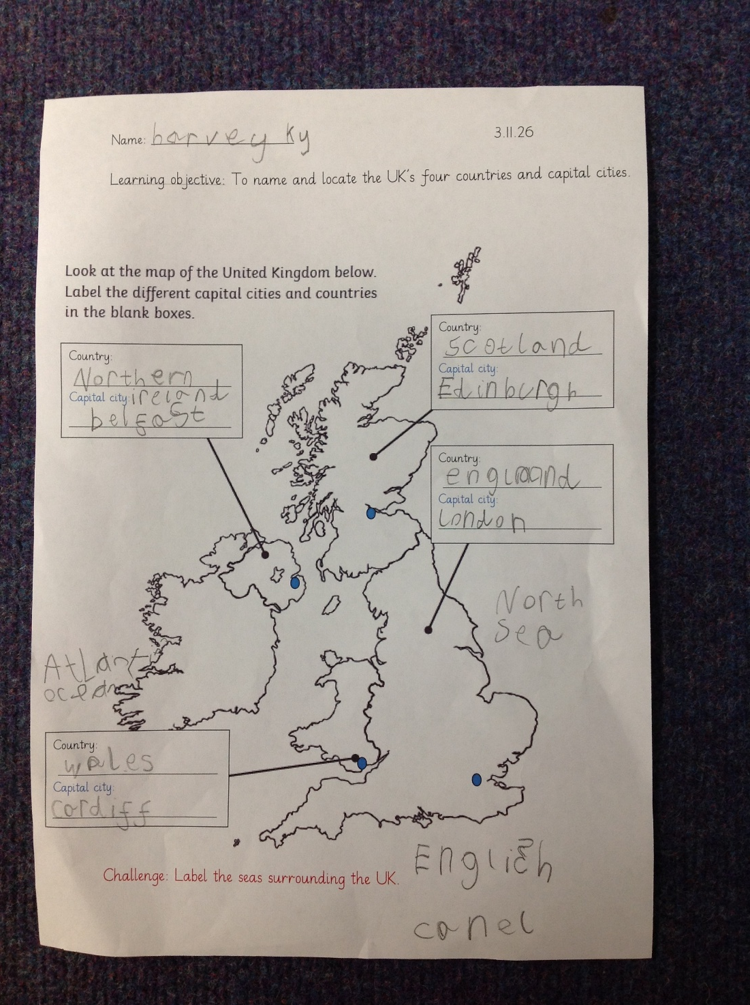
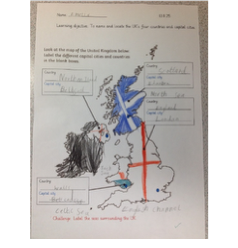
They then located the UK on the map and looked at this part of the world in more detail. They located the four countries of the UK, discussed the well known landmarks and features of them and identified their capital cities.
Finally, they learnt about the 5 oceans in the world. They learnt about what an ocean is and located the different oceans on the world map. They discussed their positions in relation to the continents they had previously learnt about. They used posters about each one to answer questions about the different oceans.
Year One Walk around Toftwood
6th November 2026
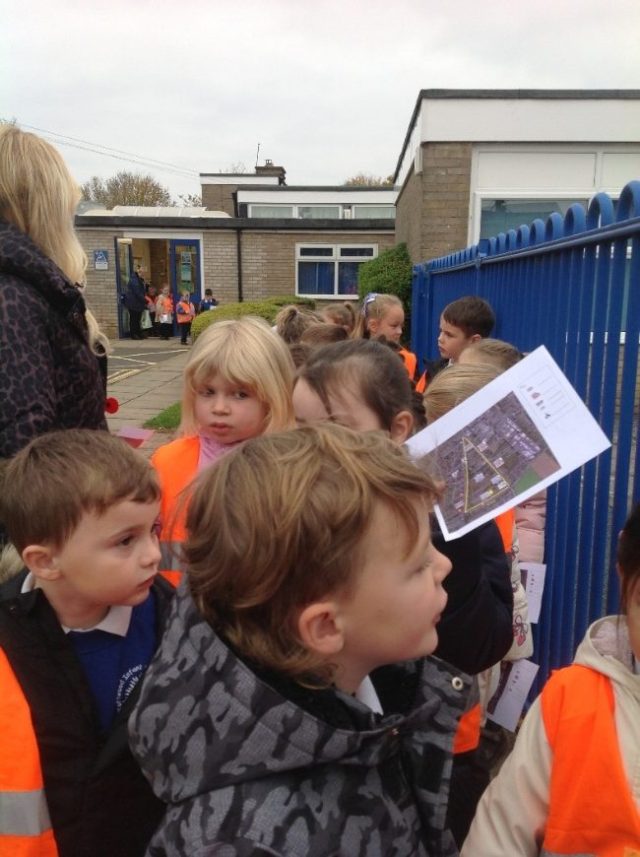
The children in year one have been exploring the local area of Toftwood. They began the week by looking at photographs and aerial maps of the local area to see what they could see and talked about the different things they knew about Toftwood. They looked at the route they would be taking and the map symbols.
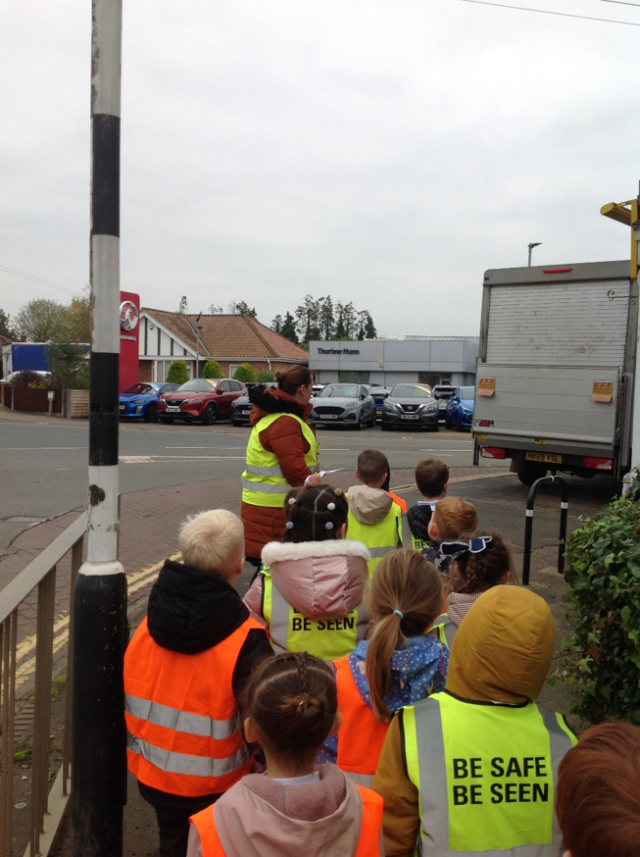
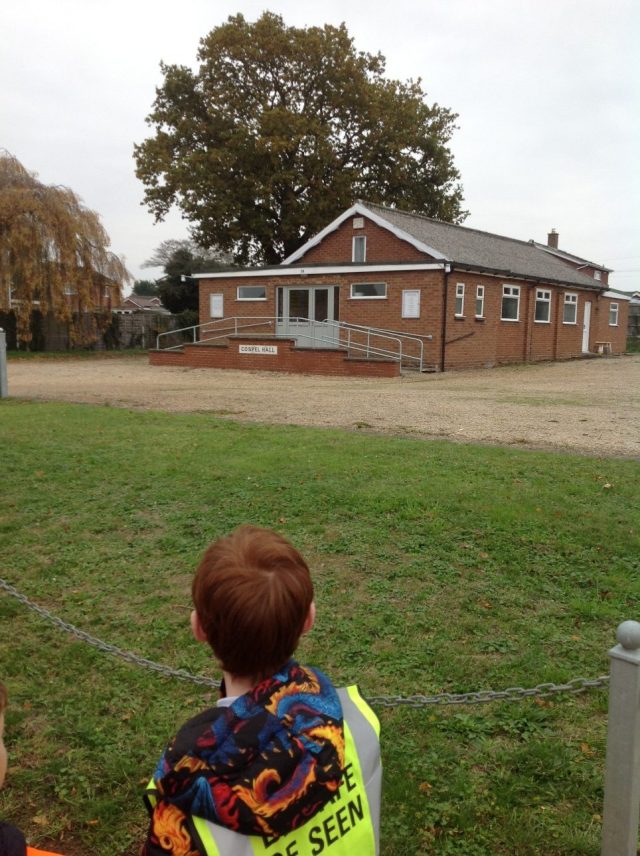
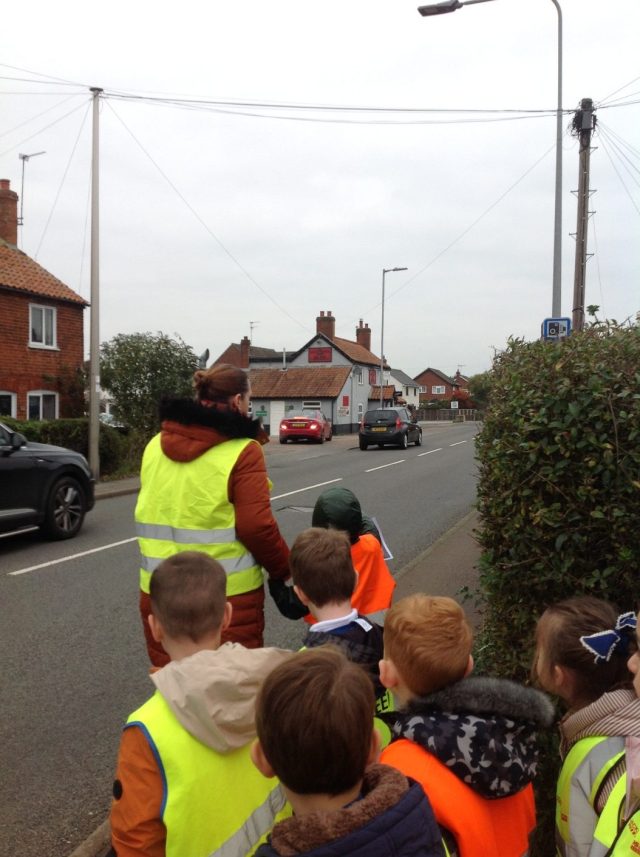
On Friday, the children went on a walk around Toftwood and identified different features in their local area including shops, chuches, houses, the village hall. They had their own maps and identified different places on the route. When the children returned to class, they recalled what they saw and talked about experiences of these places. ‘That’s the hall where I go to Rainbows,’ said G. ‘Here is Toftwood Junior School and that is the park I go to,’ said J, as he pointed to the features on the map. ‘That’s the pub where I go to Halloween and they have lots of balloons and it’s sort of like a cafe,’ explained another child.
Geography Summer Term 2026
Reception
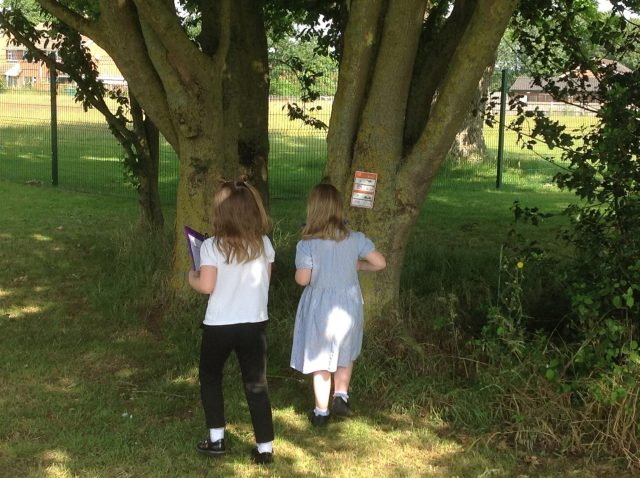
Reception children have been learning about maps. They used the orienteering routes outside and searched for the clues. They looked at the map of the route they took and discussed what they found. They shared the story Henry’s Map and recreated their own version of the story by visiting different locations around the school and creating their own maps. They also created their own pirate maps and drew on a route to the treasure, as well as considering time adverbials for the order of our route.
Year 1
The children in year 1 elaborated on their learning of Norfolk, to learn about the United Kingdom.
They learnt what the United Kingdom was an island nation made up of 4 countries. Then they learnt about the countries, their flags, locations, their capital cities and the waters that surround them! In groups, the children labelled a map of the United Kingdom and their capital cities.
They also focused on each country of the United Kingdom and learnt some landmarks, food and cities in each country. They then made their own flag of choice from the UK and they played a game based on which landmark was in what country.
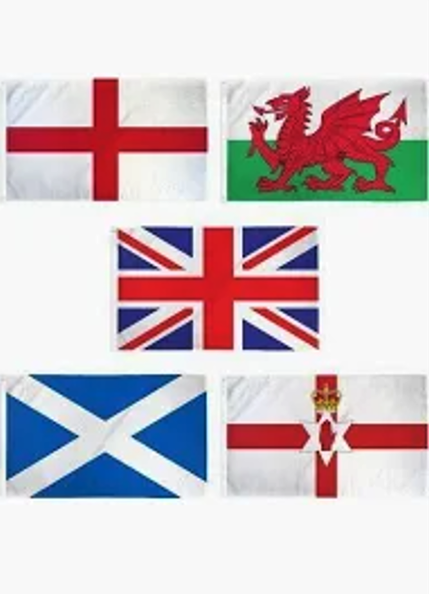
“We live in England” Marli
“In Scotland, they have the tallest mountain in the UK” Omari
“In Wales they have their own language and the capital city is Cardiff” Edie
Europe
The children in year 1 recapped where they live using google earth and thought back to previous lessons on the UK, Norfolk and Dereham. They listened to a song about the continents of the world and learnt what a continent is. They looked closely at our continent- Europe and learnt some facts. They discussed where they had visited or had family and found them on a map.
The children used their knowledge of 4 European countries and played the ‘European Four Corners’ game. At the end of the lesson the children came up with a list of questions they would ask if the met a person from another country.
The children learnt about the country Estonia through receiving information from a family who live in Estonia. They answered lots of the questions that the children had asked in the previous lesson. The children then compared Estonia to the UK by discussing their similarities and differences. They also enjoyed watching a video of some traditional Estonia dancing.
Orienteering – Geographical skills and fieldwork
The children used simple compass directions (North, South, East and West) and locational and directional language [e.g. near and far; left and right], to describe the location of objects around the school, and they then had to place them in the correct place on a quadrant. They worked in teams to do this. They used a map of the school to locate the objects. The children enjoyed working in teams to do this.
Year 2
Building on from work in year one, year two children revisited using a compass in the summer term. The children talked about why we might need a compass, where they have seen them and how to find north. They explored using the compass around school.
Child M ‘Wherever it’s wobbling and starting to set, that’s where north is.’
Child O ‘If you have a map, you can see where you’re going, like north, south, east and west.’
Geography- Spring
Reception
Reception children have been learning about people who help us in our community. This has included visits from the police force, vets, first responders and a bus driver.
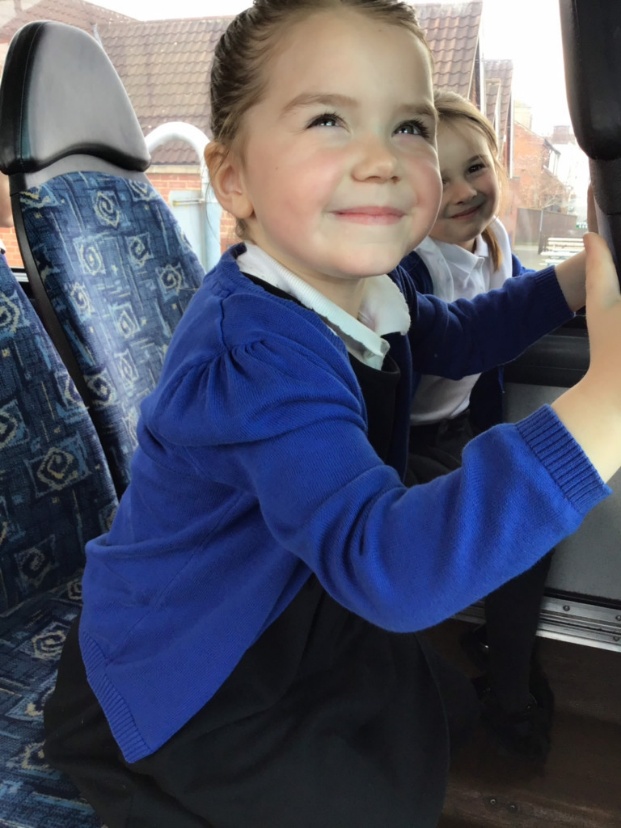
Children took a bus ride around the local area. They played bus bingo in which they had to search for a red car, a person riding a bike and a dog being walked. Children noticed lots of things on their journey.
“We’re going past my grandma’s house” E
“Our bus is bigger than that bus” A
“We’re on the A47!”
“That’s they way to my dad’s haircut”
Year One
The children in year 1 elaborated on their learning on the school grounds and Toftwood/Dereham to discuss the county that we live in Norfolk.
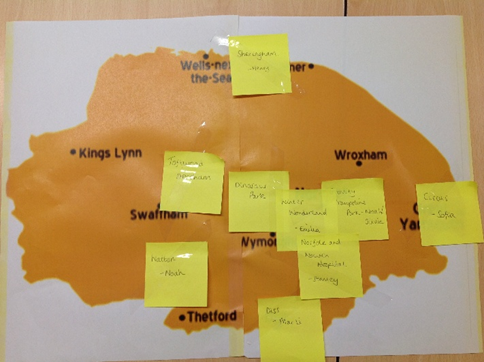
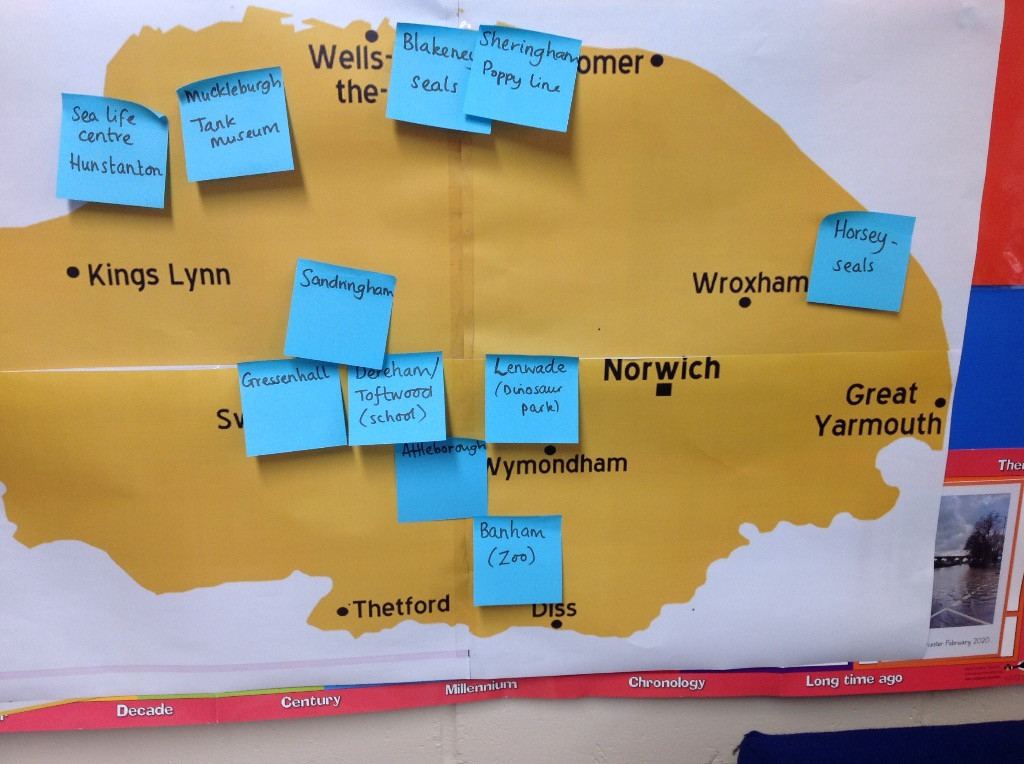
Using a large map, the children discussed places they know or are familiar with in Norfolk. Marli in CM1 said her Granny lived in Diss. Many children talked about how they had visited the beach at Cromer or Sheringham. Lots of children talked about visiting the Dinosaur park.
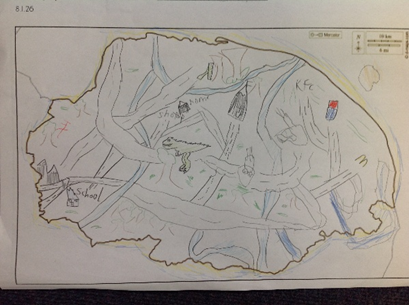
In our second lesson, the children identified human and physical features of Norfolk. We discussed terminology like town, city, coast, roads and rivers, even looking at these on maps. They then made their own maps and added places familiar to them and other points of interest likes shops and restaurants as well as roads, rivers and a coastline.
Year Two
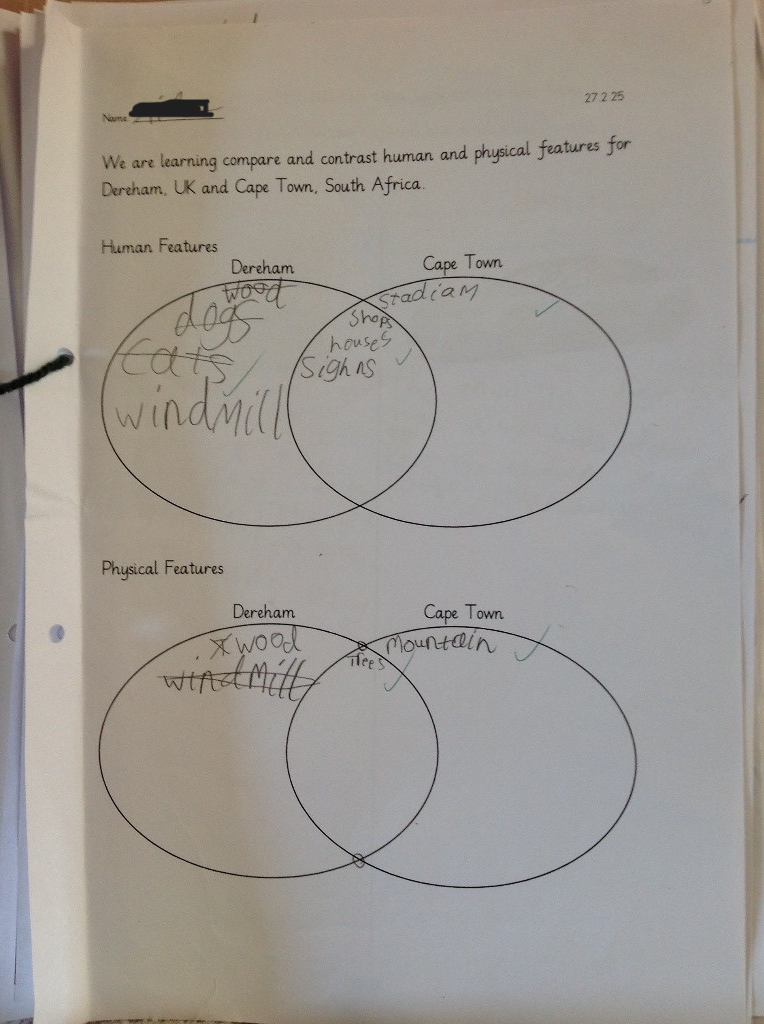
Year two have been learning to compare and contrast the human and physical features of Dereham with Cape Town, South Africa.
Geography Autumn 2025
Reception
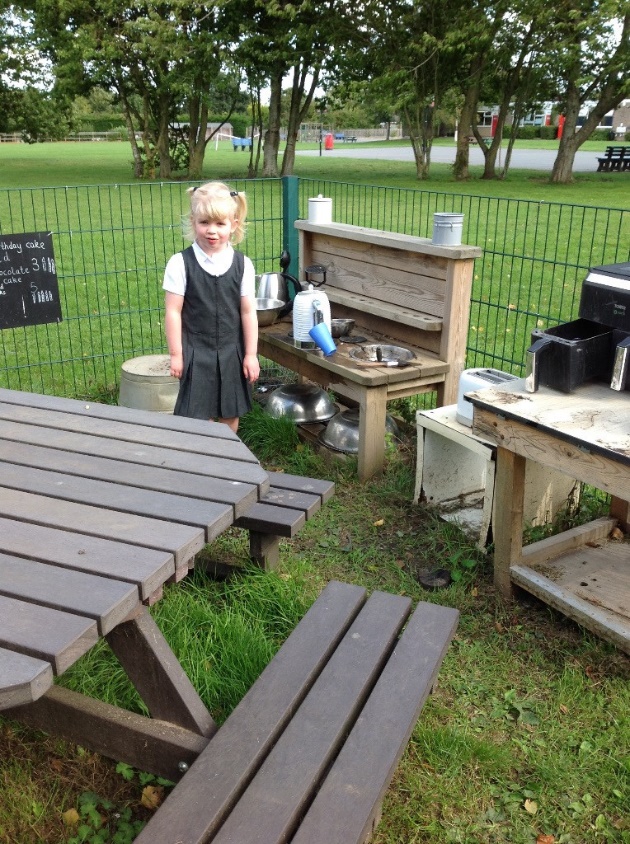
Reception children have been very busy exploring their immediate environment, including talking about animals and plants in their outdoor area, which is known as ‘Ted’s Den’. They used google maps when discussing where they live. They have also talked about other countries when finding out how Christmas is celebrated around the world.
Year One
In autumn 1, the children in year 1 explored their school grounds. They looked at aerial maps of the school to see what they could see and talked about the different rooms that the school has as well as what we have in our school grounds.
In pairs, the children explored some of the external areas of the school including the school field, the pond area, the pond and the year 2 sensory garden. They navigated through the school building and discussed and recorded what they could hear smell, touch and see.
In groups, the children selected a way to make their own aerial view of the school. Some children used construction, some drew their own aerial map, some even made their own key and label.
In autumn 2, year 1 children explored their local area in Toftwood. They looked at maps of the local area to see what they could see and discussed the things they knew about the local area. The route for the walk was discussed and the children drew the expected route and added map symbols too.
The children went on the walk around Toftwood and identified different features in their local area including shops, houses, and the village hall. They were able to recall what they had seen and added features to their own maps.
Year Two
Year two children have been naming and locating the UK’s four countries and capital cities. They have also named and located the 7 continents and oceans.
Geography Summer Term 2025
Reception
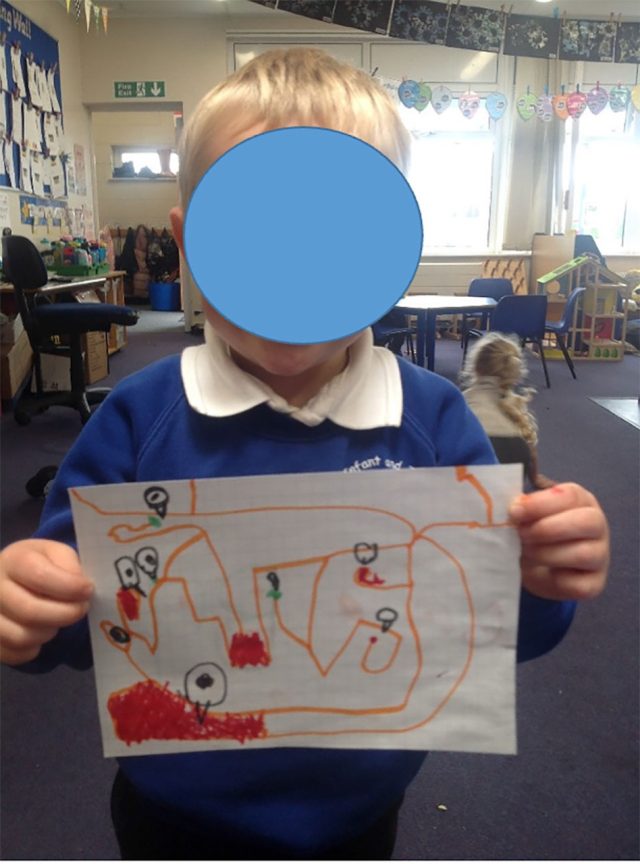
As part of the topic ‘Around the World’, Reception children have been learning about maps. They began the topic by looking at a plan of our school and used Google Earth to find our school and familiar places in the local community. They then explored further afield, searching for places of interest. During independent learning time, some children chose to create their own maps. The children also developed their sense of place and knowledge of jungles, oceans, and deserts.
Year 1
Year one children developed their knowledge of the 7 continents. The year one teachers made links with children and adults from a selection of countries. The children thought of some questions they would like answered about these countries. They were very excited to have their questions answered and find out more about life in these countries.
Year 2
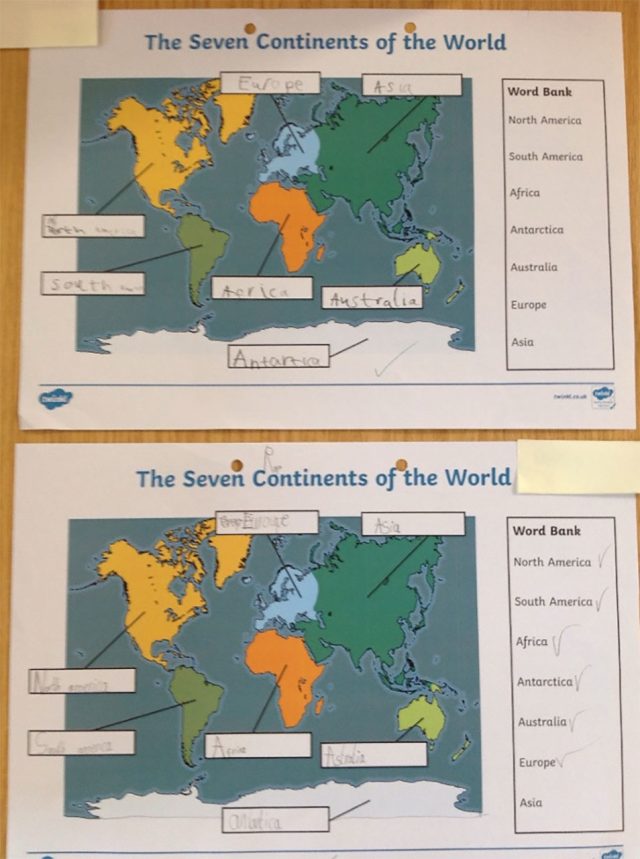
Year two located the 7 continents. They discussed the continents and also named the oceans.
Geography Spring 2025
Reception
During the topic “People Who Help Us” children found out about the jobs of members in our community. The children very excited to go on a bus trip with Konect buses. They got their tickets to travel on the bus and asked the bus driver some questions. They found out how the pedals work and what the bus drivers favourite bus story was. Davina challenged the children to find a red car, a lamp post, a wheely bin and a post box. The Reception children enjoyed their trip around Dereham Town! They saw lots of buildings they recognised including Tesco and the library. It was lovely to hear the children explaining their findings to their friends, including how to press the button to stop the bus.
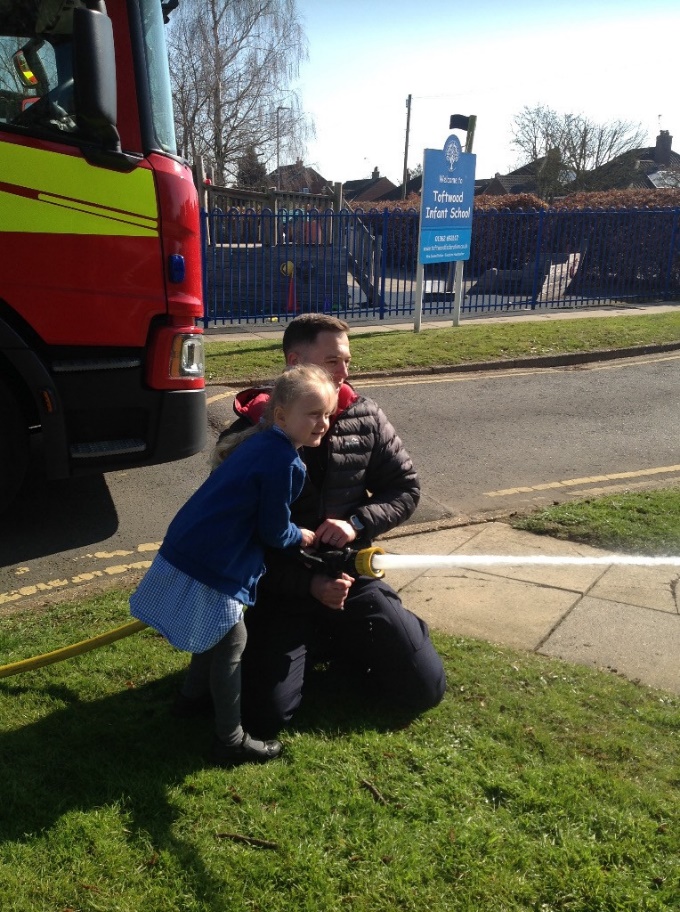
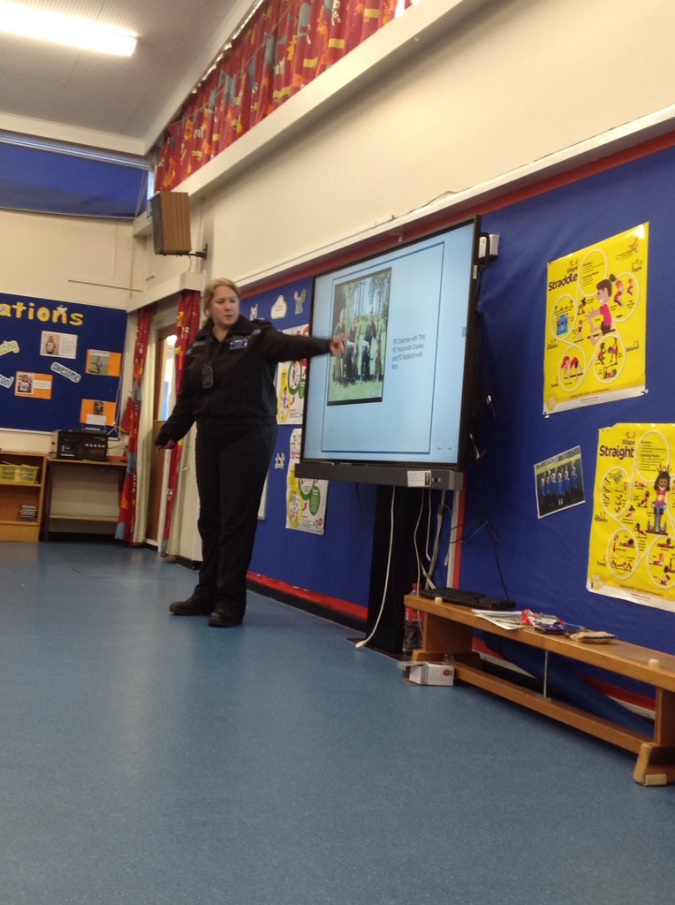
The police, fire service and dentist also visited Reception to talk about their roles in helping people and keeping them safe and well.
Year 1
Year one children have been learning about Norfolk. They have talked about places they have visited in Norfolk and identified the key physical and human features in Norfolk. They learnt some facts about Norfolk and created their own maps of Norfolk.

Year 2
Year two children have been learning to compare and contrast human and physical features for Dreham, UK and Cape Town, South Africa.
Year 3 Geography Summer 2026
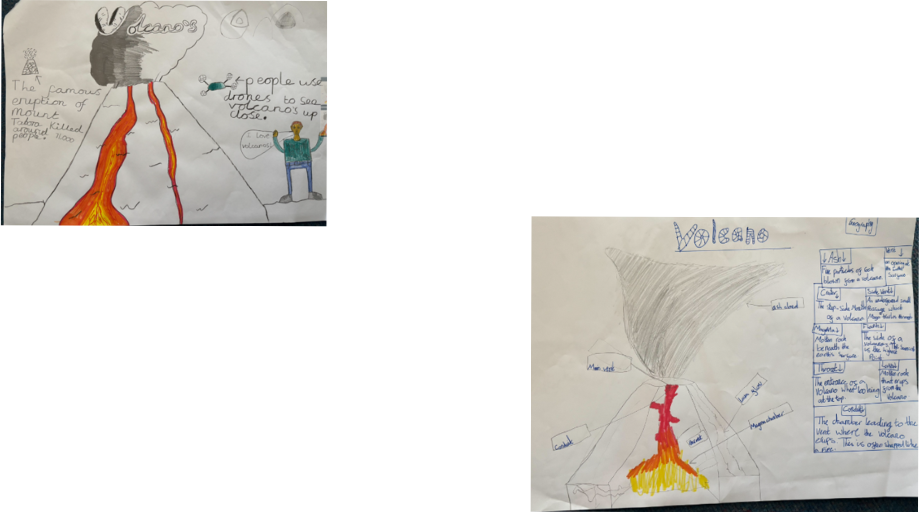
This term in Geography, children have been learning about volcanoes.
They explored the different types of volcanoes and learned about the key parts of a volcano, including the crater, magma chamber and vent. Pupils compared different volcanic regions around the world, identifying similarities and differences between them.
Children also investigated the differences between volcanic and non-volcanic areas, considering what life is like in each. They discussed the advantages and challenges of living near a volcano, linking this to their guided reading text to deepen their understanding.
This topic has helped pupils develop their geographical knowledge while encouraging them to think about how environments can shape people’s lives.
Geography Spring 2026
Year 3
The children have been learning about settlements.
They started by considering the history of settlements, building on their learning of prehistoric history and the needs of early settlers. They loved using Google Maps to research more about the history of place names, both locally and nationally. They then looked at how and why settlements have changed over time.
Next, the children have used maps and map symbols to explore settlements and what you might expect to see and do if you visited an area. The children built on their math skills, using their understanding of coordinates, to be able to use grid references to investigate settlements with either 4 or challenged to use 6 figure grid references.
The children then created their own maps of a settlement to consolidate their learning of amenities and infrastructure, by creating and naming their own map, which they thoroughly enjoyed. They also celebrated their learning by completing a multiple choice quiz, to check their understanding during this unit.
Year 5
Year 5 studied South America in the first half term. They looked at a variety of maps, including topographical maps. They learnt about the various contrasting climates that stretch across this massive continent. They also looked at human features as well as the physical features, ie populations, life expectancy, access to health. They compared the landscape features of South America with that of the UK. The children were able to articulate their understanding of the presence of mountains in South America using their prior knowledge of plate tectonics. The data that the children were presented with helped them to think like geographers, drawing on their breadth of knowledge. Regular quizzes, encouraged the children to realise that they had retained a lot of information, which they built on each week.
Our learning has had cross curricular links with our writing unit on diaries where we read the text ‘Romel’s Rainforest Home’. It is written from the perspective of a young Chachi Indian, named Romel, who lives in the rainforest in San Salvador, strengthening our depth of knowledge.
Year 6 Geography
This term in Geography, Year 6 have been deepening their understanding of how our world is organised, connected, and shaped by human activity.
The children have been exploring different types of land use, analysing how areas are designated for housing, farming, transport, industry and recreation. They have also investigated the major biomes of the world, comparing climates, vegetation and animal adaptations across regions such as rainforests, deserts, tundra and grasslands.
As part of our human geography focus, pupils have been examining whether people and their movements follow patterns, looking at migration, population distribution and the reasons why communities settle in particular places. They have also studied how settlements develop and grow, identifying patterns linked to natural resources, landscape and economic opportunities.
Building on this, the children have recognised that the UK trades with many countries around the world, importing and exporting a wide variety of goods.
Throughout all of these topics, Year 6 have been working hard to explain, reason and justify their ideas, using evidence to support their thinking and developing confidence in presenting their viewpoints.
Spring 2025
This half term Year 3 have focussed on Land use and the local area. The children have learned about the differences between urban and rural areas, and the features you can identify of each different land type. We initially learnt about the physical features that were key to early settlers – such as location of water and flat lands for farming/pasture land.
We then transferred out focus to how settlements had grown and the causes for growth, especially the industrial revolution. We then looked at our local area, creating a map of detailing how our local land is used by the community, complete with an informative key!.
Finally, we created our own settlement of the future, taking into account alternative energy sources and how the onset of technology might change future settlements and the needs of local people, utilising several skills including their knowledge of OS map symbols to produce a map of their future settlement,
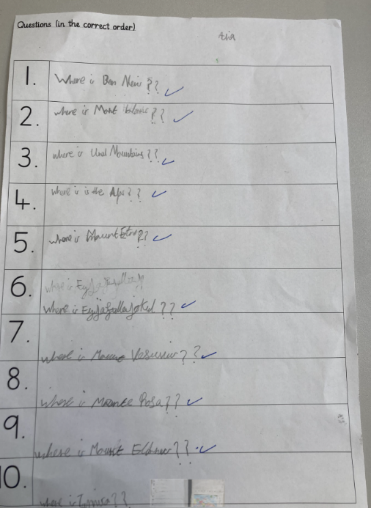
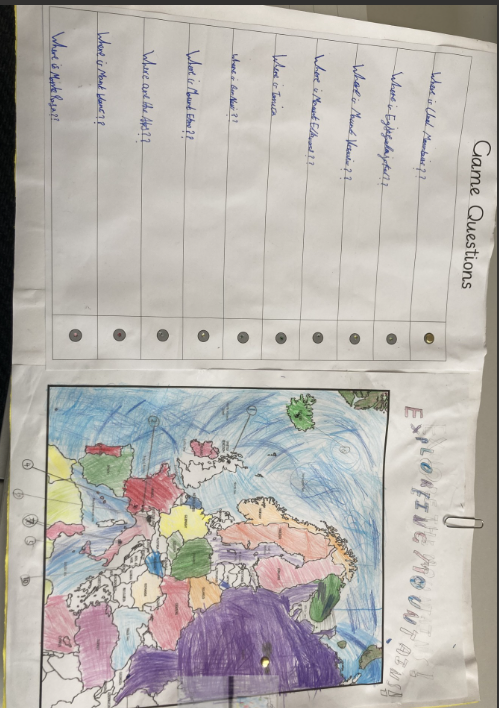
In the first half of the term, Year 4 began a new Geography topic. The children began by identifying and locating the countries in Europe. We learnt the definitions of a physical and human feature. We used Google maps to find human and physical characteristics of Italy, these included Mount Vesuvius, Lake Como and the ruins of Pompeii. We compared the human and physical features of the U.K and Italy. Our topic then moved on to finding the features of mountains which include a ridge, valley, summit and tree line. We researched how different mountains were formed and shared our new knowledge with the rest of the class. The children then designed a quiz game to test their own retention of knowledge, as well as their peers’.
Year 5 studied South America in the first half term. They looked at a variety of maps, including topographical maps. They learnt about the various climates that stretch across this massive continent. The understanding of mountains in South America, built on their prior knowledge of plate tectonics. They also looked at human features as well as the physical features, ie populations, life expectancy, access to health. The data that the children were presented with, helped them to think like geographers, drawing on their breadth of knowledge. Regular quizzes, encouraged the children to realise that they had retained a lot of information, which they built on each week.
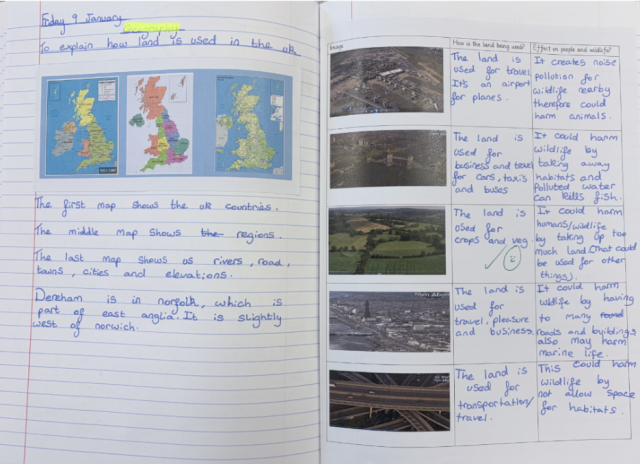
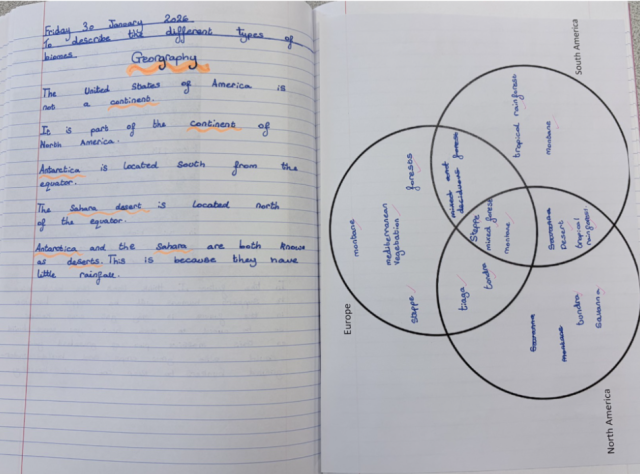
In year 6, our geography learning has focused on trading and economics. We examined and explained how land is used in the UK and discussed the affects that economic activity has on land use. We worked in groups to present information that we learnt about the high speed train HS2 and the positive and negative impacts this would have on the economy and environment. We identified and described the world biomes and where North America is in the world. We looked at Britain’s trading links with other countries and whether the items we use are imported or exported.
Year 5 Geography
In order to extend our love of geography beyond the curriculum, some children in Year 5 have written some letters to a school in Elbeuf, in France, to introduce themselves and to share their experience of school life and to make comparisons with children of a similar age. We have sent photos so they can see what our uniform and school look like.
They are excited to receive their replies.
In our next correspondence, we hope to ask about their local area and try to describe our area, thinking of places that tourists might like to visit.