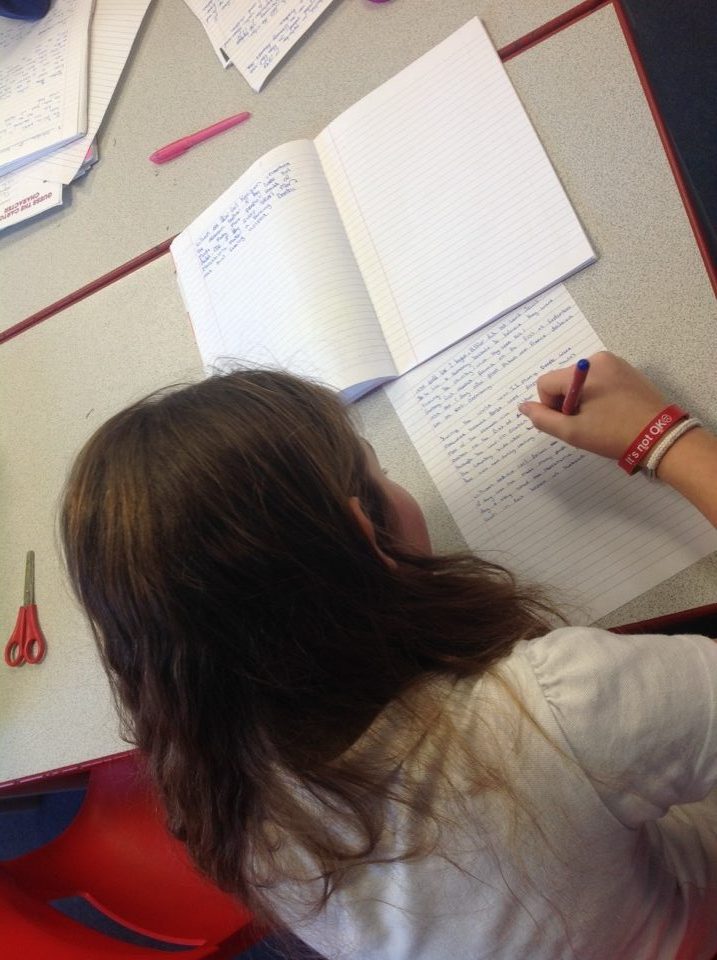
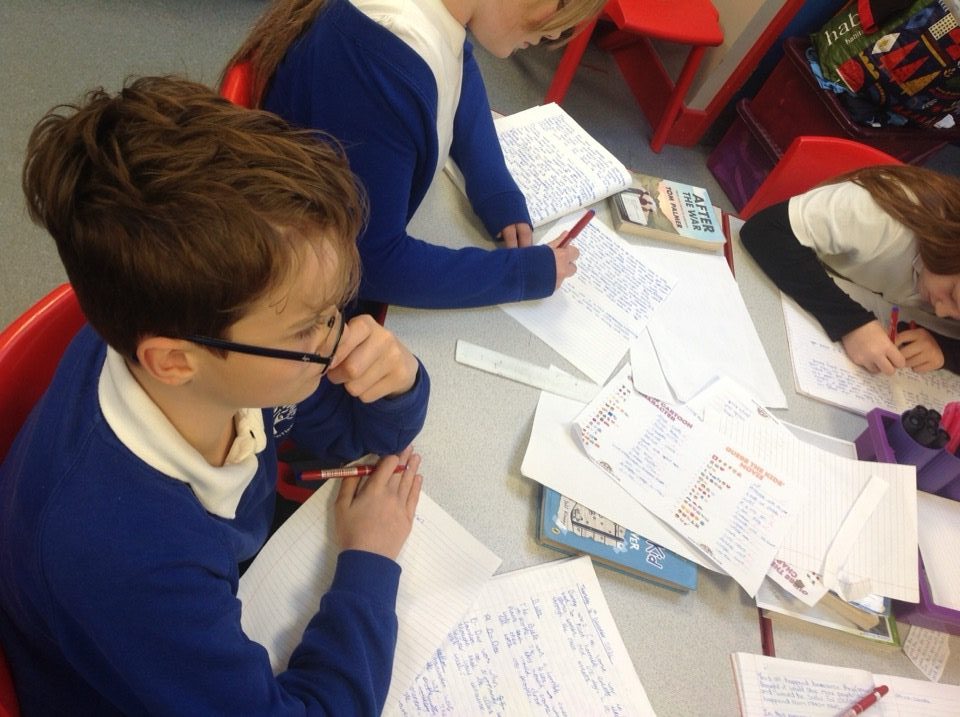
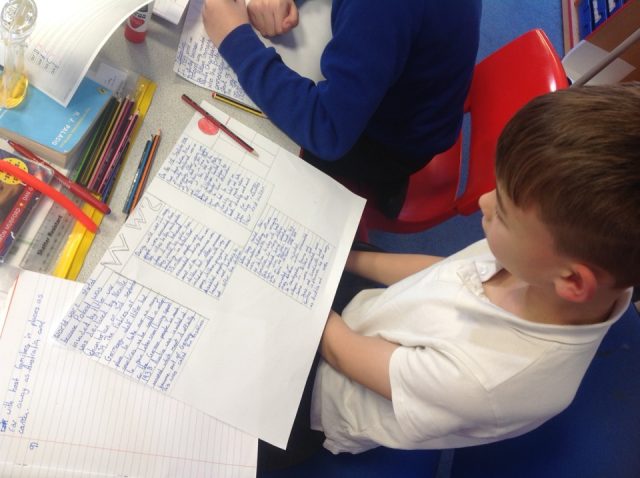
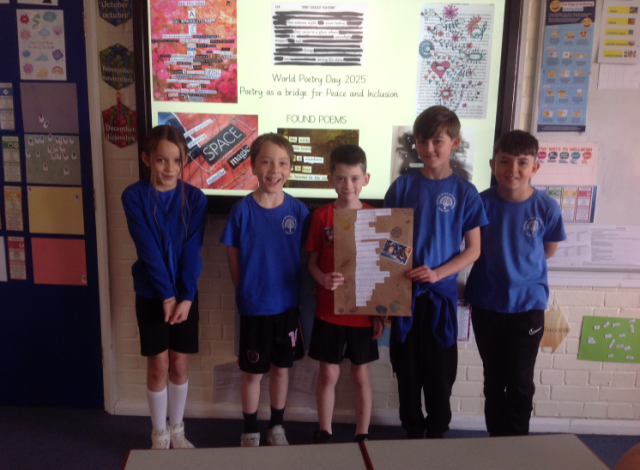
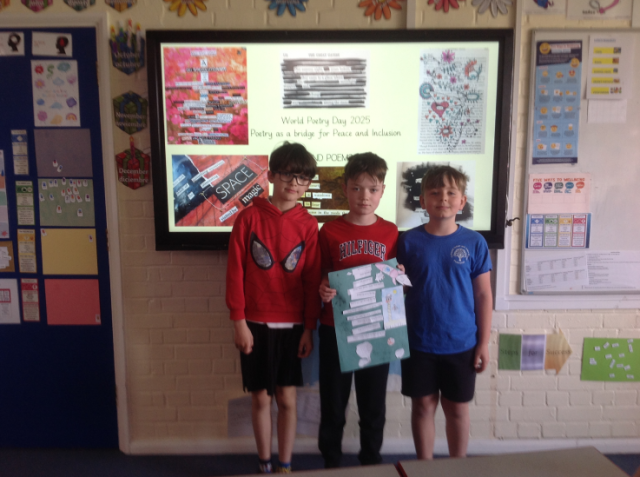
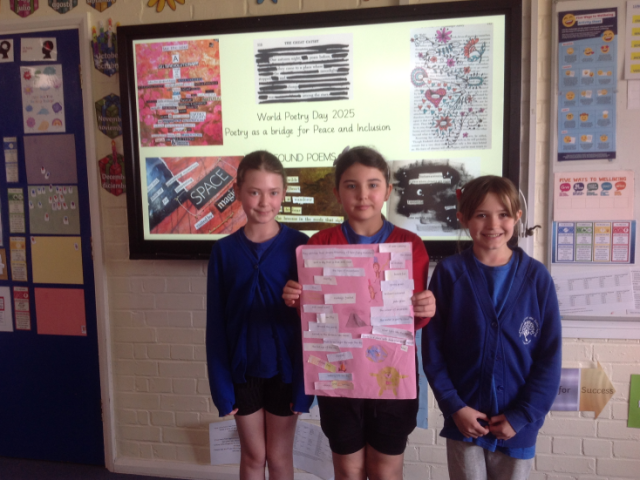
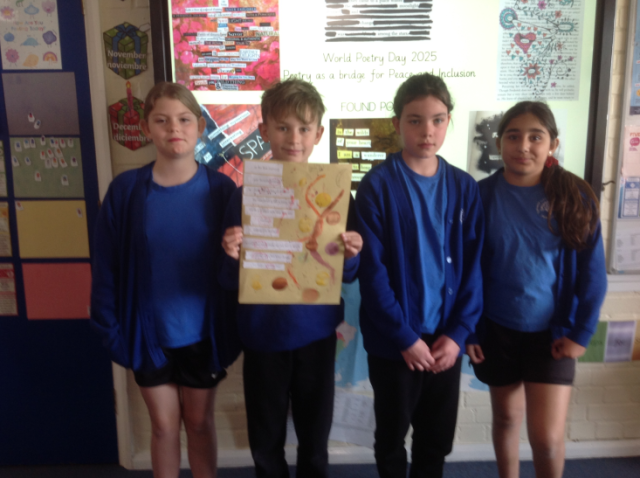
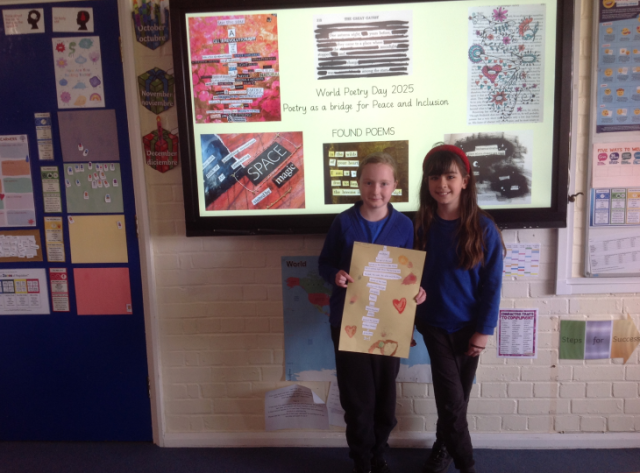
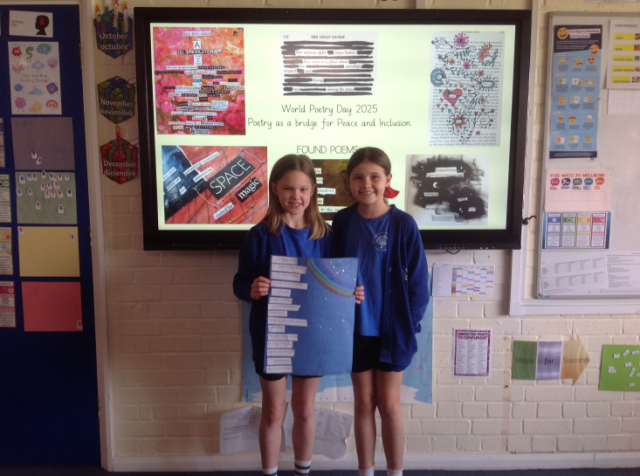
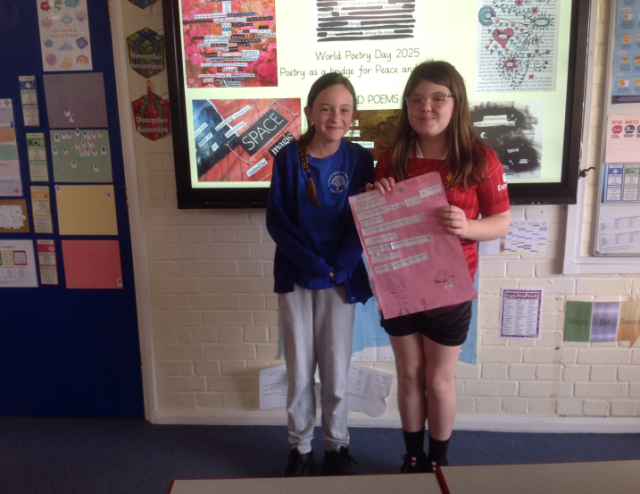
On the 21st March 2025 it was World Poetry Day, with the theme of ‘Poetry as a bridge for Peace and Inclusion’. To mark this occasion and celebrate poetry, Year 5 created ‘found’ poems, poems created using a collage technique to refashion words and phrases into a new poem. We used a selection of words and phrases from different texts we have studied in English throughout the year, making connections between different literary genres, cultures, people, experiences and places around the world. Our finished poems are a celebration of Space, Planet Earth and nature, as well as creativity and poetry. At the end of the lesson we discussed the process of making ‘found’ poems and what is special about poetry. Here are some of our quotes….
“It involves so many emotions.”
“It is fun to do.”
“People like creating it.”
“You can express yourself in a free way.”
“It is very creative.”
“It made me feel happy because I made something that made other people happy.”
“It was interesting to use language from our different texts.”
“We could recap what we learnt throughout the year and it brought memories back of what we have learnt throughout the year.”
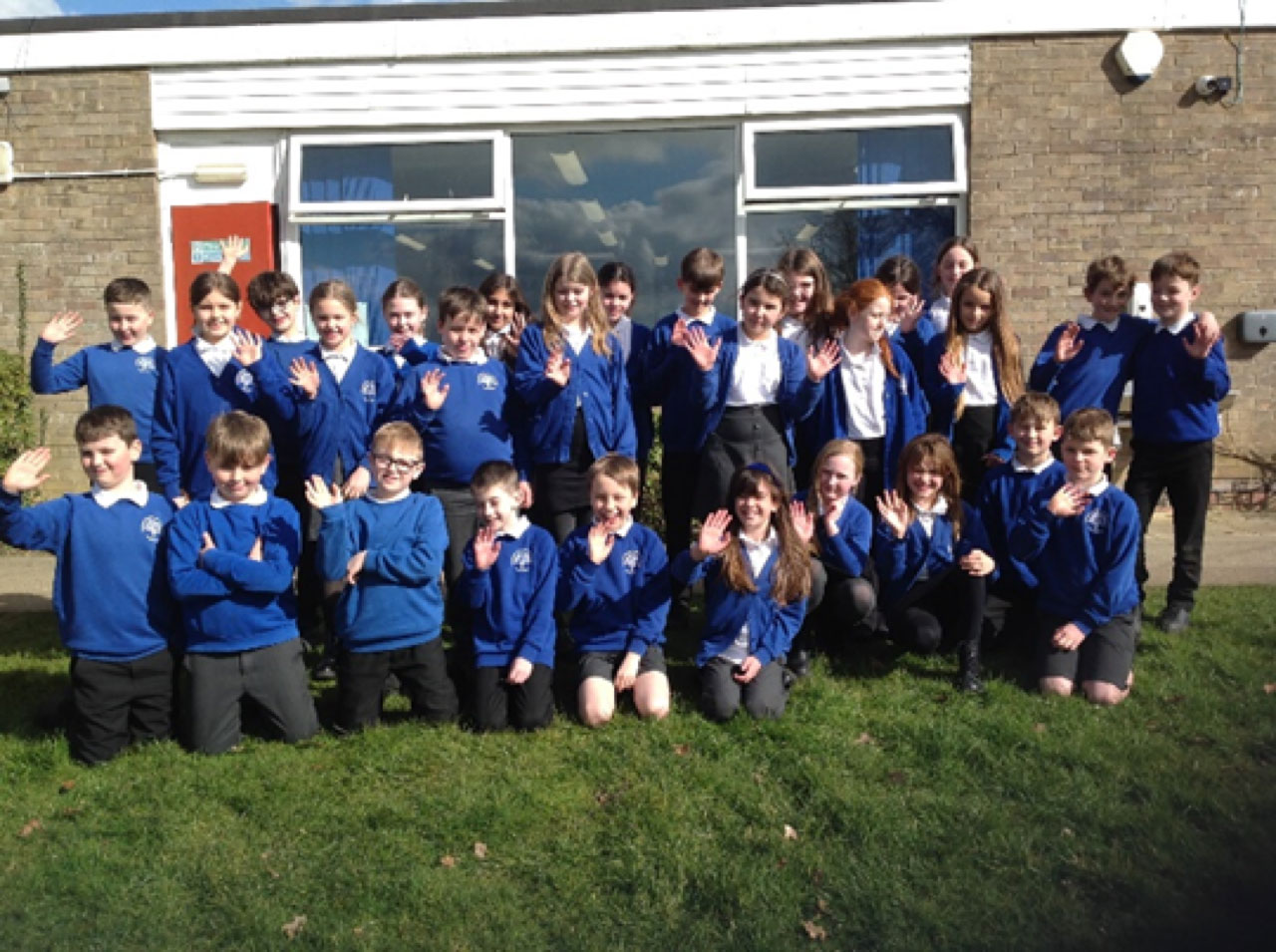
In order to extend our love of geography beyond the curriculum, some children in Year 5 have written some letters to a school in Elbeuf, in France, to introduce themselves and to share their experience of school life and to make comparisons with children of a similar age. We have sent photos so they can see what our uniform and school look like.
They are excited to receive their replies.
In our next correspondence, we hope to ask about their local area and try to describe our area, thinking of places that tourists might like to visit.
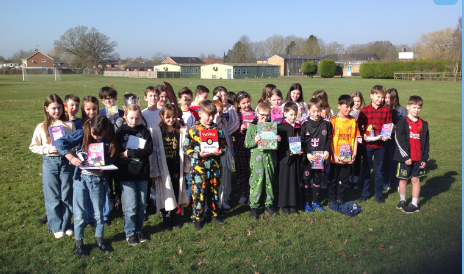
Year 5 had fun thinking about their favourite books and they gave recommendations to the class. They also made new book cover designs to promote these. Here are some of their quotes:
Sam recommended “The Last Kids on Earth” by Max Brallier because he enjoys all the adventures that they have.
Avery talked about “How to Train Your Dragon” by Cressida Cowell. He has read all 12 books in the series. He said, “each book gets longer and full of suspense.”
George is enjoying “Running Out of Time” by Simon Fox about a boy who is able to steal time and uses it do missions. He finds it quite funny at times.
Nevaeh enjoys reading Tom Gates’ “What Monster?” as she finds it helps her to sleep.
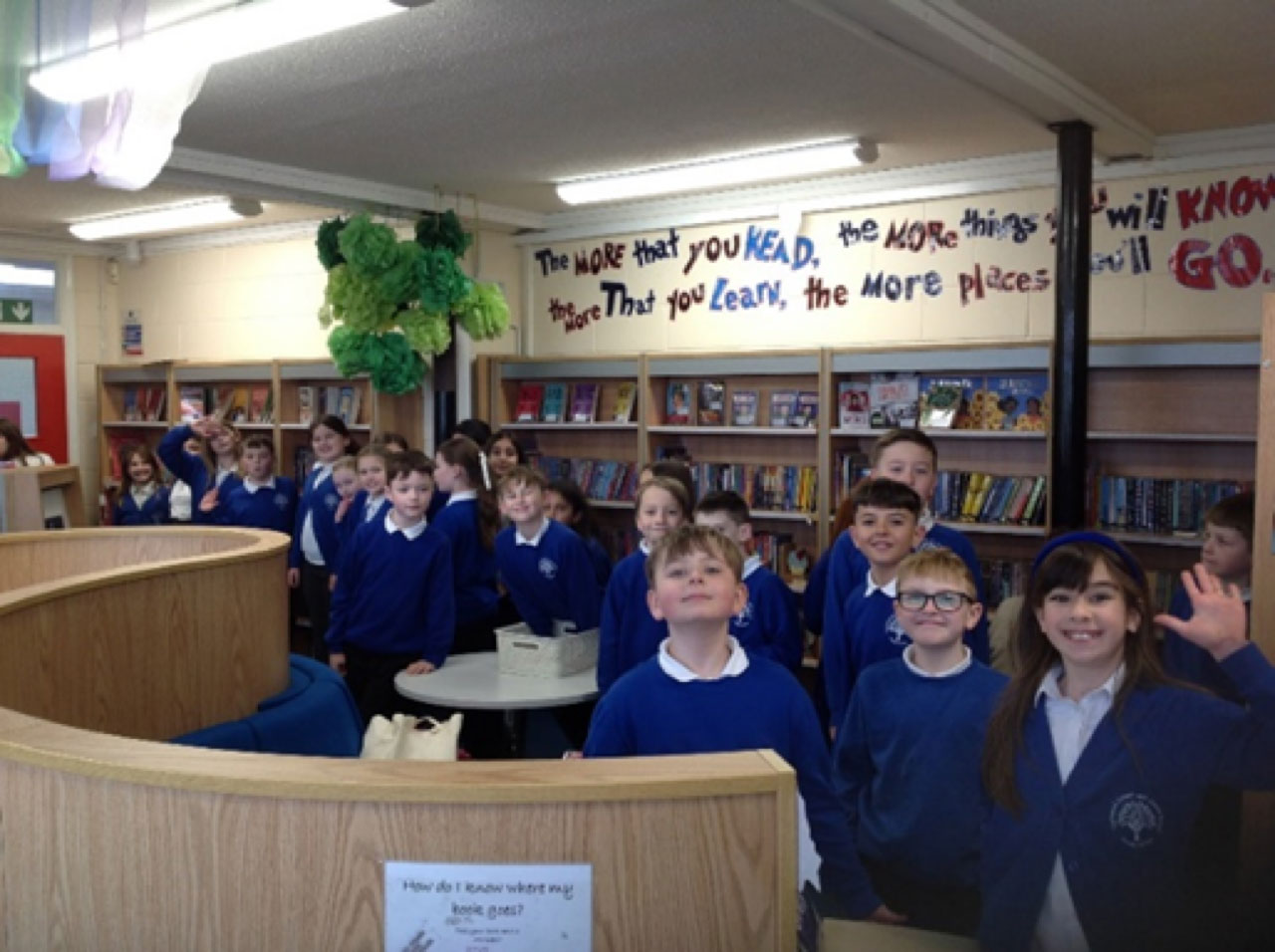
Hopefully we can enjoy browsing more genres of text when we next visit the library.
We also took part in a live quiz online, organised by the literary trust, with a football theme.
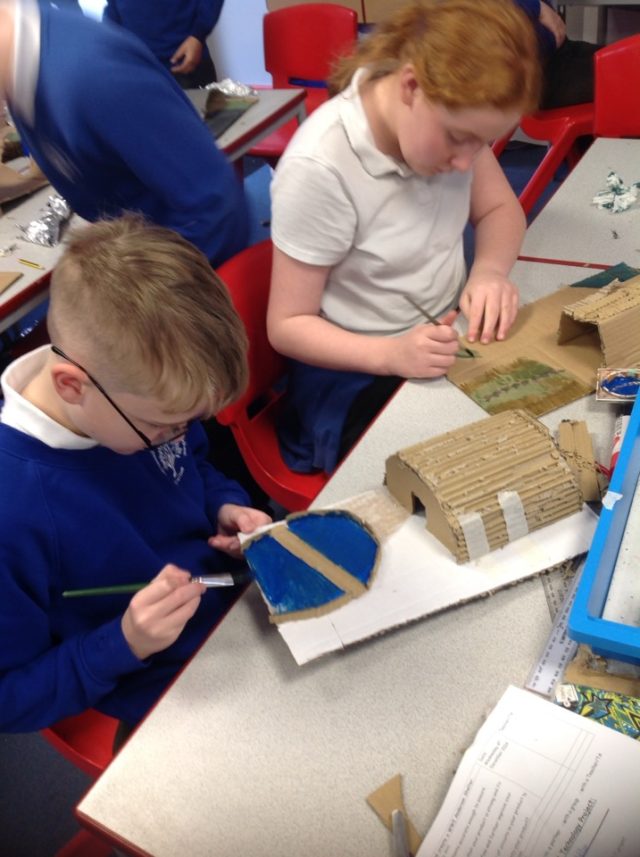
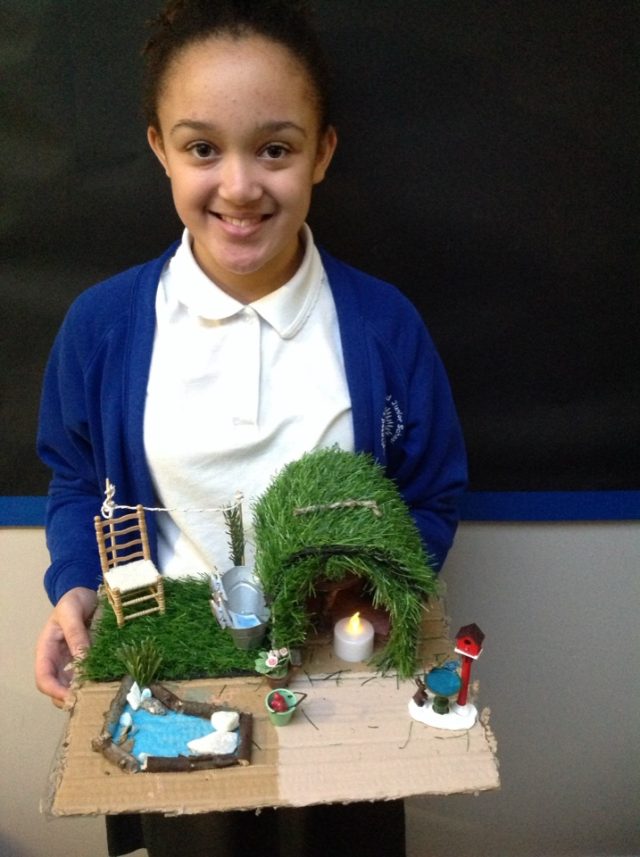
During the residential week, the children who were not attending completed a 2-page spread on their original creature creation based on the fictional planet Pandora, a 3D model diorama on a biome of their choice and a pop-art collage, building on and tying together their art work skills from year 3 and year 4.
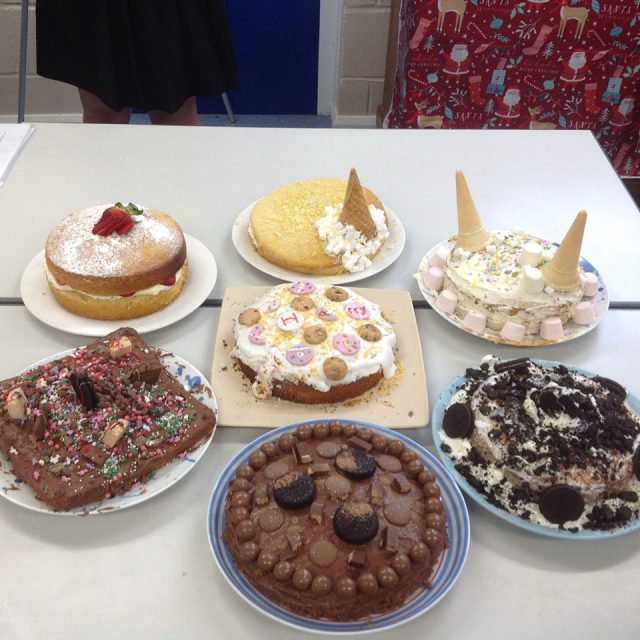
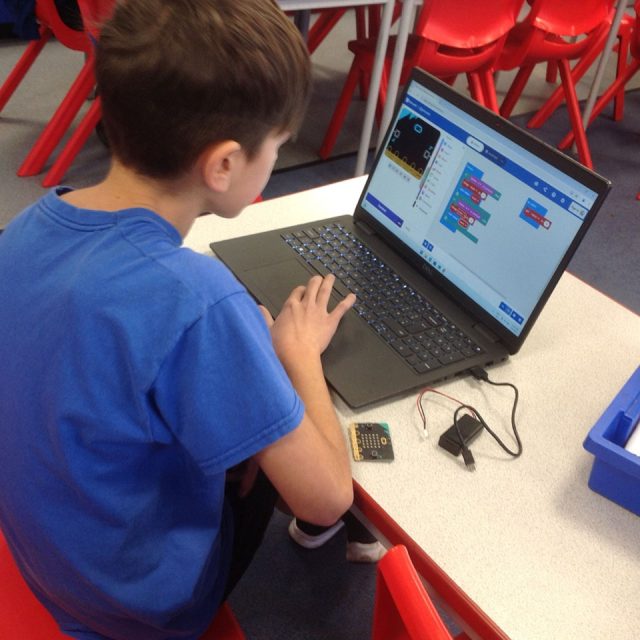
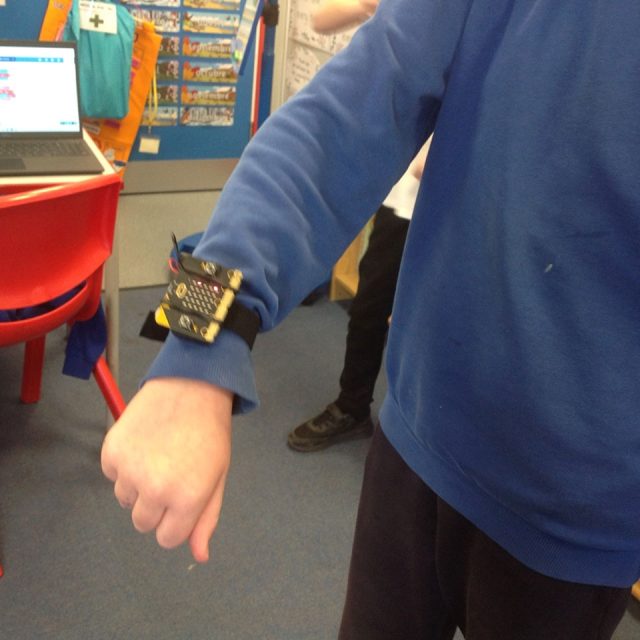
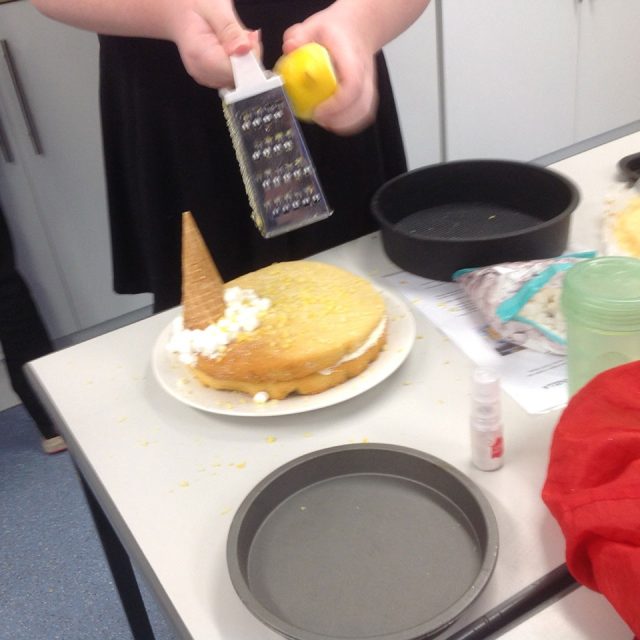
The children who remained based at school also completed a fitness watch project using Micro:bits to count their steps and a finished the week participating in a Bake off, completely led and taste-tested by the students.
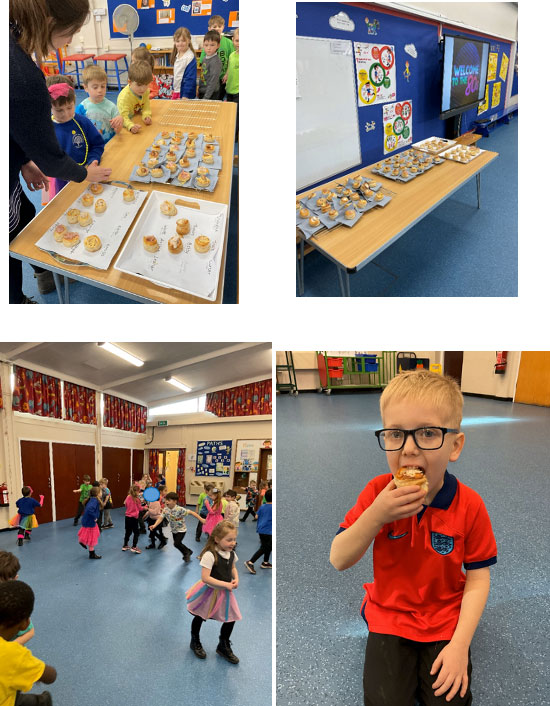
During this half term, the Year 1 children have been learning about the 1980’s in History, as part of learning about significant events within living memory. The children have enjoyed learning about technology, music and events as well as designing and making their own vol-au-vents for their own 1980’s party to mark the end of the learning.
Following last half-term’s History unit on Ancient Egypt, we built upon our prior learning to produce an excellent piece of descriptive writing about a character from ‘The Egyptian Cinderella’, a text which places a modern twist on the traditional tale! The children greatly enjoyed using a wide range of adjectives, nouns, prepositions, verbs and adverbs to provide detail and depth to their character descriptions. Then, we started exploring poetry, with a special Christmas theme this year – we have so loved reading the children’s Haikus! Their learning about Haikus will be particularly useful later in the year when the children revisit them in a later unit, with another exciting topic…
Maths
This half-term, we have completed our Addition and Subtraction unit and begun our first Multiplication and Division unit. Building on our prior learning on multiplication in Year 2, the children have developed their knowledge of repeated addition and using arrays to represent their multiplications, as well as using bar models to show their division calculations. We have also started to learn our times tables in earnest, beginning with the 2s, 5s and 10s, and progressing to the more challenging 3s, 4s and finally the 8s. Over Christmas, we encourage the children to keep up their excellent Times Table Rockstars practice – there is always a trophy at stake each week between the classes!
Guided Reading
In Guided Reading, we have explored two very different but exciting texts! We began our half-term by reading ‘The Velveteen Rabbit’ by Margery Williams. The children hugely enjoyed reading about his adventures in the nursery and his quest to become real. Their knowledge of the story helped them to write fabulous book reviews of the text! Following this, we have enjoyed reading ‘Hansel and Gretel’ by Anthony Browne, where we have continued to use our VIPERS skills (Vocabulary, Infer, Predict, Explain, Retrieve, Summarise). The children’s understanding of this fairytale will benefit them with next term’s learning, when we explore how to write a fairytale as one of our upcoming English units!
Art
In Art, the children have begun to explore what a collage is! After they learned about the famous collage artist Susan B. Schenk, the children designed and created their own Christmas cards using the art techniques learned.
RE
Year 3 participated in a drop down R.E. day to learnt more about Islam and explore the big question: ‘What difference does being a Muslim make to daily life?’
The children learnt about the religious relics that are prevalent in the Islamic faith and we discussed their purpose and uses. The children then had the opportunity to explore them respectfully. They were fascinated by the geometric designs of the Islamic prayer mats and the patterns that adorned the many mosques that they saw in the presentation and they used these for inspiration in creating their own Eid Mubarak cards. They learnt about Eid and how it is an important festival within the Muslim world.
Building on from their knowledge of Islam from the Infant school, they learnt about the Five Pillars of Islam and how these were pivotal in the Islamic faith. Some children created a poster, some a leaflet and some added to a booklet.
They took part in a quiz to demonstrate their new found knowledge of Islam and ended the day by creating a mind map to answer the big question.
Computing
In Computing, the children have been introduced to networks and have been exploring each week how they operate. This has included learning about the features of a device and considering the inputs, processes and outputs a device may have. The children have consolidated their understanding of the purposes of different digital devices, as well as comparing artwork created in real life to one created digitally.
Music
In Music this term, children have been continuing to learn tunes on the ocarina. They have learned the traditional carols Good King Wenceslas. They have been encouraged to look at the sheet music, comparing the two time signatures (Common Time and 3/4) and taking notice of the different note lengths of crotchets and minims and how that changes the rhythm. We are really impressed with their developing dexterity and musicality as they have got to grips with these songs! The children have also been very keen to take part in the Christmas performance for their grown-ups. They sang the following songs: ‘Twelve Days of Christmas’ (Traditional and Rock), ‘Santa is Coming to Town’, ‘Merry Christmas Everyone’, ‘White Christmas’ ‘Feliz Navidad’ and ‘I want a Hippotamus for Christmas’ they completed their performance with a beautiful rendition of ‘Twas the Night before Christmas.
MFL
Year 3 have been learning how to count to 20 in Spanish, working collaboratively in groups to assemble a challenging puzzle to reinforce their learning. They have learned to ask how old someone is and to answer with their own age. They have continued to practise holding simple conversations using vocabulary they have learned. The children have enjoyed playing games and activities on Purple Mash to strengthen their recall of Spanish numbers. Children looked at some Spanish Christmas traditions and compared this with their own celebrations.
Science
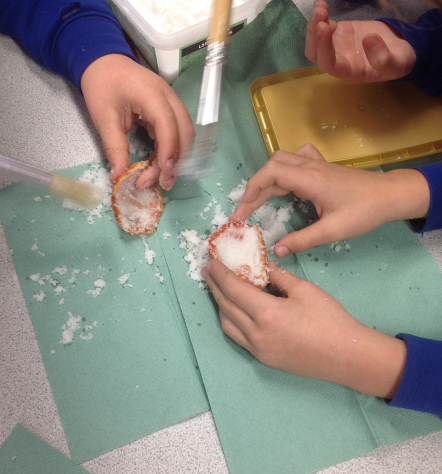
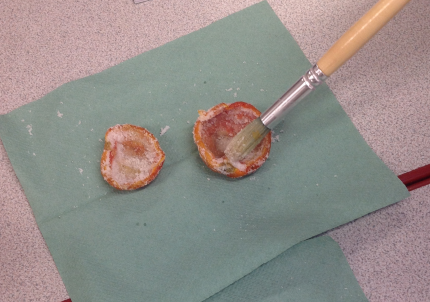
Year 3 began this half-term by looking at their exciting experiment from Autumn 1 – mummifying tomatoes! The children were very pleased to see that their preservation techniques had worked and the tomatoes had survived being buried in salt for 2 weeks. Following this, they have been learning about light sources and their necessity in our everyday lives. They have completed many investigations including classification of light sources and reflective materials. They also investigated patterns in shadows when manipulating the light source.
PE
In Gym this half-term, the children in Year 3 have been learning, developing and applying flight and balance on the floor, on low apparatus. The children have been learning how to be supportive and patient with their peers during activities. We have been impressed with how hard the children worked on the challenges and how the children persevered. In Core PE, the children have been focusing on their balance through a sequence of moves using jumps and lands.
Geography
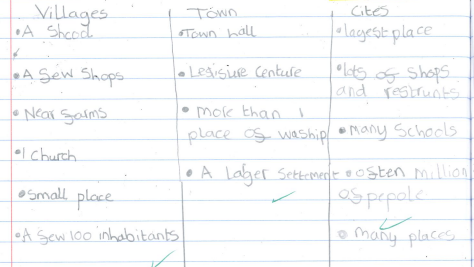
Our unit this half-term has been ‘Around the World’, revising our Year 2 knowledge on continents and countries. We have then learned about places in the UK and developed our understanding of different settlements such as cities, towns and villages. Then, we compared two UK cities (Norwich and Birmingham), and even challenged ourselves further by extending our map skills while learning about grid references.
In Autumn 2, we focussed on different stimuli for writing and watched two short films, the first called The Alchemist’s Letter. This generated a lot of creative writing focussing on imagery and writing from the point of view of a different person. The second was called Treasure and produced another piece of creative writing in a diary entry. The children had to use their skills taught through Guided Reading to infer the life of the character before the point we were shown. This piece of work focussed on feelings and the use of figurative language such as similes, metaphors and hyperboles.
In order to complete our work on the Second World War, we wrote a non-chronological report on its history and events. We pulled together our knowledge of the lead up to the war, everyday life for ordinary people, including evacuation and rationing, and the Holocaust. We then wrote a full, illustrated double–page report on this. The children were very enthusiastic about this piece of writing and have really enjoyed this cross-curricular piece of work, combining facts taught in History and our fictional story book “When the Sky Falls”, considering the perspective of an evacuee child!
Maths
In Year 6 we have been consolidating our knowledge of place value, the four operations and fractions. We have investigated and deepened our understanding of place value by applying reasoning and problem solving skills to numbers up to 10,000,000 and to 3 decimal places. We used concrete resources such as counters and base 10 to ensure we had a firm understanding of place value before using formal written methods, including considering their use as amounts less that one to represent a decimal. As part of our learning on the four operations, we developed our fluency in using formal written methods while solving many problems. This half term we were introduced to long division. We persevered with the processes of long division and challenged ourselves to apply this knowledge to multi-step problems. This allowed us to think creatively and spot patterns in calculations. The children applied their knowledge of the four operations to calculating with fractions. We discussed key vocabulary such as denominator and numerator which helped us to focus our working out.
PE
In PE we have been doing Real PE focusing on our personal ball skills through reaction and response activities. We have used these skills during our cricket sessions whilst also learning the rules and complexities of this sport. This will be revisited in the summer term (alongside an after-school club) before we enter the WNDSSP organised cricket competitions hosted at Norfolk County Cricket ground.
In the final half term we have looked to continue to build our skills of balance both individually and as a group. Displaying our growing understanding of counter-balance to support this. We have utalised these skills during ‘crossing the river’ teamwork games and also when the weather has been bad during dodgeball sessions.
Science
In Science this term, by learning about animals, including humans. We learnt about the circulatory and digestive systems and carried out an investigation into how exercise affects our heart rate. We found that after 2 minutes of continuous exercise our heart rates speed up to help oxygen reach our organs more quickly. We also learnt about how to live a healthy lifestyle, including diet and exercise and what effect this can have on our health. Over the course of a week, we did regular exercise each morning to see if this helped us to be more alert during our lessons. Most of us found that we did find it easier to concentrate in our morning lessons after five minutes of continuous exercise.
In the second half of the term, we have been learning about light. We have carried out lots of practical investigations to explore refraction, reflection and the spectrum. We have also looked at how shadows are created and how these can be manipulated depending on where the light source is in relation.
History
Year six have been learning about World War 2 as part of our history curriculum. We started our topic by learning about the events that led up to the war, and have spent the first half term learning about how life changed for ordinary people during the war period, especially during The Blitz. We have been reading Carrie’s War which has helped in our understanding of evacuation and rationing. We were able to use our knowledge of the war to do some amazing writing in English. We imagined ourselves as soldiers in the Normandy Landings, writing a letter home to loved ones, describing the feelings and experiences of being there; we used a short film called “Beyond the Lines” to support our understanding. We also wrote some instructions on how to survive in an air-raid, using a formal style of language. We also created a double page spread to show all we have learnt about World War 2.
Computing
We began the year by looking at Networks and how people effectively communicate for a range of purposes online. Within this unit, we focused on Online Safety and how to keep others and ourselves safe online. We reflected on our screen time use and image representation online and how this can affect our wellbeing.
This half term in Year 6 we have been working on coding. We gave clear instructions, known as algorithms. We focused on repetition, selection and conditional selection. We used Scratch to complete set activities to practise using the algorithms and using different variables to complete different tasks. We finished the term by designing and creating our own games involving the variables such as scoreboards, timers and directions through Scratch.
Art/D&T
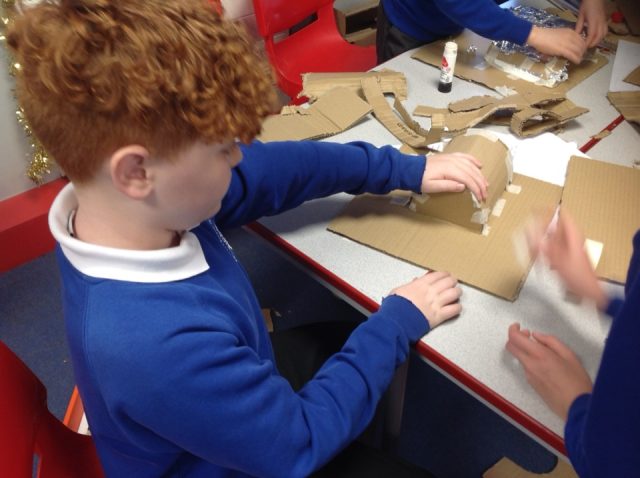
This term we have created our own Anderson shelters to collaborate and evidence our learning around this topic. We have also cooked and tasted a vegetarian cottage pie using the skills of weighing, peeling, chopping, grating and dicing the ingredients then sautéing, boiling and cooking them before finally tasting and critiquing the final product. Although some of us had suggested we needed to have meat in our meals it was interesting to see all children enjoying this plant based meal.
Spanish
In Spanish we have been learning about the names of different methods of transport. We have learnt about the verb ‘ir’ which means ‘to go’. We have been able to apply this to written sentences to describe how to get to different places in town.
RE
In RE we learnt about Judaism, and the suffering of the Jewish population of Europe during the Holocaust. We thought about how different people turn to God in various ways during times of suffering, using texts from the Old Testament and reading the writing of Anne Frank and Simon Winston – two Jews who lived through the Holocaust. Simon Winston survived but Anne Frank sadly, did not.
In autumn 2, we discussed what happiness looks like, sounds like and feels like to us. We made a list of the values that we share at Toftwood Junior School and the ones that we felt were most important. Each table created a diamond nine of the values that they ranked most important to least. We looked at Humanism and what this means for certain people in society. We learnt about their values and key messages. As Humanists do not have a holy book or sacred place to visit, we discussed where they could turn to during times of difficulty. We looked at some dilemmas and spoke about what we would do if we were faced with these challenges.
Music & Performance.
Year 6 have also been focusing on our end of 2024 performance that was shared with the adults of the children in the year group. We practiced the play and all children participated in the singing to accompany some outstanding performances by the children. A wonderful way to end 2024 and a warm-up for our final end of federation performance in July 2025 before the children move on to KS3 education establishments.
Year 5 have written letters to the Eckling Grange Care Home in Dereham, asking them questions about their Christmas memories and sharing traditions of their ow, This activity should hopefully prompt some happy memories for the residents. The children also used their lino-printing to make them some Christmas cards, in pop-art style.
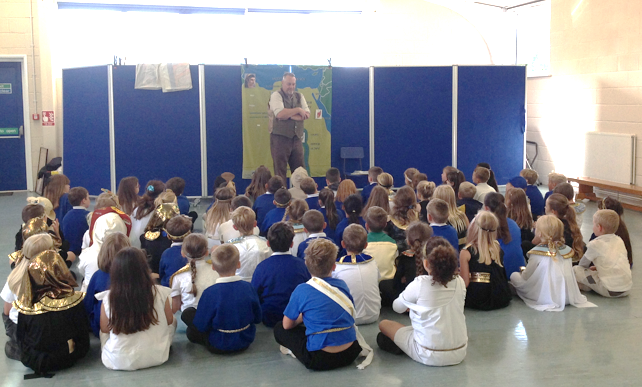
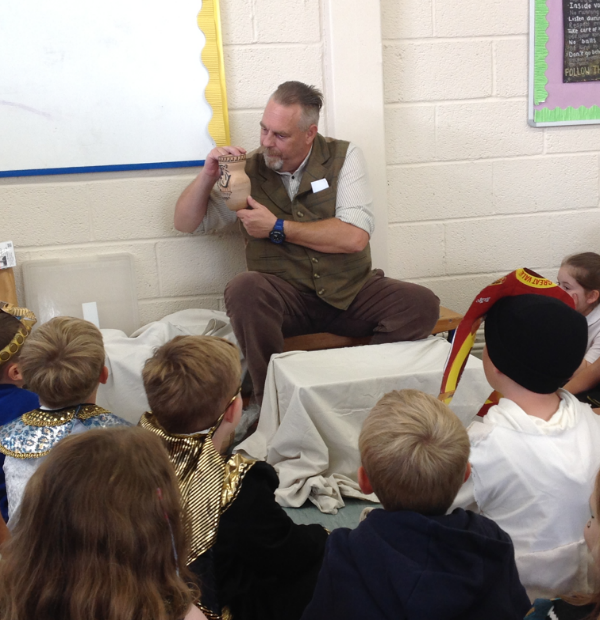
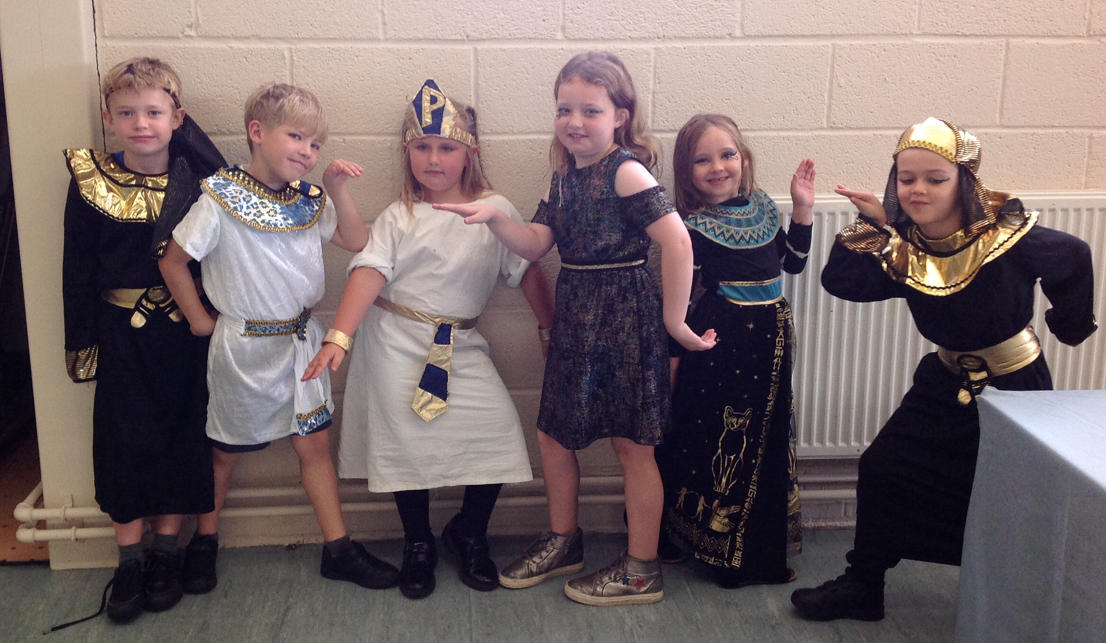
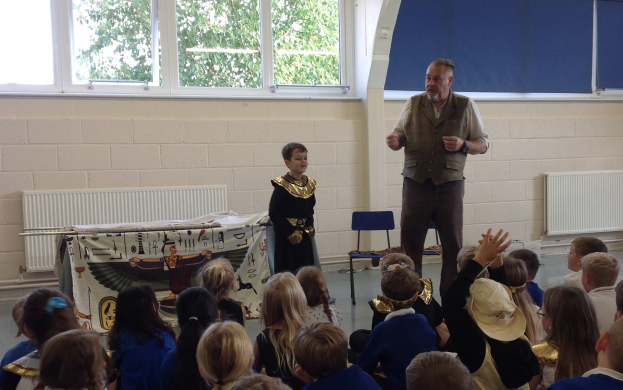
On Monday 16th September, Year 3 had a visitor from Portals to the Past to develop our understanding of Ancient Egypt. The visitor brought many resources with him that enabled us to visualise and use some of the objects in the same way as the Egyptians!
Firstly, the whole year group had an introductory talk about Ancient Egyptians and their everyday life. We discovered how Lower and Upper Egypt were united and all about the demise of Cleopatra – the last Pharaoh and how the Romans conquered the territory. Afterwards, we had a number of activities (artefacts, quiz boards and an Ancient Egyptian game) that each group explored throughout the morning.
From the exploration of the artefacts, the children discovered how enormous the ear piercings were for Ancient Egyptians and the stone decorative studs that they wore, as well as the make-up palettes and the reason the Egyptians wore black make up under their eyes – Ancient Egyptian’s answer to sunglasses! The children were able to give plausible explanations about what they thought the objects were for by considering the clues given e.g. A make-up palette for mixing make up on, a small pot used to hold kohl, amulets and versions of alabaster pottery.
From the quiz boards, we learnt about everyday life; the pyramids and how Cleopatra’s relationships caused the demise of Egyptian rule. We applied the skill of researching from the information boards and learnt some facts about many things, including why Gods and Goddesses were so important, but no longer worshipped in the same way. The things we found out on the information boards and from our visitor helped the children to conclude that Cleopatra’s love stories played a significant part in the demise of the Egyptian rule. It was interesting for the children to consider how invasions from other cultures, such as the Persians and the Greeks, had an influence on their faith and that once the land became Roman led, the land became Christian, then later Muslim and Egyptians ceased to worship their old gods and goddesses. We also learnt about the influence of some of these invasions on the language used, such as the word “pyramis” which translates to “wheat cake” as the pyramids reminded them of the shape of their wheat cakes with a pointed top.
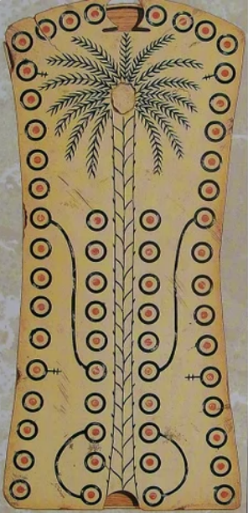
By playing the game ‘Hounds and Jackals’, the children brought alive the fun and excitement from the Ancient Egyptian period as this was a popular game, played in the poorest and the wealthiest households of the time.
The children were able to apply their historical understanding skills and discuss similarities to games developed and played today, like snakes and ladders! They were pleased and unhappy in turns about the snake and ladder on the board (the black curvy lines that you can see in the photo).
In the afternoon, we took part in and watched a role-played version of the life and death of a pharaoh, including his mummification! We watched the process that we had learnt and discussed the job roles of different people that were employed in the process. Watching this on a life size dummy allowed us to really visualise the process and consider the significance of this event in their culture on history.
Finally, we played a whole year-group game of Hounds Versus Jackals. The objective of which was to aim for the animals that would have been present in Ancient Egypt. Each animal had different points for their temperaments and importance in Ancient Egyptian life.
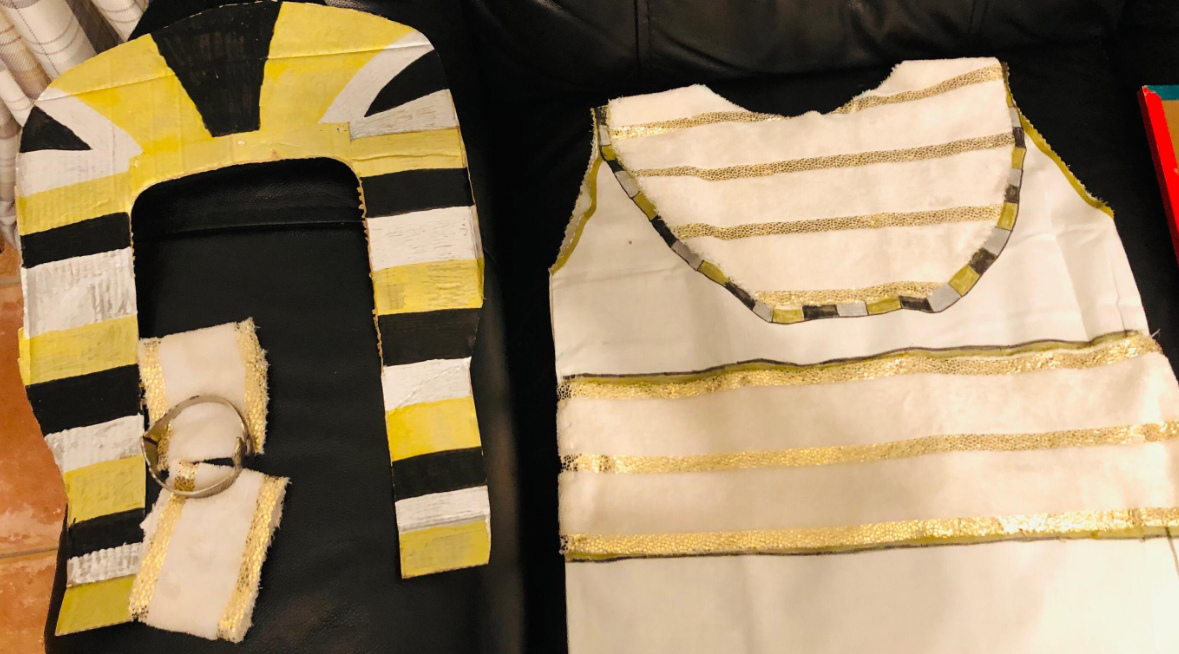
We so enjoyed seeing the children’s enthusiasm for learning and their joy at dressing up as Ancient Egyptians and archaeologists!
We use cookies to ensure that we give you the best experience on our website. If you continue to use this site we will assume that you are happy with it.

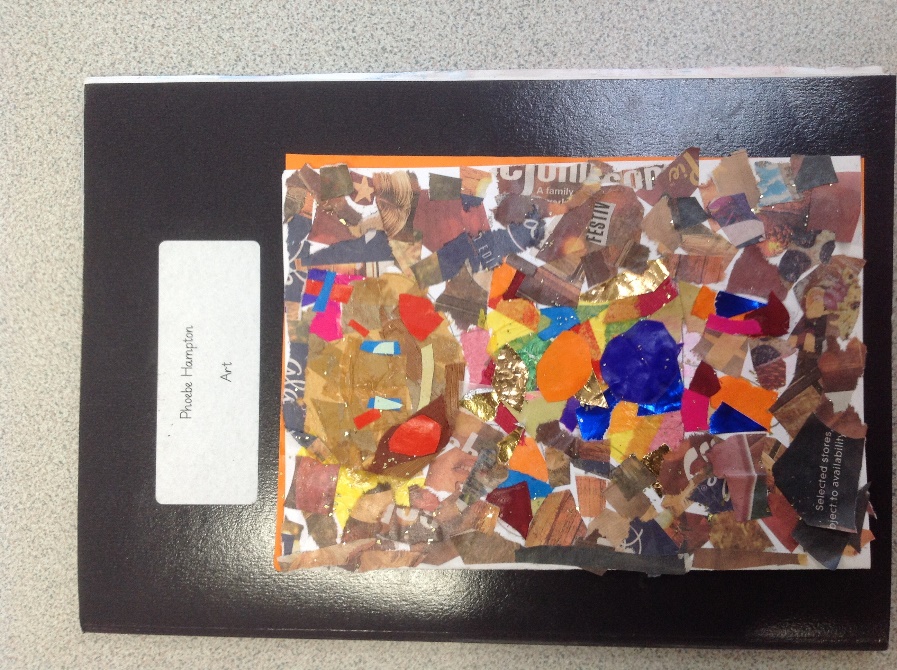 In Art, the children have begun to explore what a collage is! After they learned about the famous collage artist Susan B. Schenk, the children designed and created their own Christmas cards using the art techniques learned.