This term, the children in Year 3 have had the opportunity to revisit and consolidate the Spanish topics they have learned this year. It is great to see how much more confident they are to hold simple conversations with one another and how their pronunciation has improved.
Year 4 have been learning how to talk about their pets in Spanish this term.
They have learned various vocabulary for the different animals they might have at home
Perro, Gato, Ratón, Hámster, Conejo, Conejillo de Indias, Pez, Pájaro and Tortuga (can you guess what any mean?) and looked carefully at how words change when talking about more than one of each.
In Year 5, children have been planning a trip to a Spanish speaking country. They have researched the different places where Spanish is spoken as the primary language, and the different cultures of these. They have thought of useful phrases to have as a visitor and learned to discuss different nationalities.
The children in Year 6 have consolidated their knowledge of one of our autumn term units – ‘en mi pueblo’ (in my town). They produced a knowledge organiser to display the key phrases and vocabulary learnt. The children enjoyed decorating their knowledge organisers once they had recorded the key information.
All children have used the online learning tool, Language Nut, to help learn and consolidate vocabulary and we encourage children to make greater use of this at home in 25-26.
In Music, Year 3 children have continued to increase their ukulele skills. We’ve now reached the trickiest part where they have to quickly move several fingers in a single beat to change chords in a song. We are really impressed with the perseverance that all children are showing and Mr Hardy is hoping some of them will be joining his Ukulele Club next year.
Year 4 have been exploring rhythm with Body Percussion, Junk and Bucket Drumming. Children learned how to make different rhythmic patterns using cups, explored the range of percussive sounds made with the body (clicking, clapping, tapping, stamping, chest pats etc) to produce different grooves and then moved on to bucket drumming. They watched a video of the Chicago Bucket Boys and discussed the origins of using buckets for percussion coming from the poverty experienced by some communities in that city. Children have learned to read rhythm notation and the difference time signatures make. Children played different rhythms in 3 parts with changing dynamics. Really great fun!
In Year 5 we asked, ‘How Does Music Connect Us with the Environment?’. This Social Question evolved as the children moved through the scheme, encouraging them to be responsible and kind citizens of the world using carefully chosen songs. Children then created their own fun and confident performances.
This term Year 6 have been working on adding musical accompaniments to familiar songs using glockenspiels and recorders. The children learnt to play simple tunes to play along to the song “A La Bamba”. They also learnt to sing the song in Spanish. They learned lots of songs for their fantastic end of year production ‘School of Rock’. Amazing performances!
In addition, each class in Years 3, 4 and 5 has been practicing performing a song for our annual Toftovision Song Contest – It gets better every year with classes really upping their game with vocal skills and choreography! This Year’s overall winners were RL5 who just pipped everyone at the post with an amazing song and routine and the exuberant dancing of Ryan.
Students who have been having lessons with RockSteady put on a brilliant end of term concert!
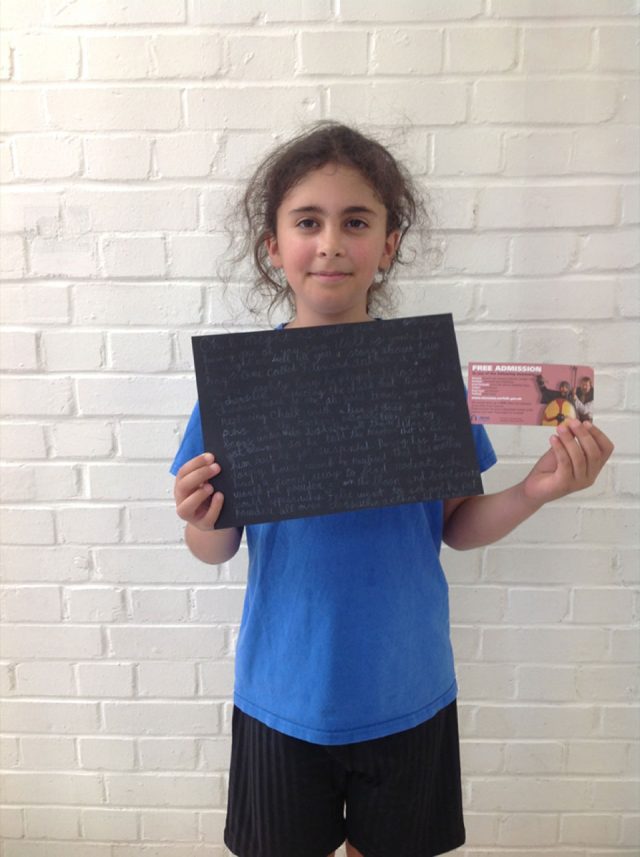
Toftwood Junior School recently organised a history competition, to inspire a love of history beyond the curriculum. The children were shown a genuine Victorian slate, in a wooden frame. They were challenged to think…
“If this slate could talk, what stories would it tell?”
The children then had to research life in a Victorian classroom, building on their learning at the Infant School and our “History of our School Day”, where they studied extracts from the school’s genuine log books. The children were very creative in the way they demonstrated their work. The winner was Sara, who has won a ticket admitting 5 people to any of the Norfolk Museums, which I know she will thoroughly enjoy, with her family.
A very special thank you to the Norfolk Museums Service, for very kindly donating this generous gift.
In spring term, Year 3 have really enjoyed learning about the Trinity! The children were very fortunate to be visited by Janet Marshall, who led an interactive day all about how Christians believe God is infinite and he has no beginning or end, and will last forever. The children were invited to join in with numerous activities such as forming the Trinity symbol with their bodies, designing new Trinity symbols, and even dressing up like religious figures! The children greatly enjoyed their visit from Janet.
Year 4
Throughout this half term, the children answered 2 big questions in RE. The first big question was what do we mean by the truth? The children learnt about stories from the Bible and expressed their view on whether the story was an axiom or an opinion. The children enjoyed participating in our role play activity where they had to act out a court case considering reliability and where the burden of proof actually lies.
The 2nd big question was how do religious groups contribute to society and culture in the local area and beyond? The children participated in lots of discussion and wrote any thoughts or questions onto our wonder wall. We returned to this at the end of our lesson to see how many queries we could answer. The children learnt about some inspirational people and how they had a positive impact on our society therefore changing the world around us. The children enjoyed creating a newspaper article about someone who inspires them.
Year 5
Year 5 have been looking at the enquiry question of ‘What does the Resurrection mean to Christians?’. Year 5 started their RE day by thinking about what things they thought might be worth holding a celebration about. Year 5 then compared different gospel accounts of the death and resurrection of Jesus. The children then read Luke 24 and wrote a script in groups to react this scene. Year 5 then investigated how Good Friday and Easter Sunday are celebrated in different ways by Christians and discussed whether Easter is a festival of new life or sacrifice? Year 5 finished their RE day off by writing a leaflet explaining the Christian belief in the resurrection of Jesus for non-believers.
Year 6
In this half term, Year 6 considered the big question; Creation and Science – conflicting or complementary? We began the unit by looking at some of the natural and manmade wonders of the world before recapping our learning from year 3 on the creation story in Judaism and Christianity, and how it may conflict or complement scientific theories of the beginning of the world; this also went alongside their science topic of evolution. The children wrote some lovely poems about different aspects of creation.
We had some fantastic discussions about how people interpret their religious texts and leads to differing viewpoints, even within the same religion.
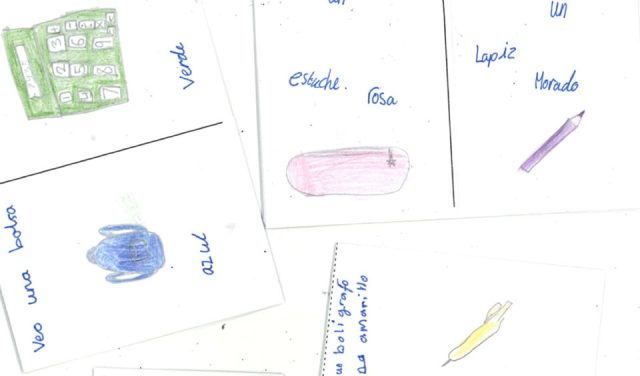
In Year 3 MFL this term we have been learning the vocabulary to talk about classroom objects and using the verbs ‘tengo’ (I have), ‘no tengo’ (I don’t have) and ‘veo’ (I see). Children have also been learning how to use adjectives in Spanish and how these change for masculine/feminine, singular/plural nouns. They have used this vocabulary to make their own fabulous minibooks!
In Spanish in Year 4 the children have learned the names of various facial features and body parts and used their adjectives including number, colour and size to describe monsters. They also learned the names of animals and had to deduce the animal by translating the description!
In Year 5 children have explored how many countries in the world have Spanish as their first Language. They have learned vocabulary to discuss and write sentences about musical instruments that they play or that they like and dislike. The children also learned how to count and wite numbers in Spanish all the way to 1000!
In MFL in Year 6 children have been taught to understand the names of key places in town. They went on to describe a present-day town and compare it with the past, beginning to use the 3rd person singular of the verbs haber, ser and estar in the imperfect tense. Children used ser to say where they or someone else is from and could discuss what language they spoke, where they live and who they live with and discuss their age, their family, the pets they have and their physical descriptions.
In Music this term, the children in Year 3 have been continuing to gain confidence playing the ukulele. They are growing their repertoire of songs using different picking patterns and learning simple one finger chords.
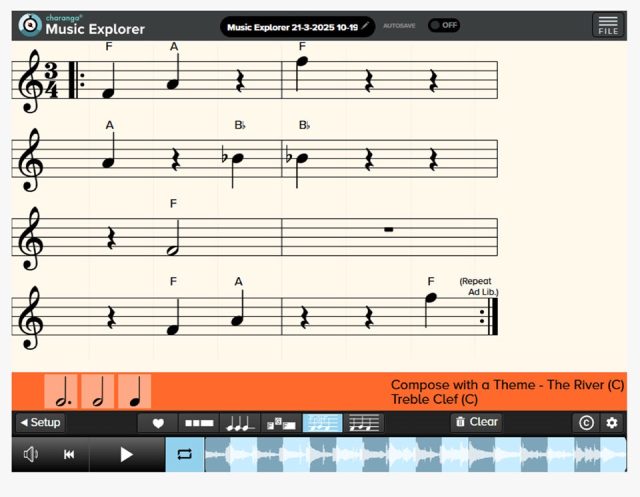
In Year 4 this term, the children have listened to various songs including Jazz and Folk styles. They have had the chance to play the glockenspiels and the recorders and are gradually becoming more proficient. Children also used YuMu on the computers and tablets to compose their own tunes over a backing track in ¾ time – and it was great to see how many remembered the basics of building melodies.
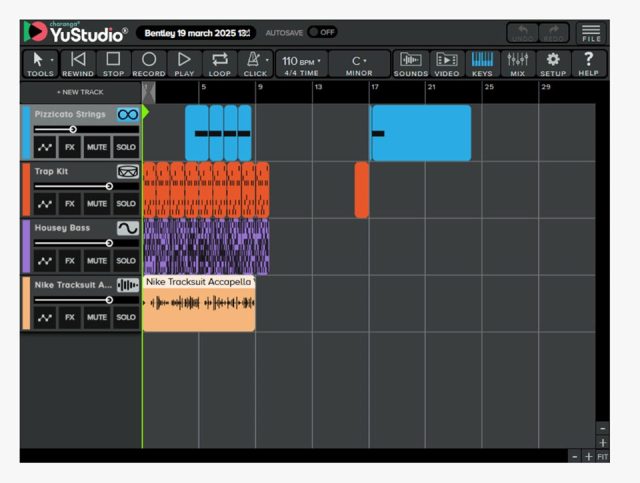
Children In Year 5 have been increasing their skills with Music Technology using the DAW (Digital Audio Workstation) YuStudio to create their own hip hop tracks. They have created drum patterns, melodic loops, and chord structures from a variety of samples and virtual instruments. We are really impressed with their enthusiasm, hard work and the quality of their compositions.
In Year 6, the children have listened and responded to a wide variety of music including South African Pop protest songs, 20th and 21st Century orchestral, 60’s Folk and Rock Music from the 1970. They have learned about different key signatures and how this can affect the mood of the music. Children have used the glockenspiels to play, improvise and compose and worked at improving the quality of their vocal performance.
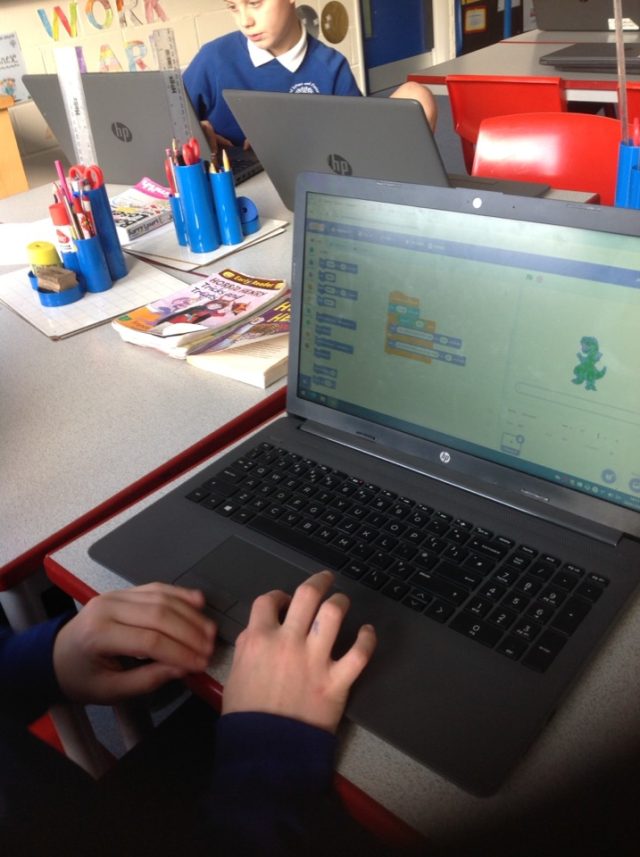
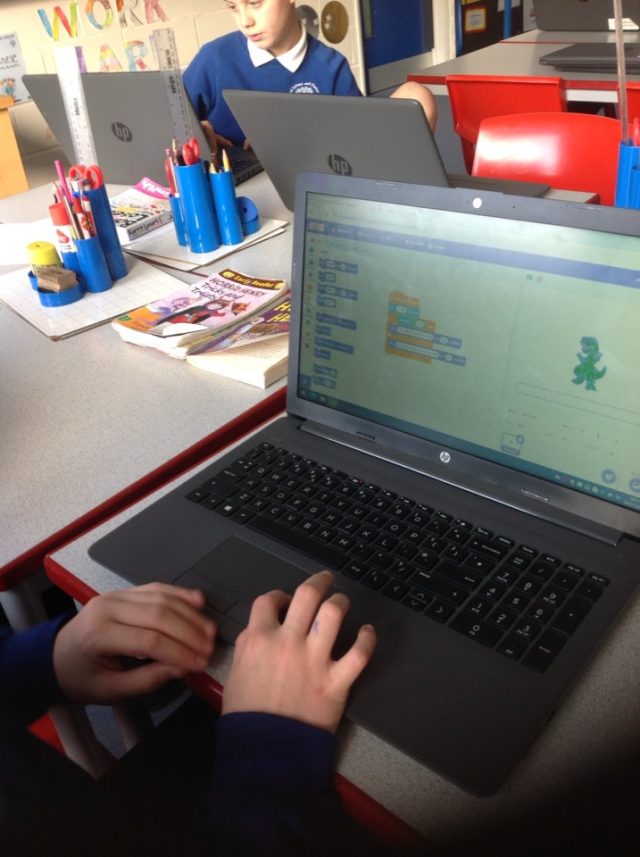
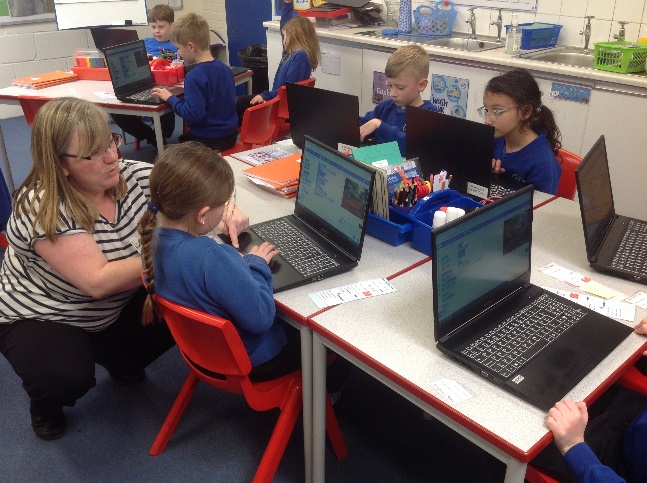
On Friday 14th March, Year 3 were very privileged to have Katie Pugh visit us. Katie works for Digital Schoolhouse, a company who specialise in using play-based learning to engage pupils and teachers with the Computing curriculum. Katie spent a session with each Year 3 class, exploring how Scratch works and what the children could do to further their understanding.
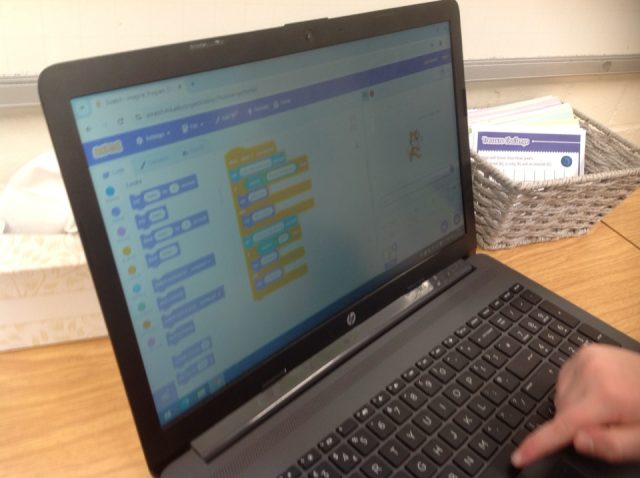
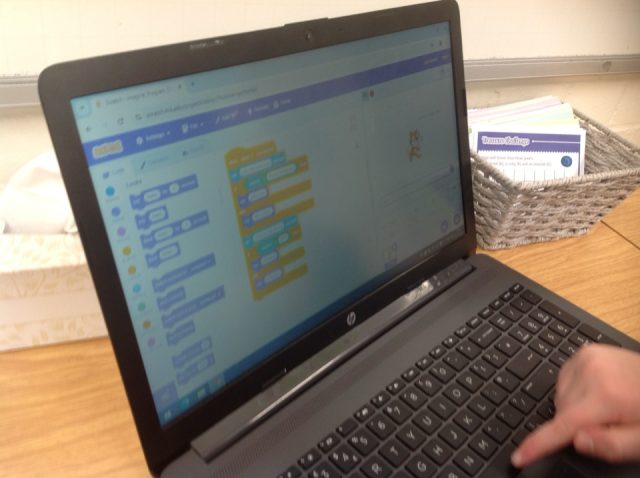
After logging into Scratch, Katie introduced the children to several studio animations she had created. She then invited the children to identify the deliberate errors she had placed into the animations, and asked if they could edit and improve her work. The classes greatly enjoyed exploring topics relating to previous learning such as the Great Fire of London – however, the favourite across each class was clearly the ‘Steve Story’ related to Minecraft!
Katie’s sessions built upon the children’s prior understanding of Scratch from earlier in the term by developing their use of different codes to use movement, audio and different control types in their animated sequences. The Year 3s greatly enjoyed their visit and are looking forward to putting their new and developed skills to good use in future lessons.
Year 4
In the first half of the Spring term, Year 4 used Logo to practice programming a turtle using a range of commands. The children learnt how to debug a set of commands and had great fun programming the turtle to create capital letters using 90 degree turns. In later lessons, the children were shown how use the repeat command to make their commands more efficient. Finally, the children were able to successfully create a range of 2D shapes after being given the exterior angle in each of the shapes.
In the second half of the term, Year 4 moved on to changing digital images using Pixlr. The children experimented with cropping the images, re-sizing, cutting out to create layers and adding text to the pictures. The unit of work culminated with the children independently creating a book cover of their choice using the skills learnt in the previous lessons. We have not included any photos here due to our digital literacy learning on Copyright!
Year 5
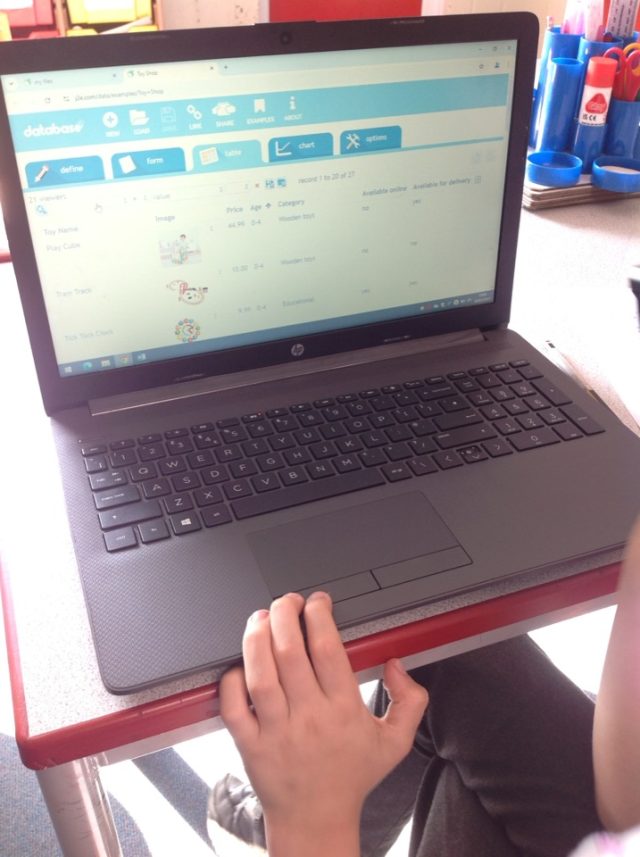
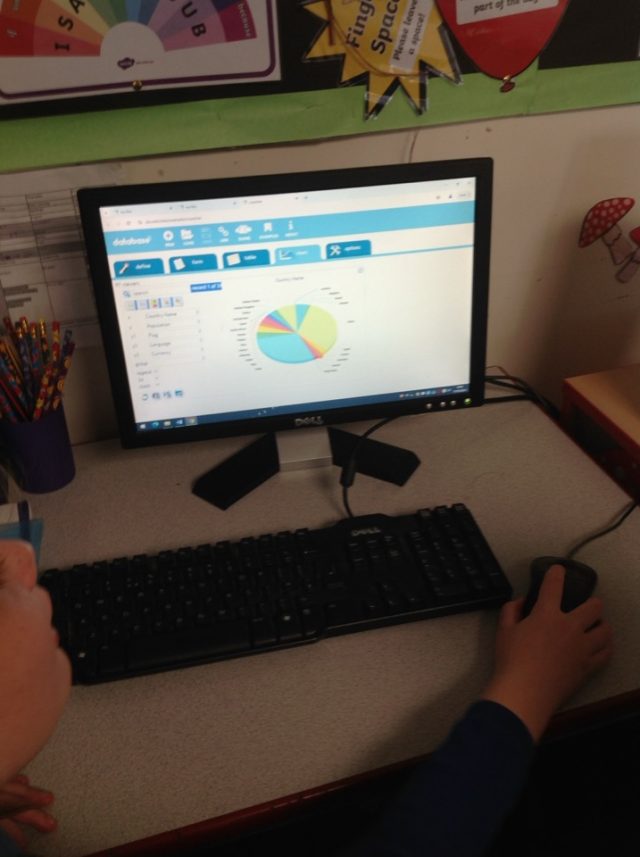
This term, Year 5 have been focusing on coding as well as using data bases. When coding, we used Scratch to make a questionnaire. The children worked with their partners to use condition and selection. When using databases, the children were able to filter data numerically, as well as alphabetically, and to search databases using specific criteria about mini beasts and dinosaurs. The children were able to explain that computer databases were much easier to sort as opposed to paper data bases.
Year 6
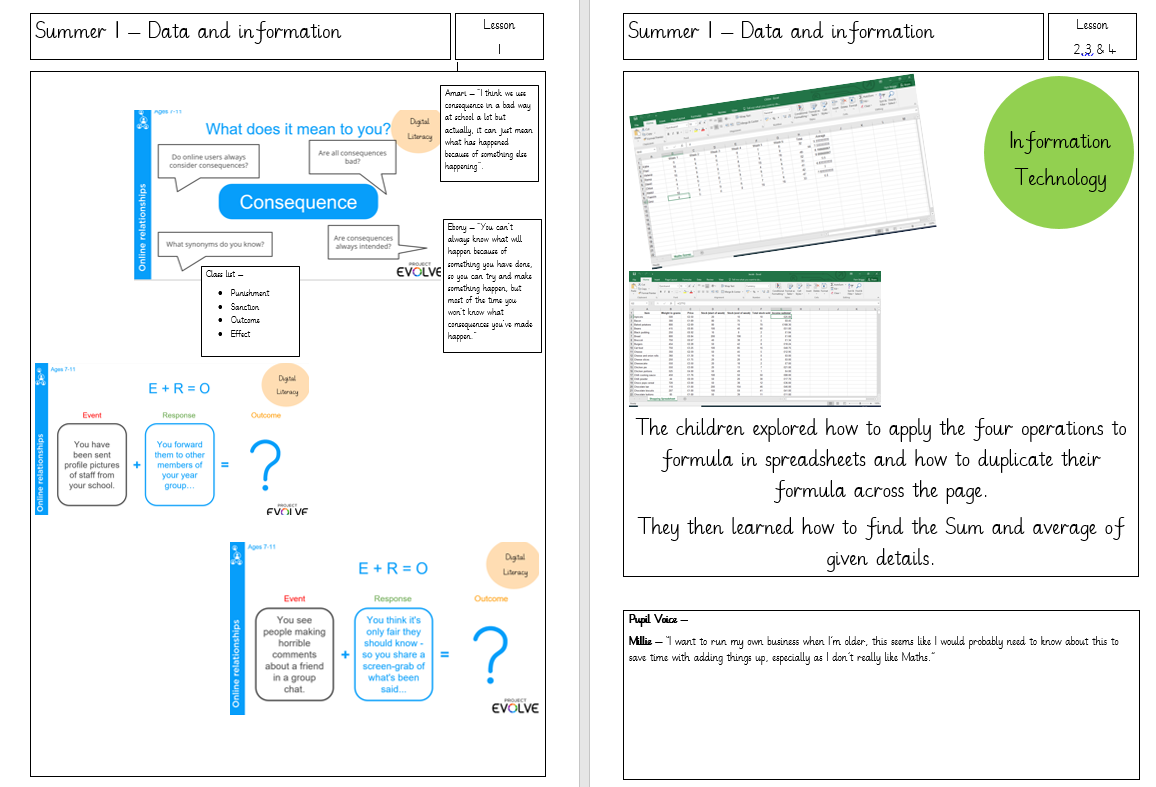
Year 6 have been working on Spreadsheets this term. We used MS Excel to input data, write formulae and duplicate the formula across to fill in cells. We have also used the data and formulae to complete different input and outputs from this, including finding the sum and average of given details.
In Digital Literacy, we also explored online profiles and online relationships, discussing what was safe to share, why people might share online and the feelings that might be resultant of sharing for different purposes.
Some year 6 children have been reflecting on their learning about World War 2, from the Autumn Term. They have studied images taken on VE Day and considered the mixture of emotions that must have been experienced on that day.
They worked in groups to create a monologue – style poem, to show their understanding of VE Day.
This term, the children have been very busy! They have used their knowledge of Prehistoric shelters to create their own model. They worked together in pairs and thought carefully about the materials they chose as well as how to design it. All the children knew they would have to make it water and wind proof as they tested their final product at the end of the project. Most shelters proved to be wind proof and a few were waterproof. All the children could identify how to improve their shelter.
As part of their Science week project, they also created a slider system lunar eclipse poster. They worked independently to create the slider system and were able to evaluate it once they had completed the project.
Finally, the children also took part in Food Technology project. They worked in groups to make healthy flapjacks – they added different types of seeds and fruits. They smelt delicious and the children were keen to try them.
Year 4
Year 4 has also completed their Food Technology project for this term: Fish cakes!
Through the process of producing fish cakes, they have learnt the D&T cooking skills of peeling and coating. We started by peeling and cutting potatoes into chunks, before boiling them and mashing them. We added this to tuna and grated lemon peel, finally flavouring it with parsley. We then scooped a handful of this mixture to press into a fish cake. We then practiced the skill of coating these fish cakes in breadcrumbs to learn to how to create a coating. The fish cakes went in to the oven for 20 minutes and we were able to take them home to taste them. They were delicious!
Year 5
In DT, we have planned and cooked a vegetarian curry this term. The children evaluated this and commented that if they were to do it again, they would add meat. In addition to this, we have also had a debate about whether we should eat less meat! The children were all very passionate about their response!
We have focussed on our Year 3 focus artist: Georgia O’Keeffe this term, creating a viewfinder and then enlarging a part of a flower in the style of Georgia O’Keeffe. We have sketched the flower using sketching pencils into our sketchbooks, and then chosen our preferred image, to recreate using paints. As part of our printing unit, we chose one of our sketches to draw an outline of a magnified part of a flower, and copied this onto a polystyrene tile. We then created a repeating pattern of our chosen tile in our sketchbooks. The overall effect was eye catching and the influence of Georgia O’Keeffe’s work was very clear in the artwork the year group created.
Year 4
We started by re-capping information about Claude Monet that we then compared to another artist from a similar era: Konishi Hirosada. The children found out differences and similarities in their work. We then looked at watercolour techniques, in order to produce our own Monet/Hirosada inspired piece of art. The children used watercolours to create the background and a printing technique to add detail.
Year 5
This term we learnt about the architects Sir Giles Scott and Sir George Gilbert Scott. We explored their gothic architecture and recorded our observations on their works in our sketchbooks. We also chose to recreate a traditional red telephone box. Some children chose to glue metallic craft paper to give the illusion of windows, whilst others chose different styles of windows for their phone box, using craft knife skills to ensure accuracy of cutting and design.
Year 6
The children created a 3D model diorama on a biome of their choice and a pop-art collage, building on and tying together their artwork skills from year 3 and year 4.
We use cookies to ensure that we give you the best experience on our website. If you continue to use this site we will assume that you are happy with it.

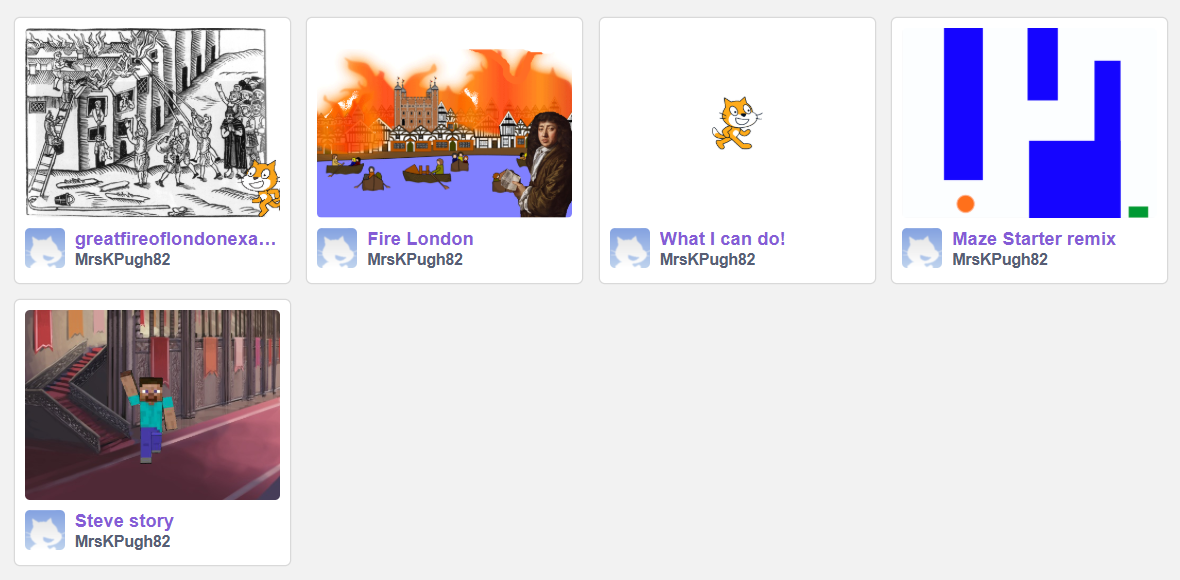
 After logging into Scratch, Katie introduced the children to several studio animations she had created. She then invited the children to identify the deliberate errors she had placed into the animations, and asked if they could edit and improve her work. The classes greatly enjoyed exploring topics relating to previous learning such as the Great Fire of London – however, the favourite across each class was clearly the ‘Steve Story’ related to Minecraft!
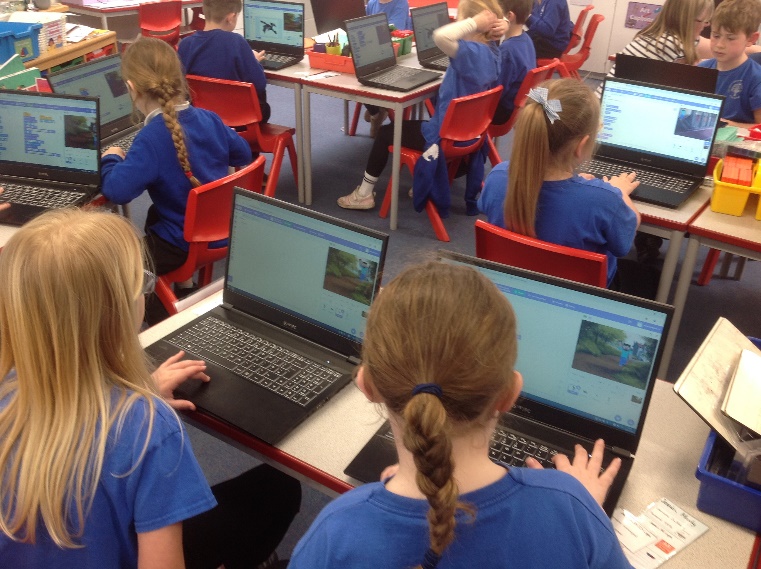
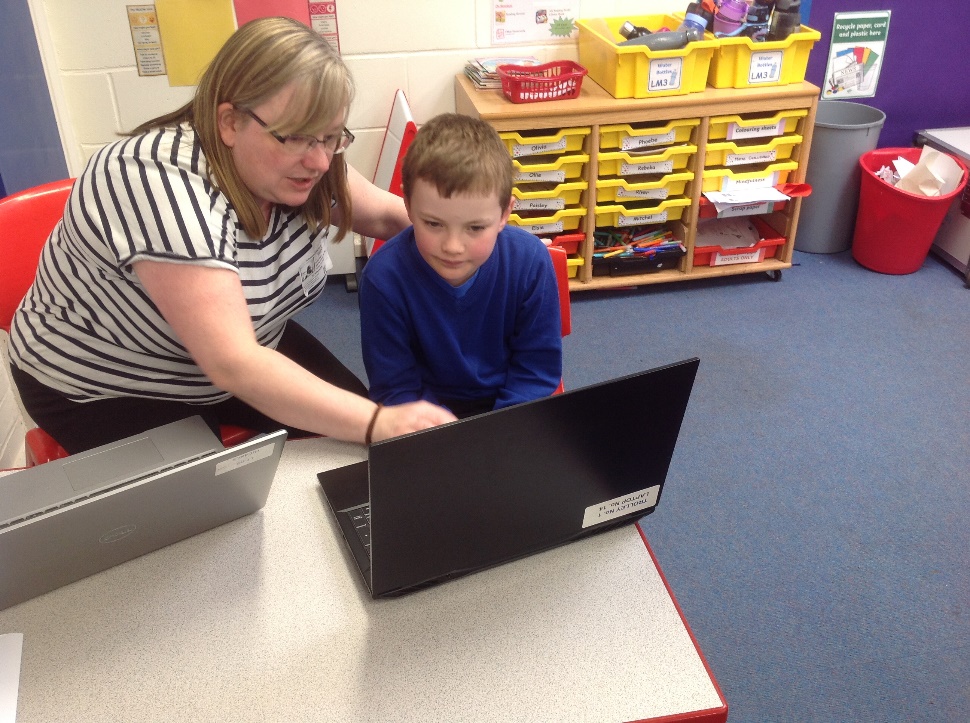 Katie’s sessions built upon the children’s prior understanding of Scratch from earlier in the term by developing their use of different codes to use movement, audio and different control types in their animated sequences. The Year 3s greatly enjoyed their visit and are looking forward to putting their new and developed skills to good use in future lessons.