We always try to keep you informed about our learning and what’s going on in school by sending home our topic webs, curriculum plans, information letters and texts, but if you’d like a reminder of what’s being taught each half term here’s our current Curriculum Plans.
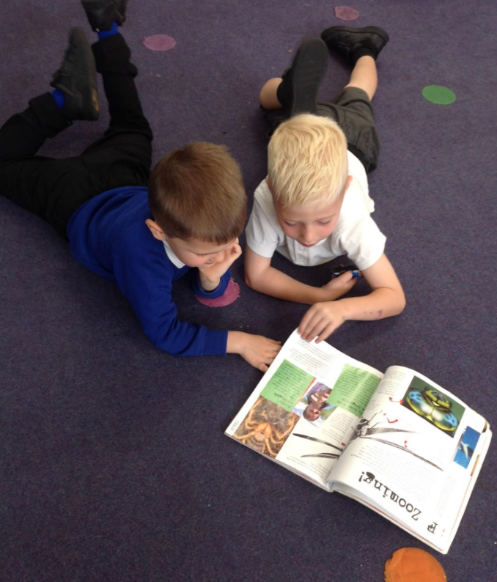
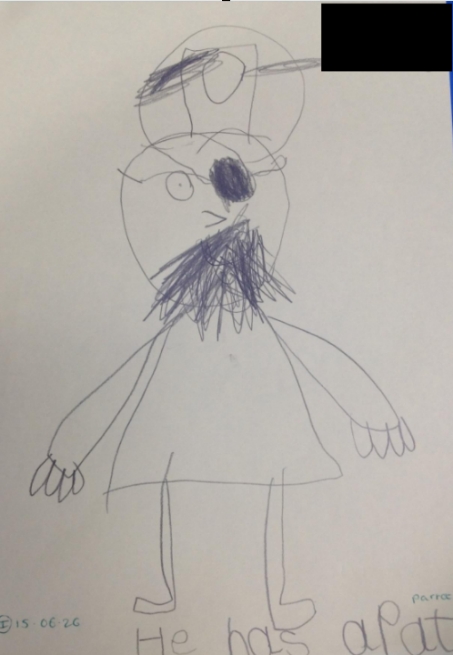
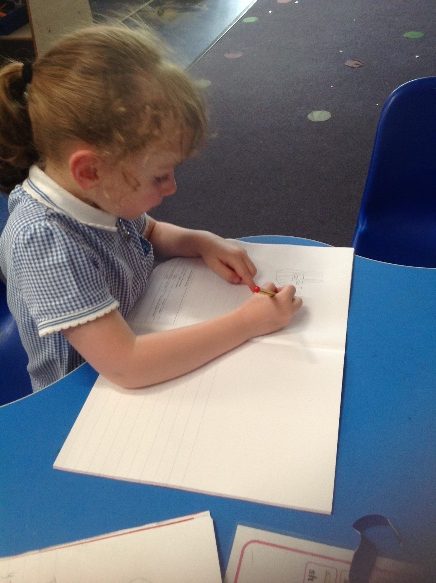
The children in Reception have been working hard to put into practise all the things they have learnt this year. They have been busy reading to themselves in their independent learning time, labelling and captioning pictures to do with our topic, such as pirates and writing simple captions about what we could see under the ocean.
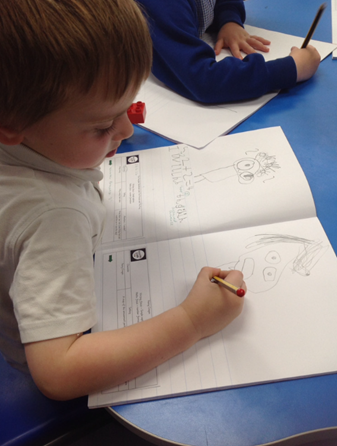
In drawing club, we have been continuing to write speech and thought bubbles for our different books that link to our topic of oceans such as ‘The Rainbow Fish’ and ‘Somebody Swallowed Stanley’. We have been working hard to continue to remember using our capital letters, finger spaces and full stops when writing our sentences!
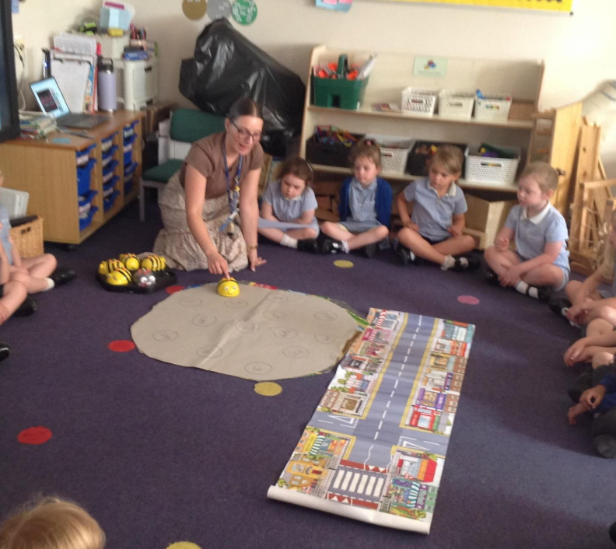
The children in Reception have been busy exploring BeeBots in the summer term and learning how to programme them to move them along a road or map. They have also been mark making with them and seeing if they could create different lines, shapes and letters!
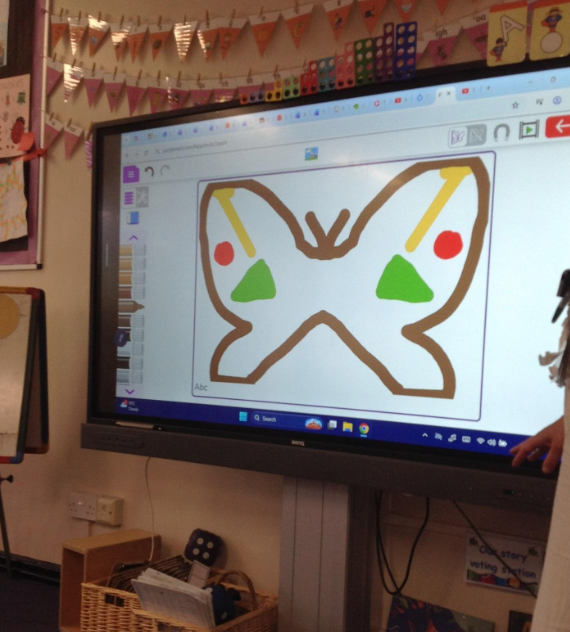
We have also been introducing using purplemash on our interactive whiteboards in our maths sessions and in provision to explore the concept of symmetry and how we can use digital tools to create and move shapes.
Year 1
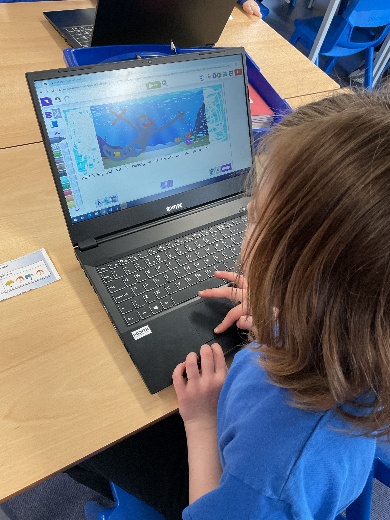
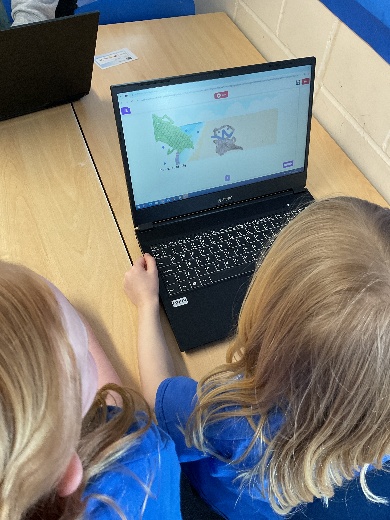
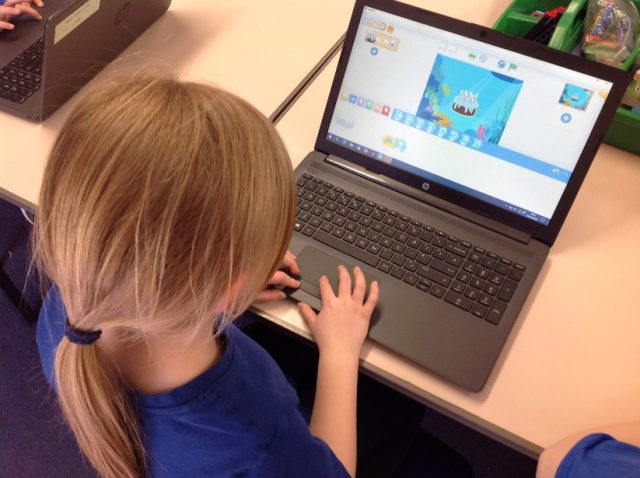
This term, the children in Year 1 have been creating their own eBooks. They drew their characters and typed out their story. Then they added animations, sounds and a background. Finally, the children have shared their stories with their friends. The children have also been looking at what technology is and how they can use it. We have also discussed how the children can stay safe online and why they need to keep their personal information private.
Year 2
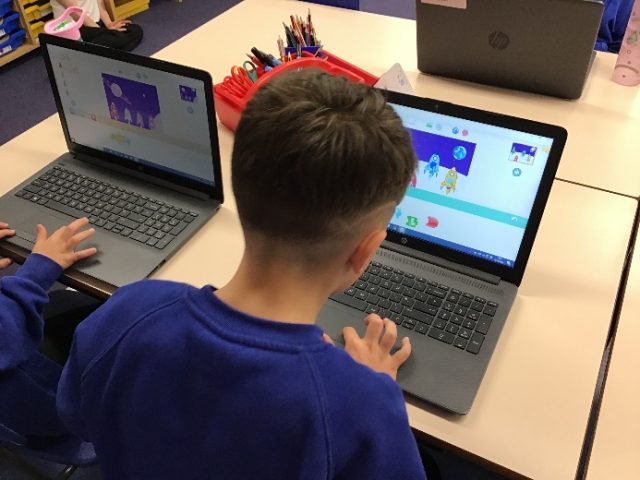
In Summer 1 the children built on their Computer Science knowledge and have been programming on Scratch Junior. The children were able to design their own sprites and backgrounds. They then programmed these sprites and made them do a variety of things, including; bounce, spin, move, speak, disappear, grow and shrink! We were so impressed with their finished space races!
In Summer 2 they have furthered their typing knowledge and have used laptops to write sentences about their favourite things in Year 2. They were then able to edit these sentences in Word. Following this the children played typing games on Purple Mash and enjoyed increasing their fluency.
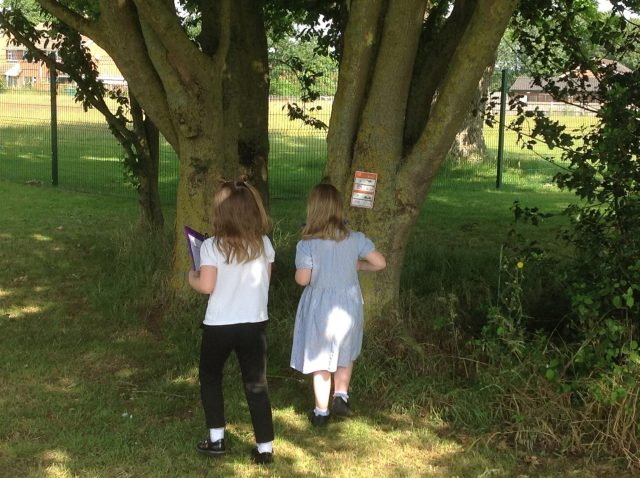
Reception children have been learning about maps. They used the orienteering routes outside and searched for the clues. They looked at the map of the route they took and discussed what they found. They shared the story Henry’s Map and recreated their own version of the story by visiting different locations around the school and creating their own maps. They also created their own pirate maps and drew on a route to the treasure, as well as considering time adverbials for the order of our route.
Year 1
The children in year 1 elaborated on their learning of Norfolk, to learn about the United Kingdom.
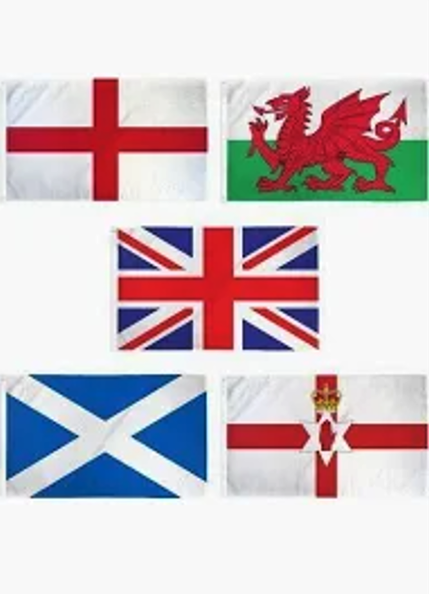
They learnt what the United Kingdom was an island nation made up of 4 countries. Then they learnt about the countries, their flags, locations, their capital cities and the waters that surround them! In groups, the children labelled a map of the United Kingdom and their capital cities.
They also focused on each country of the United Kingdom and learnt some landmarks, food and cities in each country. They then made their own flag of choice from the UK and they played a game based on which landmark was in what country.
“We live in England” Marli
“In Scotland, they have the tallest mountain in the UK” Omari
“In Wales they have their own language and the capital city is Cardiff” Edie
Europe
The children in year 1 recapped where they live using google earth and thought back to previous lessons on the UK, Norfolk and Dereham. They listened to a song about the continents of the world and learnt what a continent is. They looked closely at our continent- Europe and learnt some facts. They discussed where they had visited or had family and found them on a map.
The children used their knowledge of 4 European countries and played the ‘European Four Corners’ game. At the end of the lesson the children came up with a list of questions they would ask if the met a person from another country.
The children learnt about the country Estonia through receiving information from a family who live in Estonia. They answered lots of the questions that the children had asked in the previous lesson. The children then compared Estonia to the UK by discussing their similarities and differences. They also enjoyed watching a video of some traditional Estonia dancing.
Orienteering – Geographical skills and fieldwork
The children used simple compass directions (North, South, East and West) and locational and directional language [e.g. near and far; left and right], to describe the location of objects around the school, and they then had to place them in the correct place on a quadrant. They worked in teams to do this. They used a map of the school to locate the objects. The children enjoyed working in teams to do this.
Year 2
Building on from work in year one, year two children revisited using a compass in the summer term. The children talked about why we might need a compass, where they have seen them and how to find north. They explored using the compass around school.
Child M ‘Wherever it’s wobbling and starting to set, that’s where north is.’
Child O ‘If you have a map, you can see where you’re going, like north, south, east and west.’
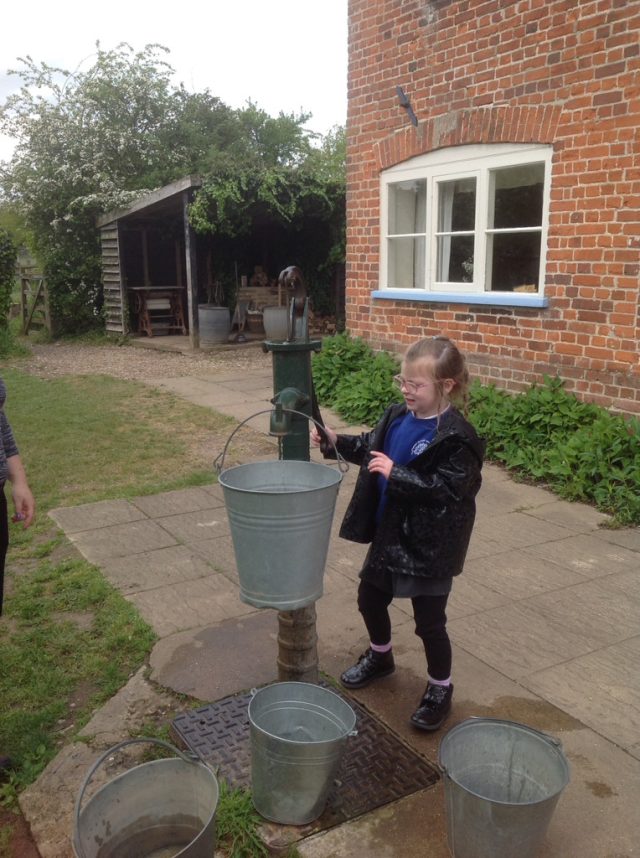
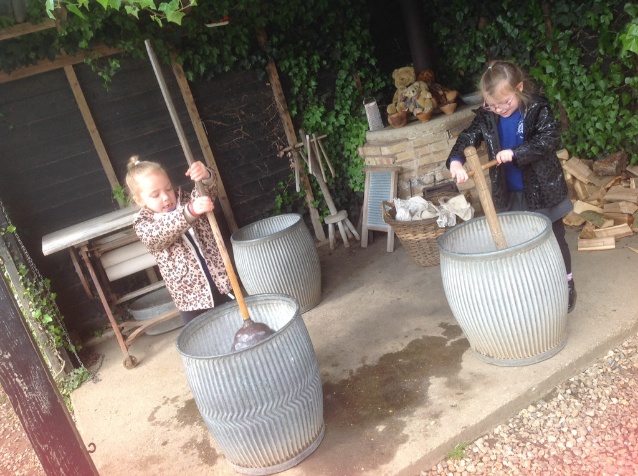
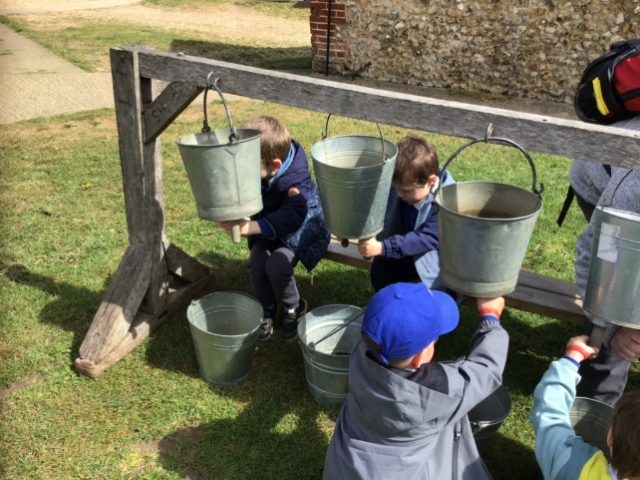
In the summer term, Reception children visited Gressenhall Farm and Workhouse for a fairy tale event. Part of the day involved helping the ugly sister and Cinderella with jobs around the house and gardens. Jobs included pumping water from the well to water the plants, washing clothes using the wash board and washing dolly, and milking the pretend cow.
Year One
The children stepped back in time to the 1800s, immersing themselves into what it would have been like to live during the reign of Queen Victoria. The children experienced what it was like to do their washing during the Victorian Era, getting the opportunity to use a dolly and washboards to do some washing themselves as well as learning about a mangle. They also got to play with some Victorian toys and made comparisons to when we learned about toys earlier on in the year, during the 1980s and 1990s as well as comparisons to toys that they play with today. Finally they enjoyed seeing what it would have bee like to go to school during the Victorian era, writing on slates, having a dunce hat in the classroom as well as being taught in rows with a very strict teacher! We discussed how schooling changed during the Victorian era as at the beginning, only wealthy children went to school whilst others went to work. They then learned that by the end of the Queen Victoria’s reign all children went to school with the introduction of Ragged schools.
Year Two
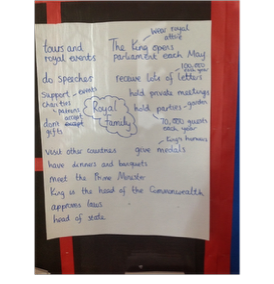
During Summer 1, the children focused on the Monarchy thread. They researched and learnt about the UK royal family and the different roles they have.
They learnt about the different members of the royal family and created a family tree of the members linked to King Charles.
They used their research about King Charles and the royal family to create class fact files about King Charles.
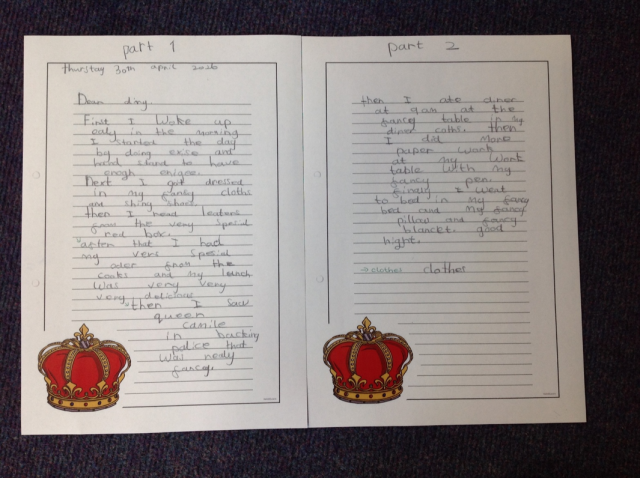
They then used their knowledge of diary entries from English and writing in the perspective of someone else, to write diary entries from the perspective of King Charles.
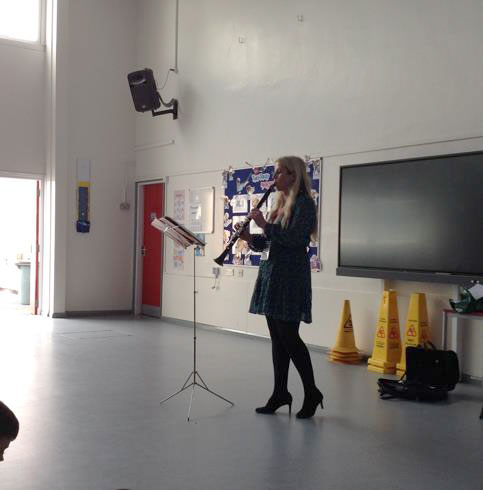
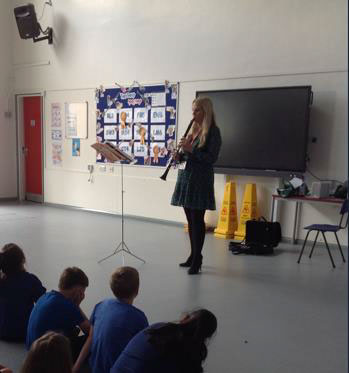
On Friday 5th June, Toftwood Junior School were very lucky to have a clarinet player called Sarah Williamson come to play for them. She has been playing since she was 8 years old! She practised an awful lot and then was able to study at music college in Paris. We entered the hall to her performing to a British composer called Gerald Finzi who worked in the telephone exchange during world war 2. The children could recognise the different stories and moods that the music was trying to convey from calm, relaxing to exciting and energizing.
Sarah then explained how major and minor keys changed the mood of music by demonstrating with different versions of the same song, Happy Birthday. The children described the minor key as melancholy, sad and depressing.
We then had to identify the glissando “slide” in some jazz music that was very upbeat and made us want to dance. The musician then showed us how the reed vibrates in a clarinet to make some funny sounding noises that sounded a little like a fire engine. We were then shown the range of notes from the very lowest, to the very highest! We learnt that you can only play one note at a time on the clarinet and that the vibration of the reed, caused the sounds. Sarah had to learn to circular breathe in order to avoid holding her breath.
After that we listened to some recordings of music that our musician had recorded a long time ago. She moved on to a piece of music that had been written in 1692 and contained lots of trills, and she asked us to identify if we thought it was in a major or minor key. We then listened to a really complex piece of music composed by a polish composer, written in 1919. It was really fast and she pre-warned us that she could still make mistakes even though she has played it lots of times!
We found out that Sarah grew up in Holt and recorded part of the music for the Harry Potter films! She also plays for radio, concerts and orchestras. Sarah performed for the King last year and has played the saxophone with Sting! She also plays all over the world; America, Africa, Japan and Portugal etc. We then heard some music from the film, “The Close Encounters” about someone who has been alone and finds friendship at the end of the piece.
The children sat beautifully and listened with great interest at the range of music that a clarinet could play. Sarah explained how important a good, appreciative audience was whilst performing.
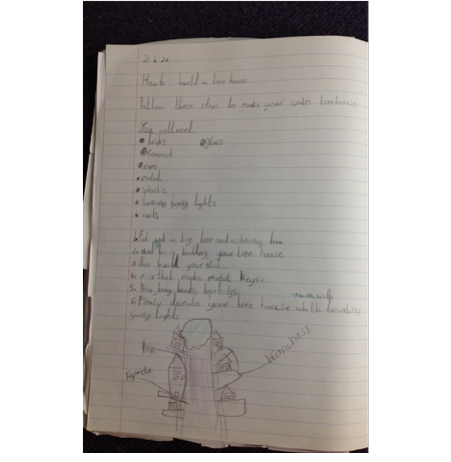
This half term, the children wrote instructions for a tree house inspired by the short film “EmBARKed”. They designed a tree house and thought about the features. They then looked at instructions and reviewed the features. They then used time adverbials, imperative verbs and numbered steps to write instructions for how to build their tree house.
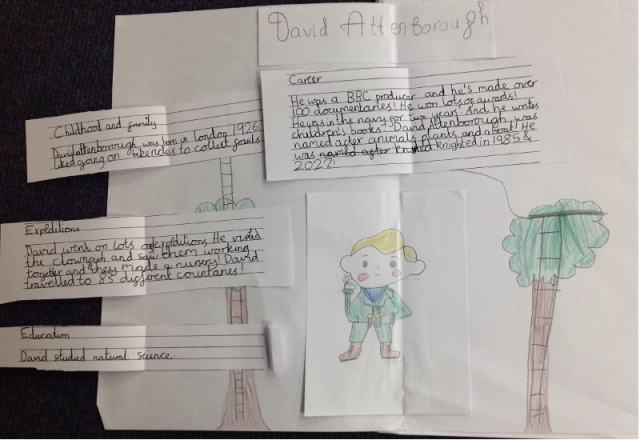
The children looked at the Little People Big Dreams book about Sir David Attenborough and talked about what a biography and an autobiography is. They did lots of research and learnt lots about David Attenborough’s life and work. They learnt they he was going to be 100 years old this year, so the children made him birthday cards which we sent to him. The children then used the facts they had learnt to create two page spreads about David Attenborough. We shared these with the Year 1 children on David Attenborough’s actual birthday! We then watched a clip from one of David’s documentaries and wrote our own voice over clips to go alongside this. We performed our voice over clips to the class and considered the intonation we were using to make it interesting and engaging for our listeners!
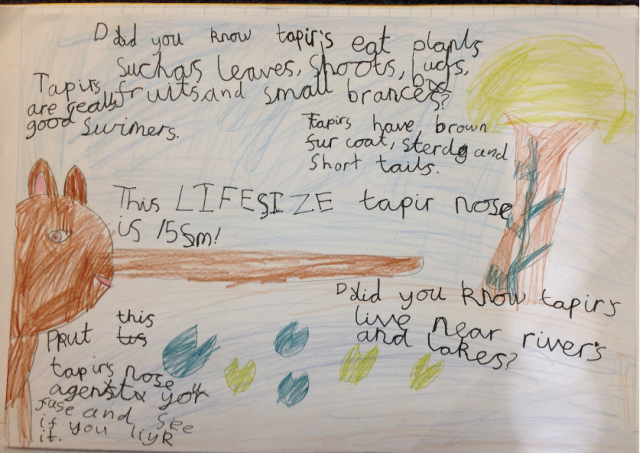
The children have also explored the texts “Lifesize”, “Lifesize Dinosaurs” and “Actual Size”. These books show the children facts as well as the size of some animals. The children enjoyed measuring the animals to make the sizes in the classroom and comparing them to themselves. They then researched an animal of their choice and created a poster in the style of the texts they had read to share facts about the animals they had learnt about.
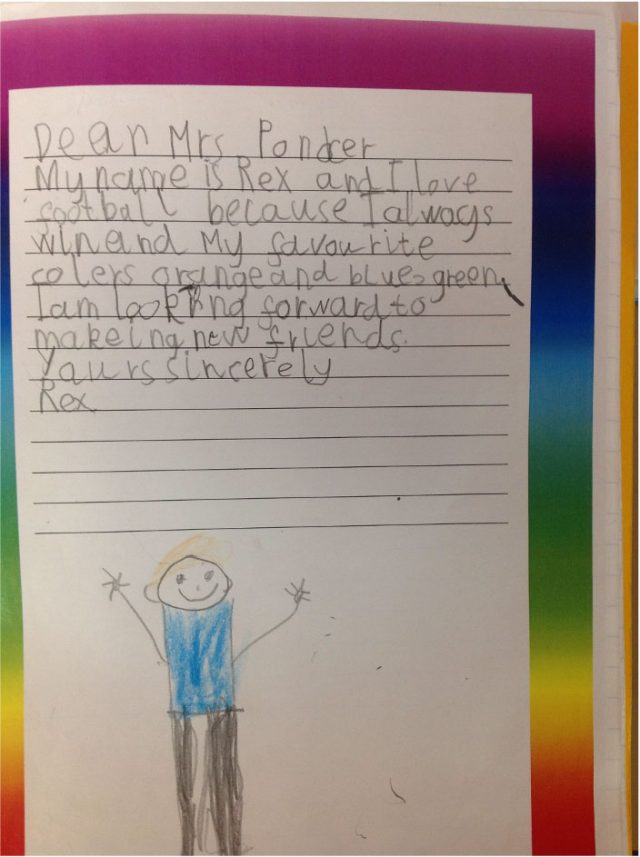
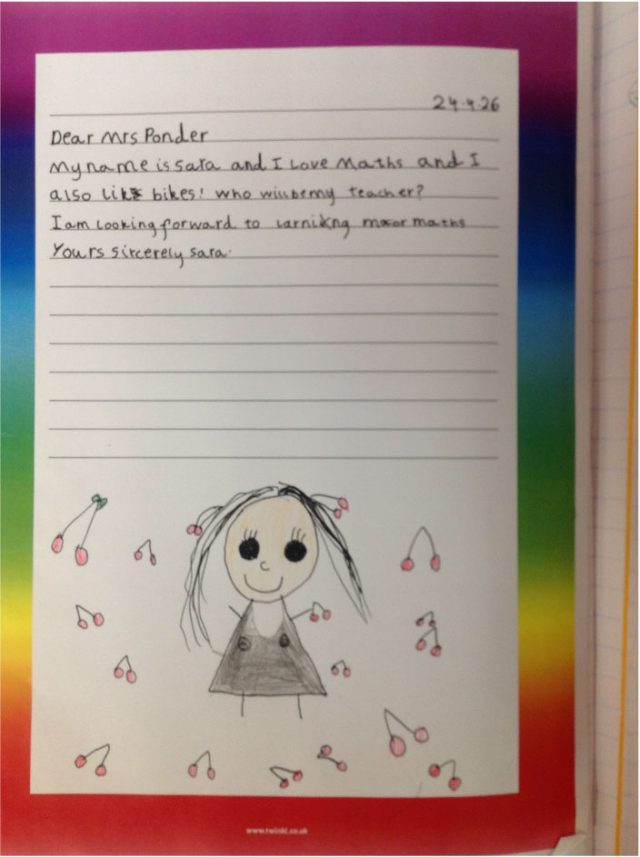
The children have recapped their letter knowledge from Autumn 2 to write their own letters to the year 2 team at Toftwood Infant School. The teachers wrote letters to each class to share information about year 2 and to support transition for their move to year 2 in September! The children looked deeper into the language of formal and informal; identifying features of both and writing in a more formal manner. Each child wrote a fact about themselves, asked a question about year 2 and then sent their letter to the year 2 classrooms. We have already received a reply from one of the teachers answering some of our questions!
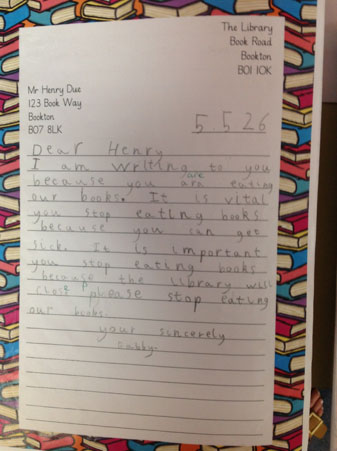
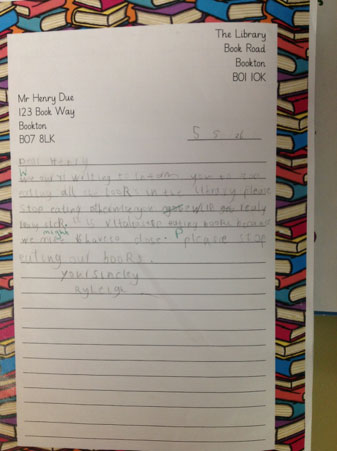
After we had sent our letters to year 2, we focused on the high-quality text ‘The incredible book eating boy’ by Oliver Jeffers! The children thoroughly enjoyed this book and enjoyed discussing why we shouldn’t eat books, and what would happen if books weren’t returned to the library! They wrote letters as if they were the librarian explaining why Henry was not allowed to eat books and created a conscience alley to help persuade Henry that this was not a sensible (or healthy) thing to do!
In phonics we have been consolidating our knowledge of level 2 and 3 sounds. We have been continuing to read these sounds in captions, making sure we spot any tricky words too!
We have also been working very hard to write short CVC word captions using our phonics knowledge to sound out words independently. We have concentrated on our letter formations trying our best to ‘bump the line’.
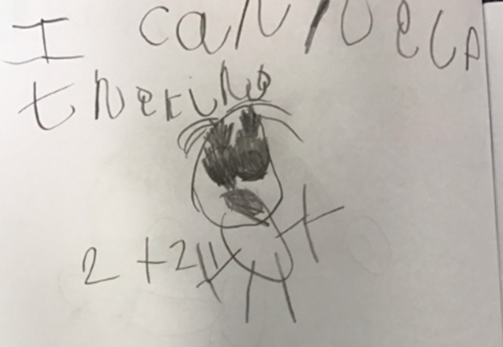
In Drawing Club we have enjoyed writing speech bubbles for ‘The Hungry Caterpillar’, drawing the setting of an amusement park for ‘Penny Crayon’ and using our imaginations to think of a different material for the ‘Three Little Pigs’ to build their new house out of!
We have been exploring lots of different ‘Traditional Tales’ for our topic this half term. During our continuous provision we have had lots of fun writing a wanted poster for the Big Bad Wolf, writing letters to Mummy Pig to tell her what happened and using AI to create a new character for Chicken Licken to meet using rhyming words and adjectives.
In History, the children were excited to start a new topic all about the Anglo Saxons. We began by discovering where the Anglo Saxons fitted in on our Key History Topics timelines. We learnt about the push and pull factors for the Anglo Saxons invading Britain. The children enjoyed closely observing Anglo Saxon artefacts and deciding what they may have been used for. The children became detectives and tried to solve the clues about the mystery of the empty grave to discover who was buried at Sutton Hoo, many of the children guessed correctly! The clues included silver christening spoons and dated gold coins. During this topic we enjoyed an Anglo Saxon workshop which taught the children many aspects of life in the Anglo Saxon times. The children had the opportunity to dance, dress up, make bread, eat oat cookies and role play, this was a thoroughly enjoyable experience. To finish our topic we looked at different sources of evidence that historians have used to uncover life in Anglo Saxon Britain and learnt new terms linked to this; infer, enquiry and insight.
Year 5
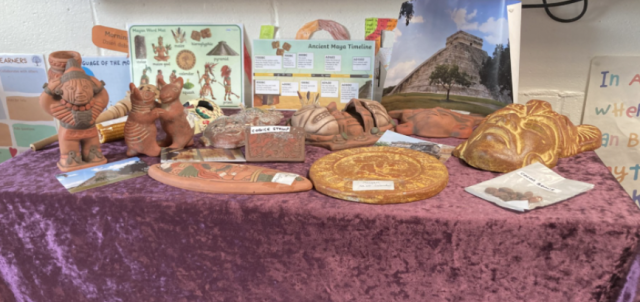
In year 5, we have been enjoying learning about the Mayans. We were lucky enough to have a mini museum in our class, with artefacts that we have been able to handle, carefully. This helped us to think like historians or architects, wondering what material were used or what purposes they served. We have learnt about how society was structured, what the Mayans invented, and about their belief in many gods (and the sacrifices required to keep them “happy”). The children enjoyed making a quiz to test their knowledge from the unit and key landmarks that can still be visited today.
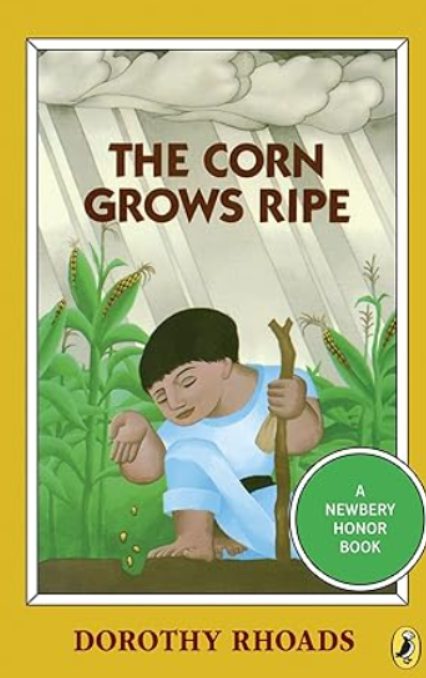
Our learning has had cross curricular links with our guided reading “The Corn Grows Ripe” by Dorothy Rhoads, strengthening our depth of knowledge.
The children have been learning about settlements.
They started by considering the history of settlements, building on their learning of prehistoric history and the needs of early settlers. They loved using Google Maps to research more about the history of place names, both locally and nationally. They then looked at how and why settlements have changed over time.
Next, the children have used maps and map symbols to explore settlements and what you might expect to see and do if you visited an area. The children built on their math skills, using their understanding of coordinates, to be able to use grid references to investigate settlements with either 4 or challenged to use 6 figure grid references.
The children then created their own maps of a settlement to consolidate their learning of amenities and infrastructure, by creating and naming their own map, which they thoroughly enjoyed. They also celebrated their learning by completing a multiple choice quiz, to check their understanding during this unit.
Year 5
Year 5 studied South America in the first half term. They looked at a variety of maps, including topographical maps. They learnt about the various contrasting climates that stretch across this massive continent. They also looked at human features as well as the physical features, ie populations, life expectancy, access to health. They compared the landscape features of South America with that of the UK. The children were able to articulate their understanding of the presence of mountains in South America using their prior knowledge of plate tectonics. The data that the children were presented with helped them to think like geographers, drawing on their breadth of knowledge. Regular quizzes, encouraged the children to realise that they had retained a lot of information, which they built on each week.
Our learning has had cross curricular links with our writing unit on diaries where we read the text ‘Romel’s Rainforest Home’. It is written from the perspective of a young Chachi Indian, named Romel, who lives in the rainforest in San Salvador, strengthening our depth of knowledge.
Year 6 Geography
This term in Geography, Year 6 have been deepening their understanding of how our world is organised, connected, and shaped by human activity.
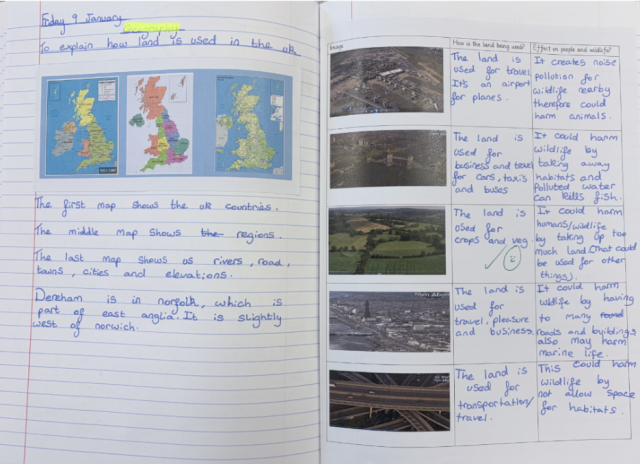
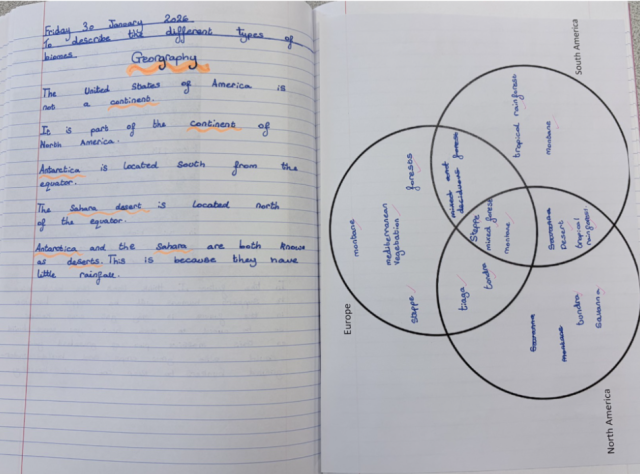
The children have been exploring different types of land use, analysing how areas are designated for housing, farming, transport, industry and recreation. They have also investigated the major biomes of the world, comparing climates, vegetation and animal adaptations across regions such as rainforests, deserts, tundra and grasslands.
As part of our human geography focus, pupils have been examining whether people and their movements follow patterns, looking at migration, population distribution and the reasons why communities settle in particular places. They have also studied how settlements develop and grow, identifying patterns linked to natural resources, landscape and economic opportunities.
Building on this, the children have recognised that the UK trades with many countries around the world, importing and exporting a wide variety of goods.
Throughout all of these topics, Year 6 have been working hard to explain, reason and justify their ideas, using evidence to support their thinking and developing confidence in presenting their viewpoints.
We use cookies to ensure that we give you the best experience on our website. If you continue to use this site we will assume that you are happy with it.