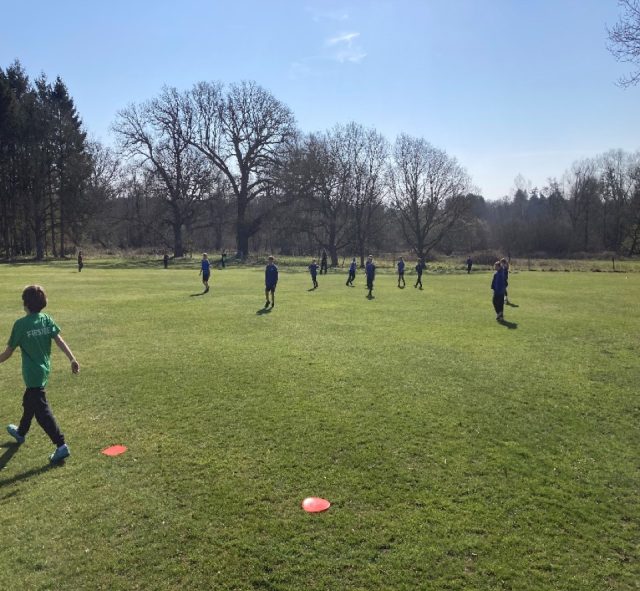
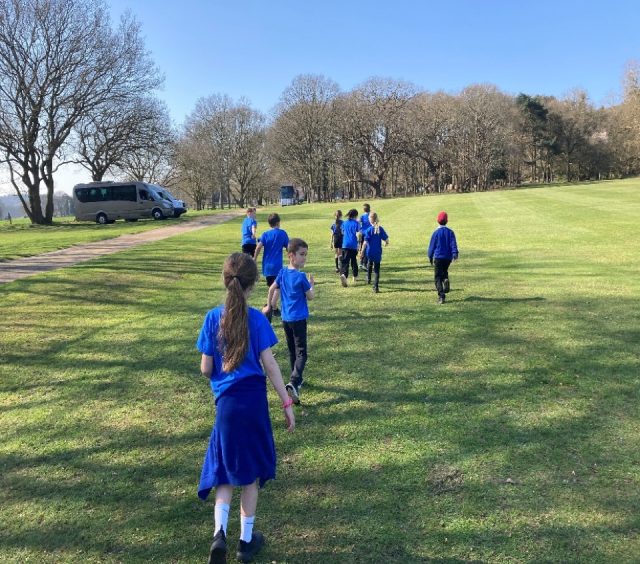
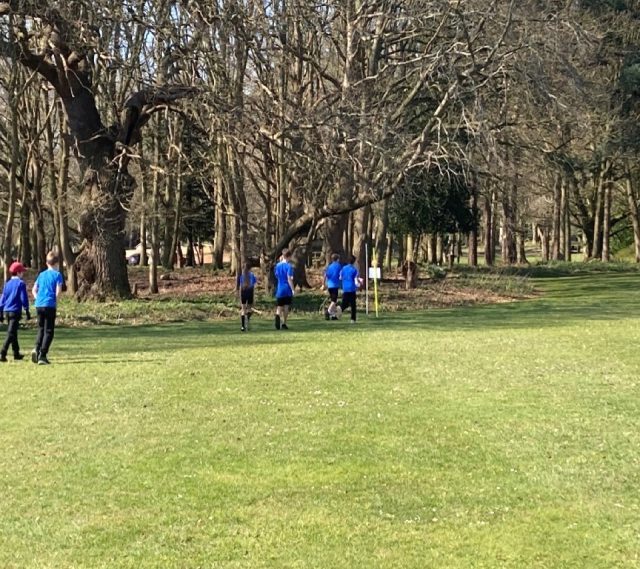
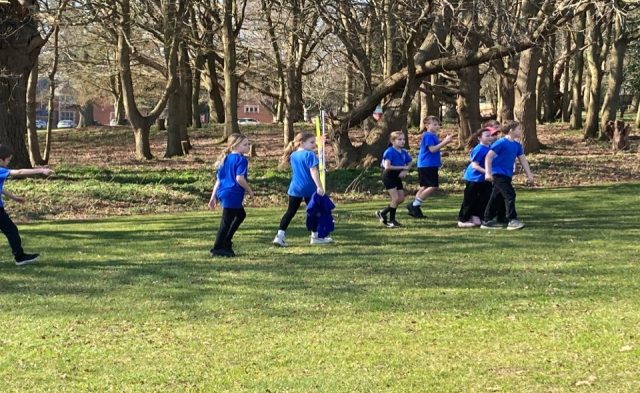
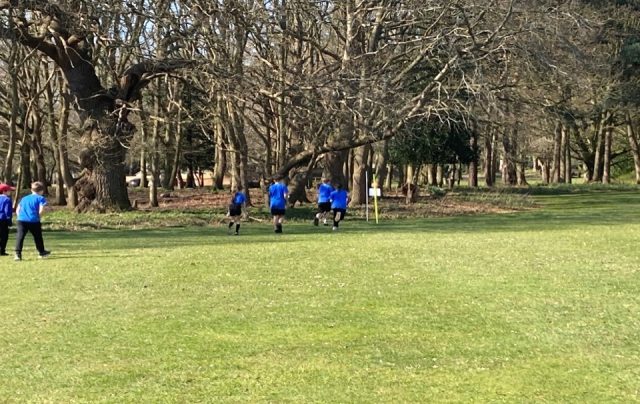
Two teams of 12 children from Toftwood Junior took part in an Orienteering festival organised by the WNDSSP at Langley Prep School in Taverham, Norwich.
The children (who have been enjoying orienteering at school also) were chosen to take part in this inaugural event, and made the most of it!
The day was divided up into four different OAA events: Capture the Flag, Symbol Relay Challenge, Start Orienteering and Score Orienteering. The children had a really positive experience in these lovely settings and worked incredibly well as a team to achieve great success on the day.
Mr Barnard was very impressed and will be looking for these great leaders to achieve similar success when taking on the Toftwood Federation Orienteering Challenges throughout the year.
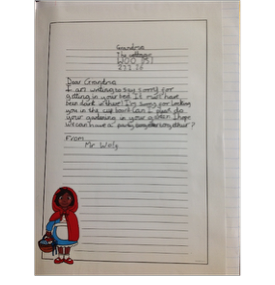
This half term in Year 2, the children have been focussing on the traditional tale, Little Red Riding Hood. They thought about the story of Little Red Riding Hood and discussed who the villain was. They then wrote a letter to the Grandmother from the perspective of the wolf apologising for breaking in to her house and trying to eat Little Red Riding Hood.
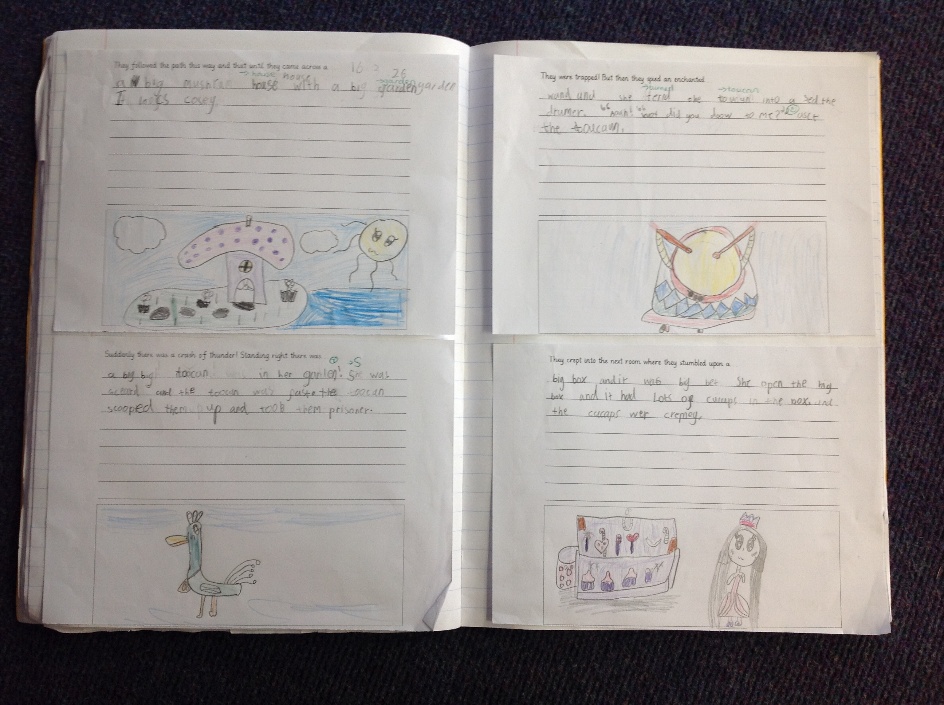
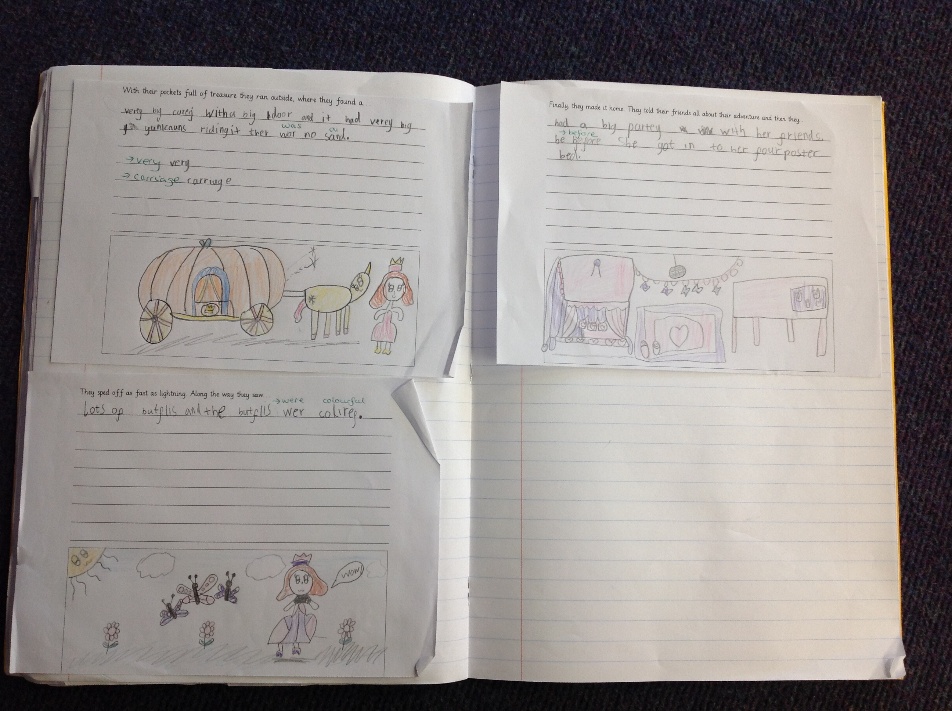
The children were very excited to receive a letter from the Federal Story Investigators who had unfortunately had their imagination powers stolen by some villains. They needed the children to create their own story for the children in our school.
The children received a part of a special story path map each day to help them to construct their own stories. The children enjoyed using their own imaginations to create their own stories and illustrated each part too!
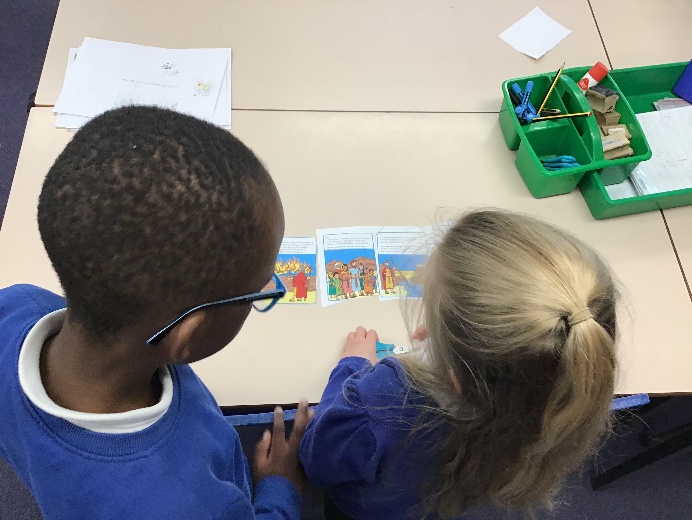
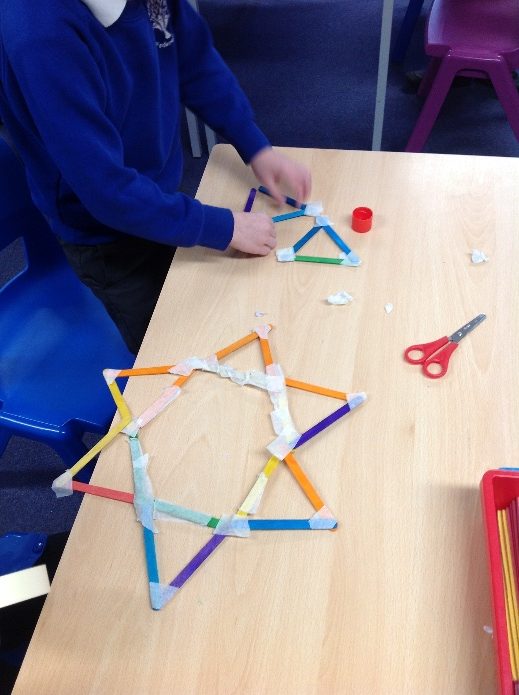
In RE, the children have been learning about Passover and how this is celebrated in Judaism. They learnt the story, retold this in groups, and then created their own Seder plate on Purple Mash, describing each section.
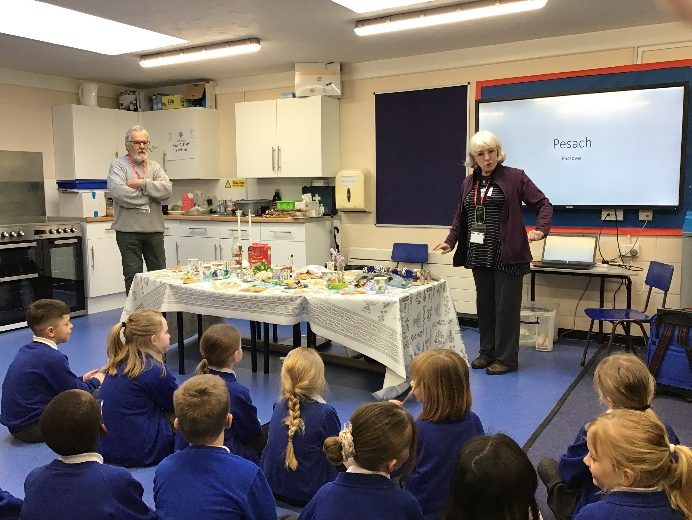
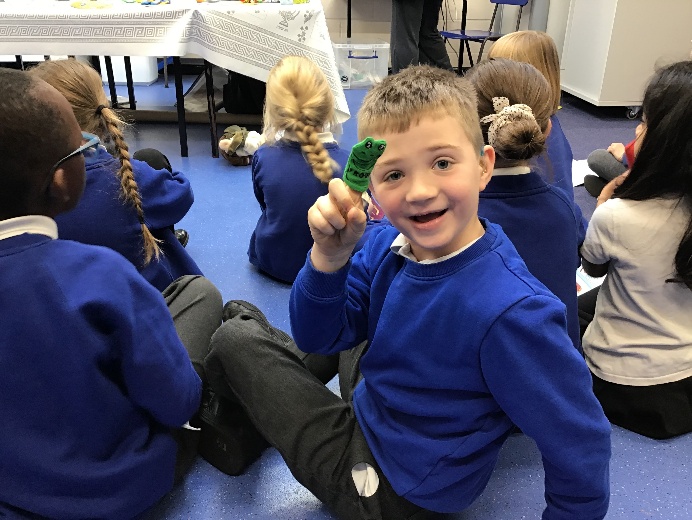
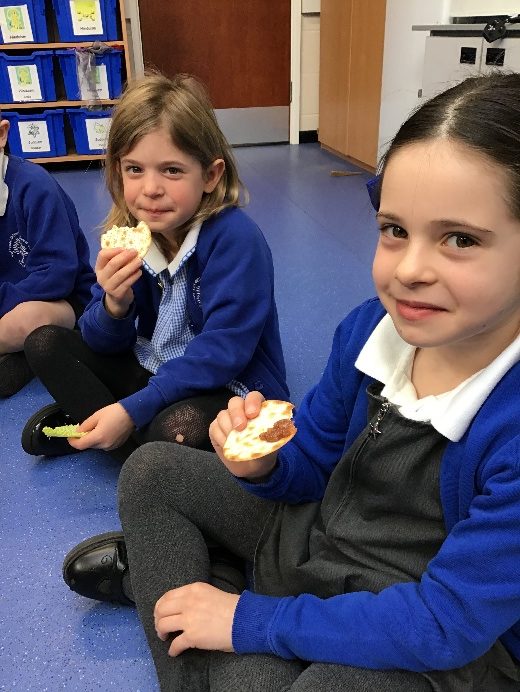
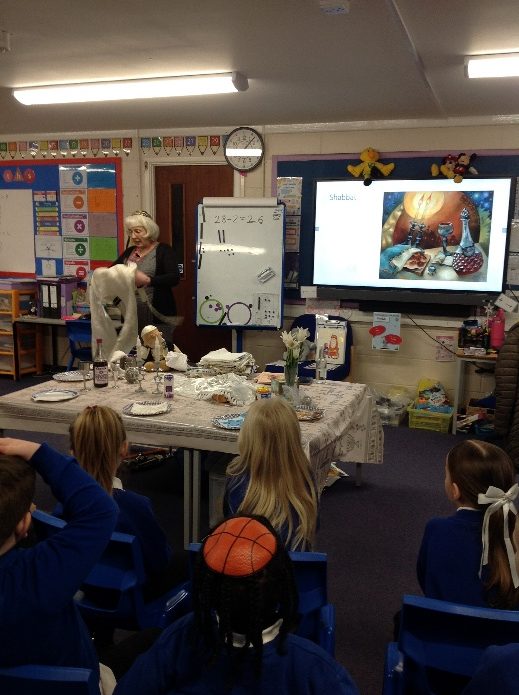
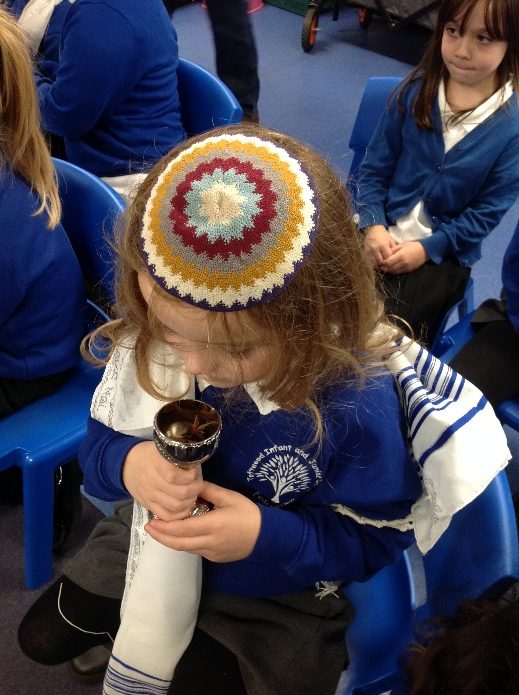
We also were very lucky to have Marsha and Todd come and speak to the children about the celebration of Passover. The children learnt about the story of Moses and thought about what each part of the Seder plate means. The children tried some of these different parts, such as; parsley with salt water, grape juice and matzah bread.
In Art the children have taken inspiration for the abstract artist Wassily Kandinksy. The children enjoyed emulating his circles painting but will the technique of collaging. We were very impressed with what they created.
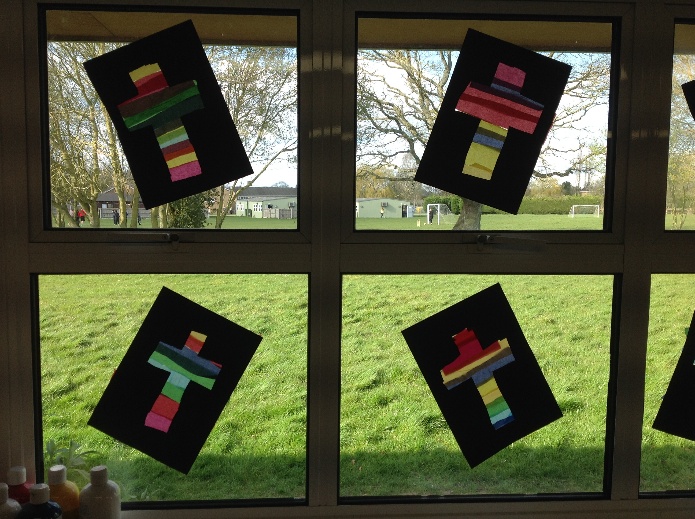
This term we revisited how the Bible is a special book for Christians and includes many different stories. Several children shared that they have Bibles at home. We shared the story about Easter, titled ‘A happy day’. The children enjoyed hearing about the angel appearing to tell Jesus’ friends that he was alive again!
Oscar said ‘Jesus died and he came back to life’.
Martin said ‘his three friends went to see him and there was an angel’.
We discussed how many families choose to celebrate Easter and we might all have different traditions. The children enjoyed sharing how they celebrate Easter with their families.
Year 1
This term Year 1 have investigated two enquiry questions:
What do Jewish people remember on Shabbat?
What does the cross mean to Christians?
When enquiring on the first the children saw lots of pictures of a Shabbat meal taking place. They were able to discuss these pictures and highlight what they noticed, where it was taking place and who was in the images. The children were also able to compare this Jewish creation story (after listening to it) with the Christian creation story. Year 1 were also able to have Marsha and Todd in to further deepen their knowledge of Shabbat.
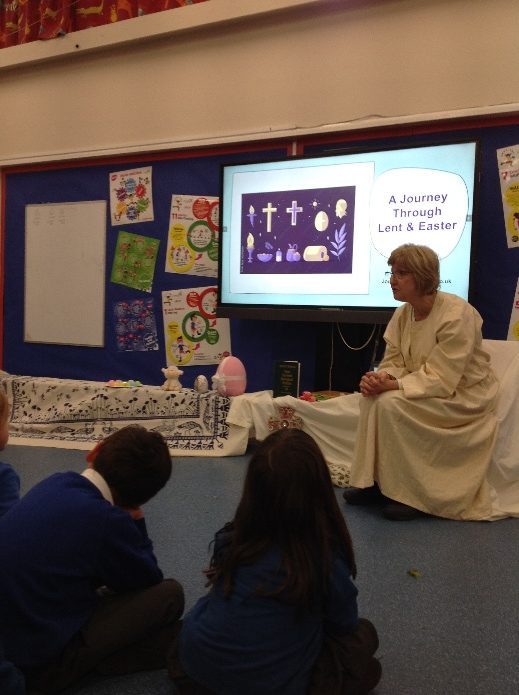
During Spring 2 the children had a session led by Janet Marshal all about the Easter story. The children were able to get into role as the people in story and retell this through Janet’s storytelling style. The children learnt how Christians believe that Jesus was crucified on a cross and came back to life (resurrection) on Easter Sunday.
Year 2
This term the children have investigated two enquiry questions:
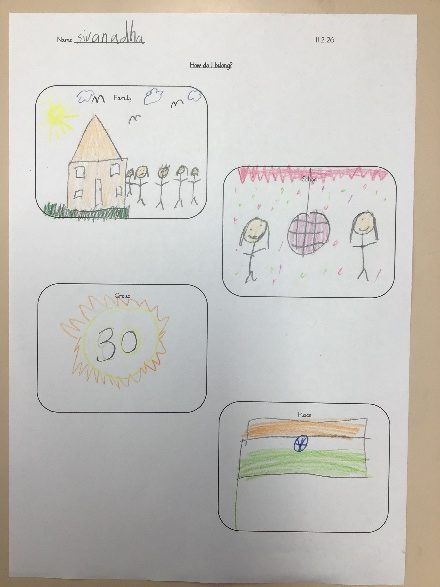
How do Christians belong to their faith family?
How do Jewish people celebrate Passover?
The children were able to ask, listen and respond to lots of questions around these two questions. In Spring 1 the children have looked at different celebrations that Christians celebrate such as Christenings, weddings and Holy Communions. They have also thought about other ways they show belonging, such as attending church, reading the bible and writing prayers. The children were able to reflect on these Christian traditions and some children were able to reflect on how these beliefs may be different to their own.
In Spring 2 the children have had a visit from Marsha and Todd, who came to speak to the children about the celebration of Passover. The children learnt about the story of Moses and thought about what each part of the Seder plate means. The children tried some of these different parts, such as; parsley with salt water, grape juice and matzah bread.
The children enjoy exploring a variety of Art tasks as part of our continuous provision. The children are also developing their drawing skills through our Drawing club sessions. Throughout the week the children will be given the chance to draw either the character, setting or adventure from the chosen text or video. The children have independently created some masterpieces in their Drawing Club books and we can see great progress from the start of the year.
Year 1
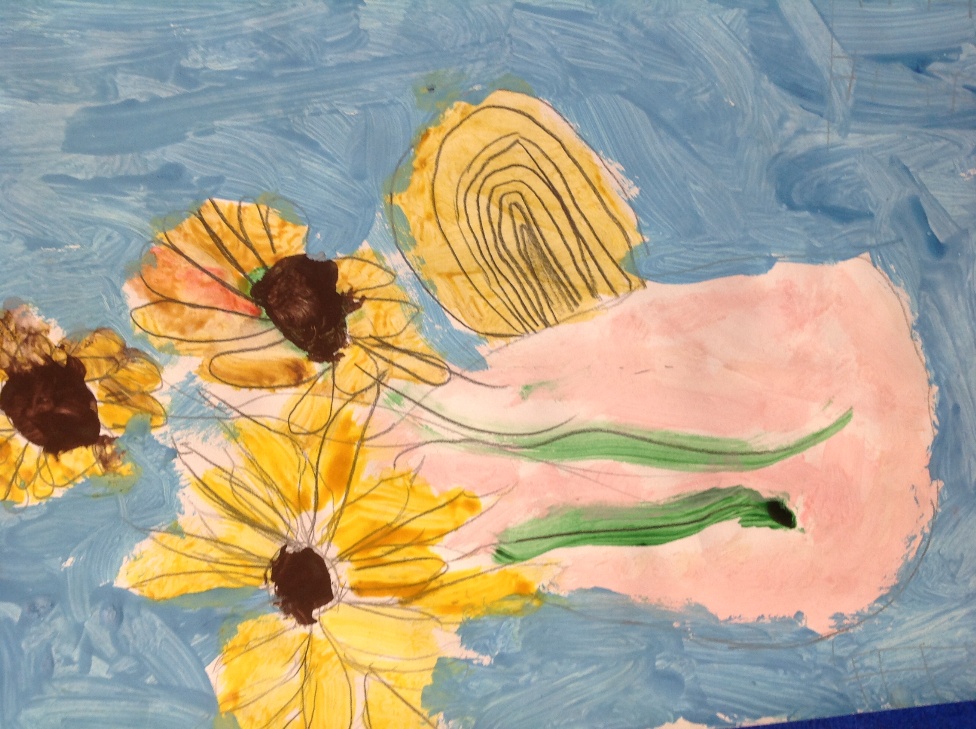
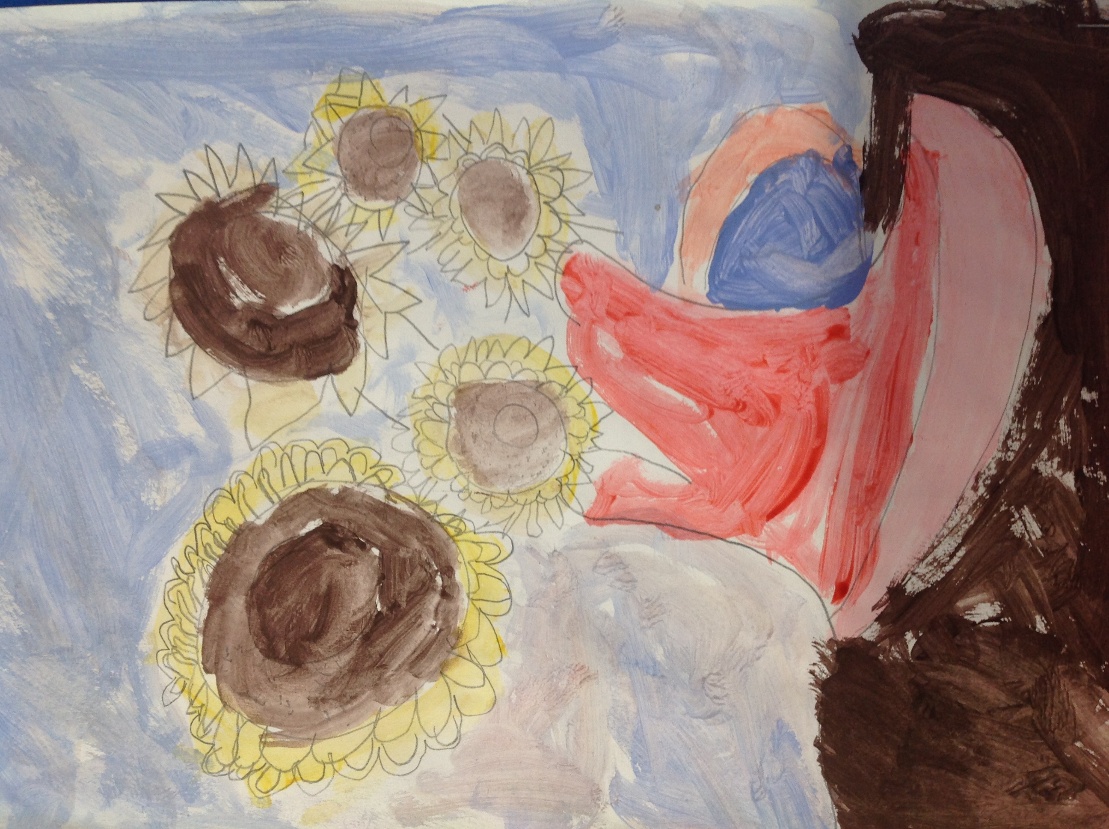
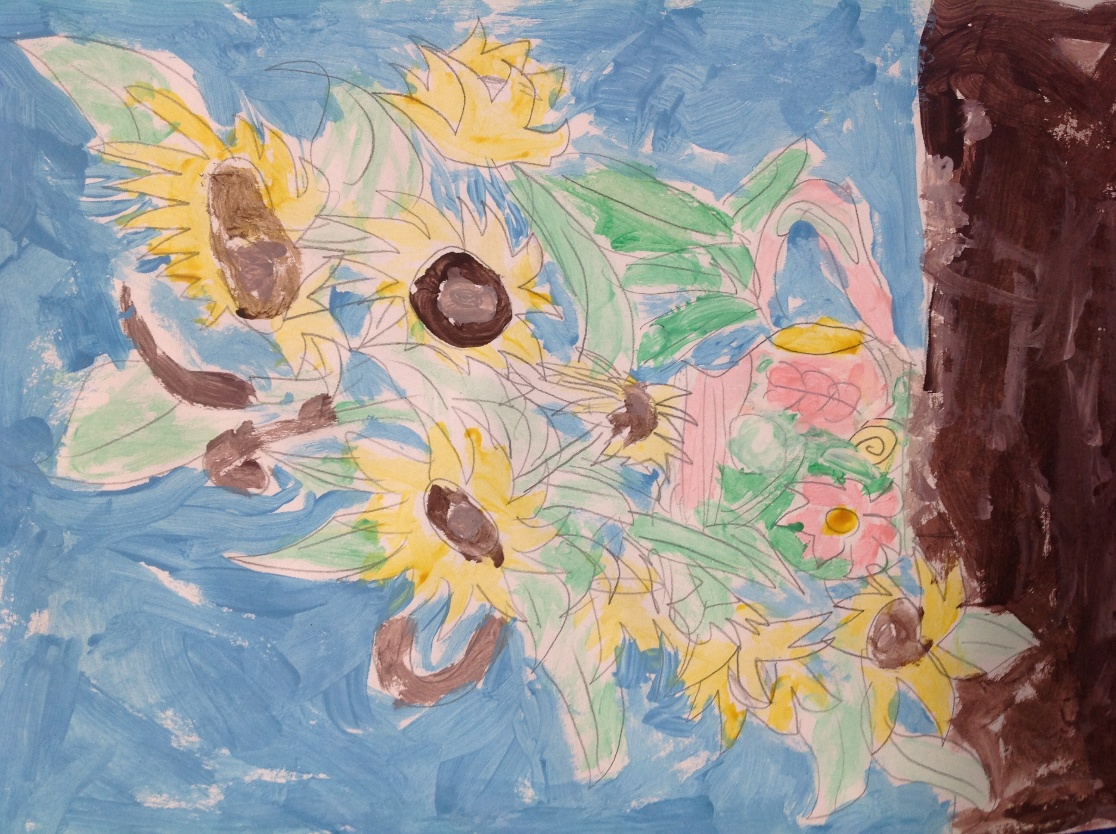
In Year 1 this half term, the children have been learning to sketch and shade to add depth and texture to their drawings. They also did their own line drawings inspired by artist Louise Bourgeois. They then built on this learning when learning about Vincent Van Gogh. They sketched their own version of Van Gogh’s Sunflower painting. They then learnt about colour mixing to create their own colours and shades for their paintings.
Year 2
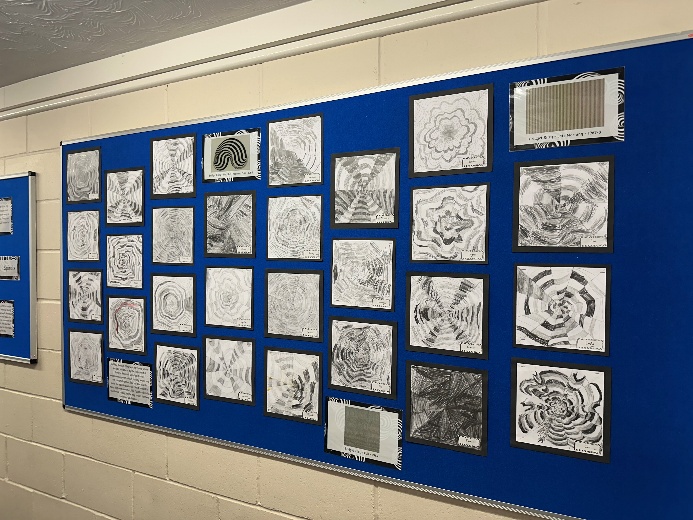
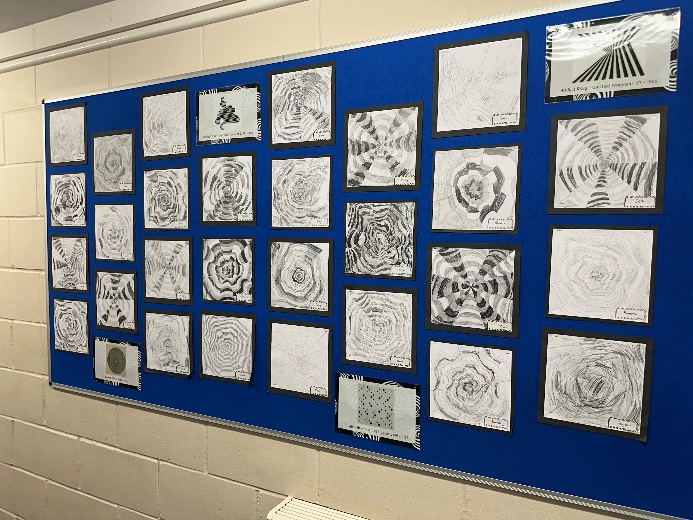
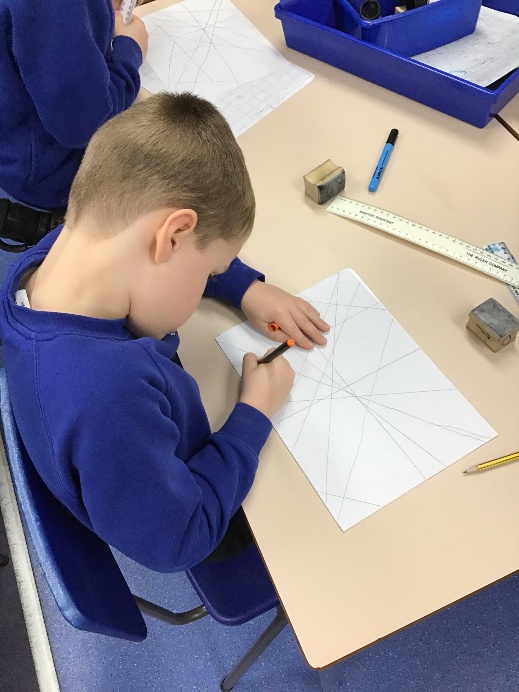
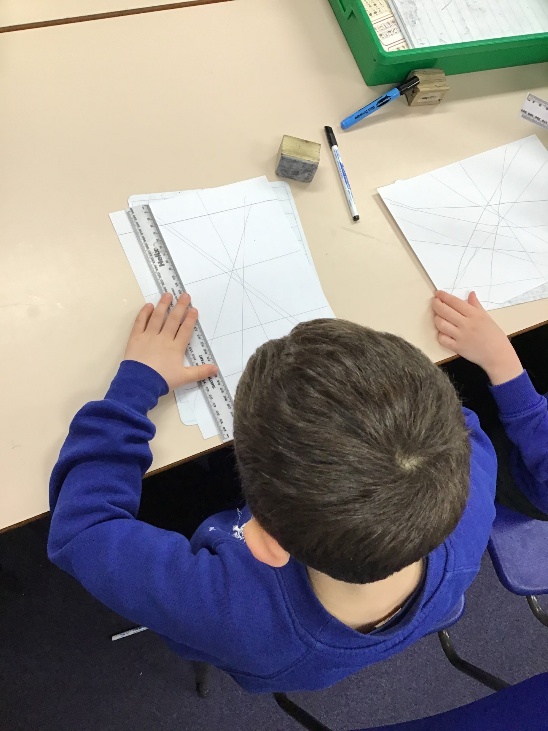
In Spring 2 the children in Year 2 have learnt about the artist Wassily Kandinsky and they created their own collage using his ‘Concentric Circles’ painting as inspiration. They also learnt about Bridget Riley and her optical illusion pictures. They loved looking at all of her different artwork. The children then used different shades of pencils to shade in their own artwork.
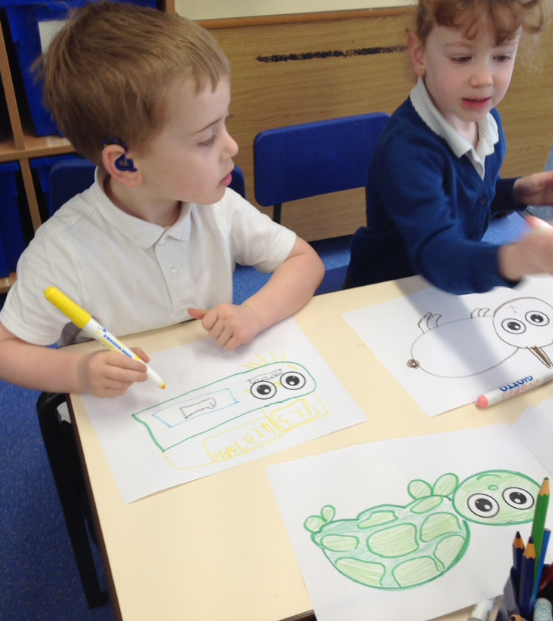
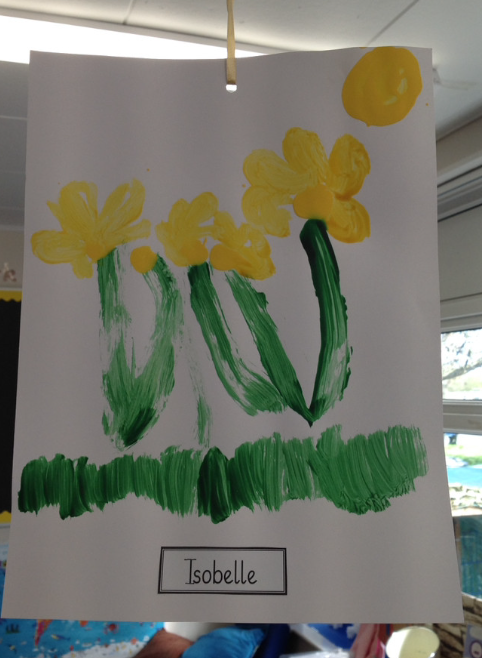
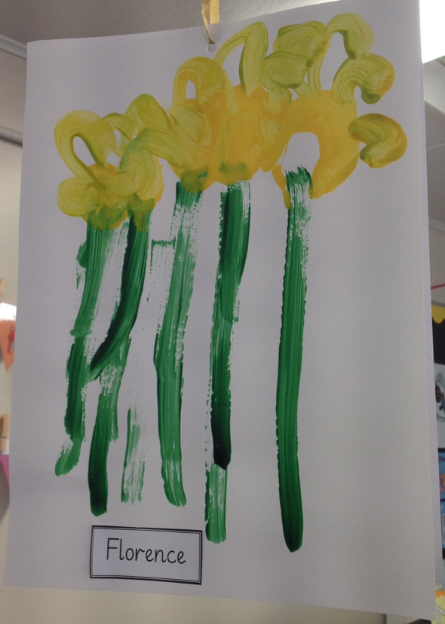
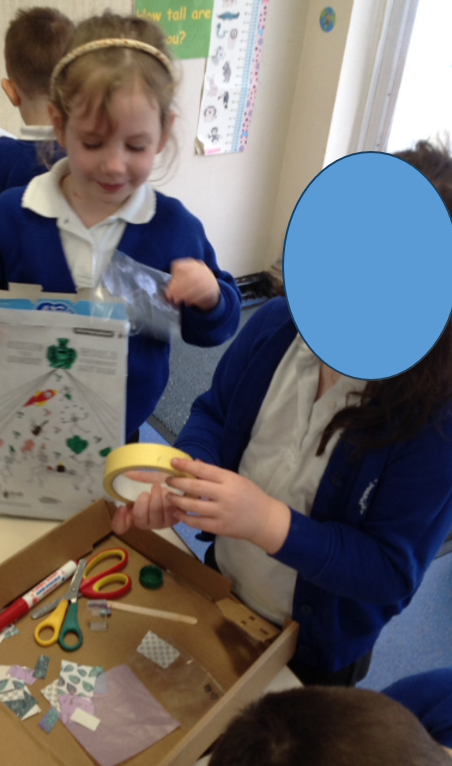
The children enjoy exploring a variety of art and DT tasks as part of our continuous provision. This term we have introduced the ‘Superclips’ challenges and the green clip focuses on an art or DT skill. The children have been challenged with creating different drawings, patterns and constructions using a wide range of materials. Examples include creating a boat and testing if it floats or sinks, building vehicles using junk modelling, creating a creature from just a set of eyes and doing observational drawings and paintings of daffodils. We can see the progress the children have made with their fine motor skills and the details they are adding to their creations through these challenges.
Year 1
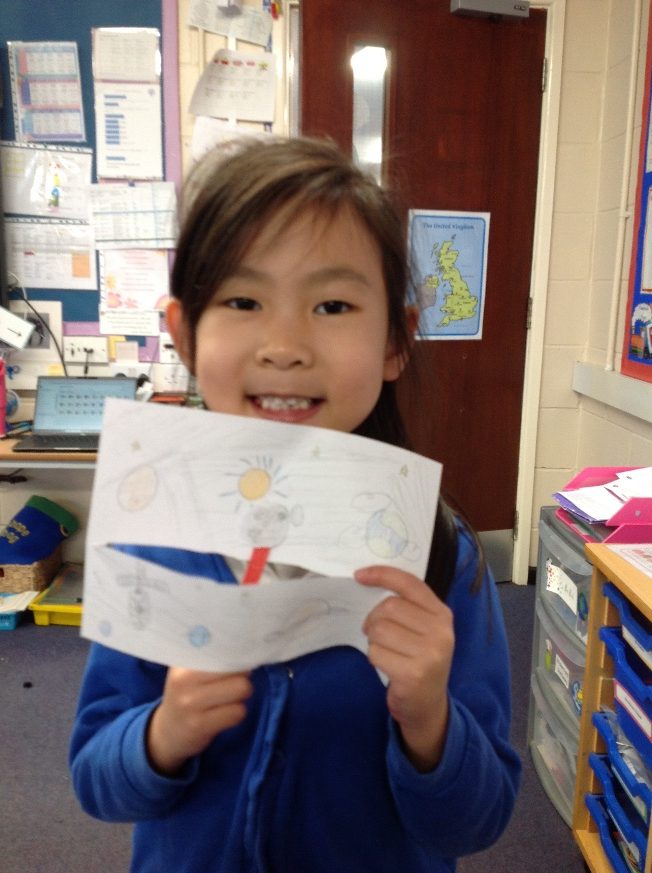
In Year 1, the children learnt about different mechanisms and how they could be used to create movement. The children then made their own model on the theme of a solar eclipse, using a sliding mechanism to show how the moon passes and blocks the sun. They were then able to test and evaluate their model for effectiveness.
Year 2
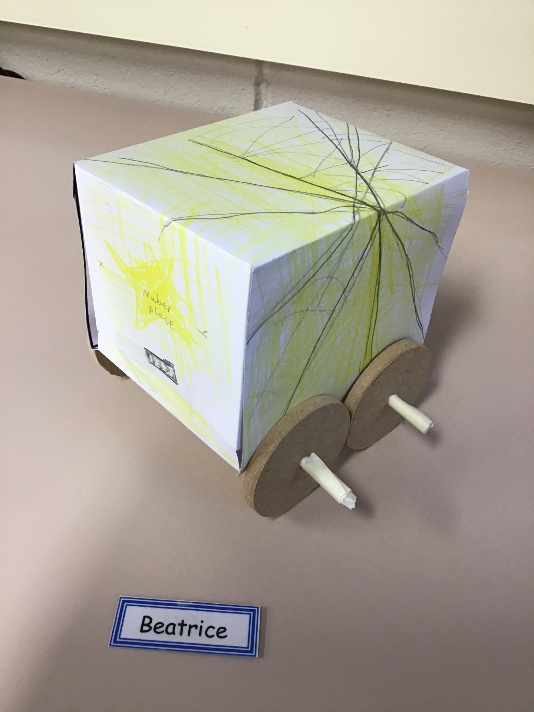
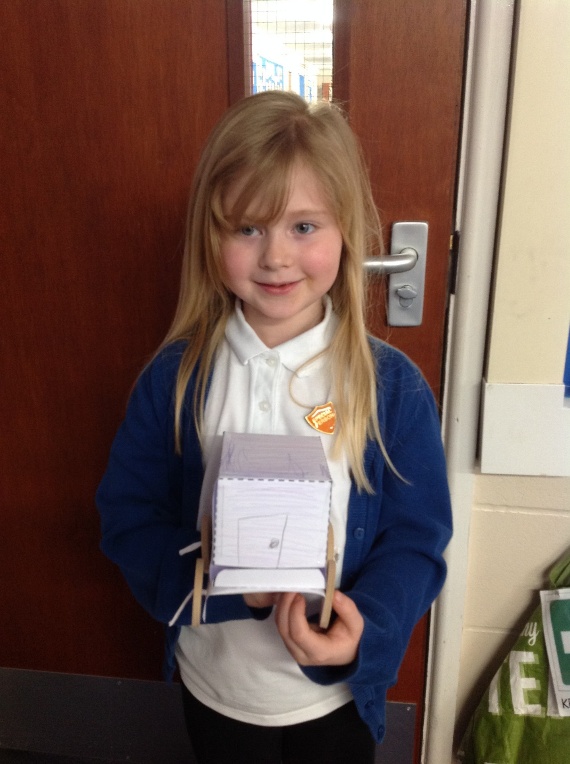
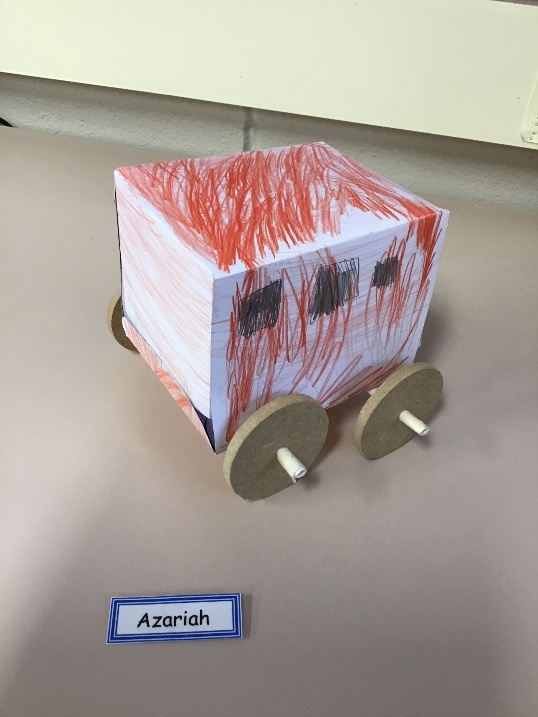
In Year 2 the children learnt about wheels and axels by looking at real life examples. They were then able to design and create their own model car using a variety of construction materials. The children enjoyed testing their model cars and made some alterations based on their drive! They then evaluated their models against their design and thought about what they would do differently next time.
In Computing, the children have looked at programming and sequencing. They started the term by making simple code, adding and moving different Sprites and changing the background. As a challenge, some added features such as sounds and different speech bubbles. Later on in the term, the children have been exploring previously made code and figuring out how they move and work. This then led to them creating, debugging and showing their final games at the end of term.
Year 4
In the first half of the Spring term, Year 4 used Logo to practice programming a turtle using a range of commands. The children learnt how to debug a set of commands and had great fun programming the turtle to create capital letters using 90 degree turns. In later lessons, the children were shown how use the repeat command to make their commands more efficient. Finally, the children were able to successfully create a range of 2D shapes after being given the exterior angle in each of the shapes.
In the second half of the term, Year 4 moved on to changing digital images using Pixlr. The children experimented with cropping the images, re-sizing, cutting out to create layers and adding text to the pictures. The unit of work culminated with the children independently creating a book cover of their choice using the skills learnt in the previous lessons. We have not included any photos here due to our digital literacy learning on Copyright!
Year 5
In Year 5, we have been focusing on coding as well as using data bases. When coding, we used Scratch to make a questionnaire. The children worked with their partners to use condition and selection. When using databases, the children were able to filter data numerically, as well as alphabetically, and to search databases using specific criteria about mini beasts and dinosaurs. The children were able to explain that computer databases were much easier to sort as opposed to paper data bases.
Year 6
In Digital Literacy, we also explored online profiles and online relationships, discussing what was safe to share, why people might share online and the feelings that might be resultant of sharing for different purposes.
The children in Reception have continued to learn about the technology in their classroom learning environments. They have particularly been focusing on gaining independence when using equipment, such as exploring educational games and being able to change the colour of the pen on the SMART programme. A key focus has been using educational games on the interactive whiteboards to practice following instructions by listening carefully, recognise patterns and complete tasks in the correct order.
Year 1
In spring 1, the children in year 1 used online tools to complete various tasks on digital painting. Each lesson they focused on a different artist to recreate their art using different tools like shape, paint, drawing and filling with colour. During the final lesson, the children recreated a piece of their own artwork digitally using the same programme.
In spring 2, the children used Purple Mash for the first time, using the 2Create a story tool. They created an e-book that they worked on each week, adding something different each week like an animation, sound and inserting backgrounds. We as a class enjoyed sharing the stories at the end of the topic and the children were excited to tae their purple mash logins home to enable them to explore further.
Year 2
In Computing this term the children have focused on all three strands of Computing; Digital Literacy, Information Technology and Computer Science.
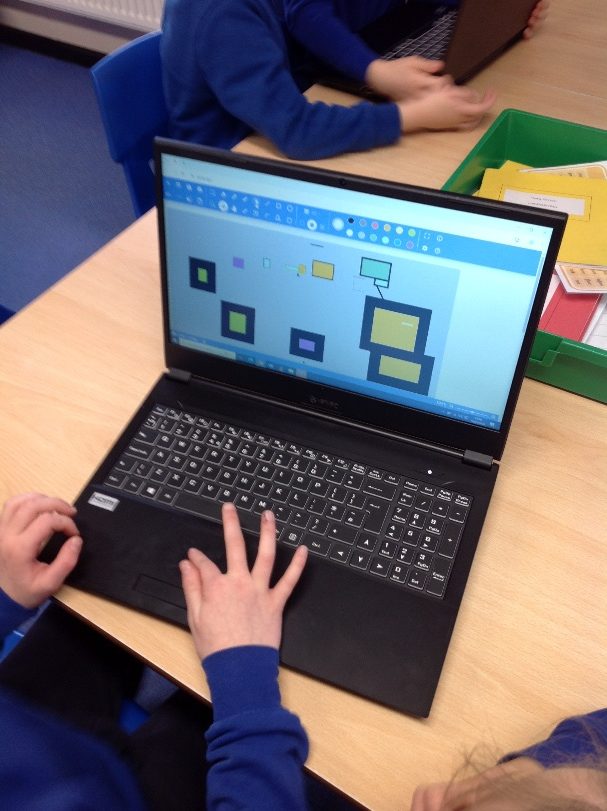
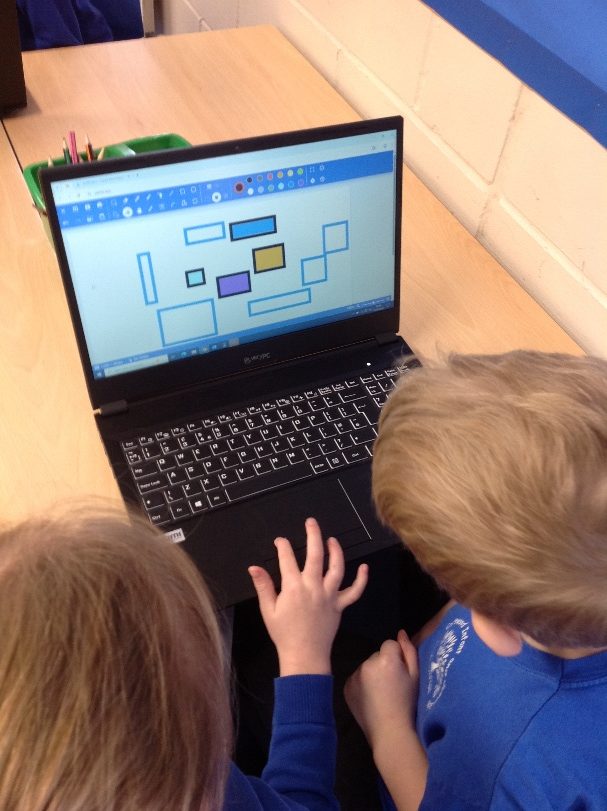
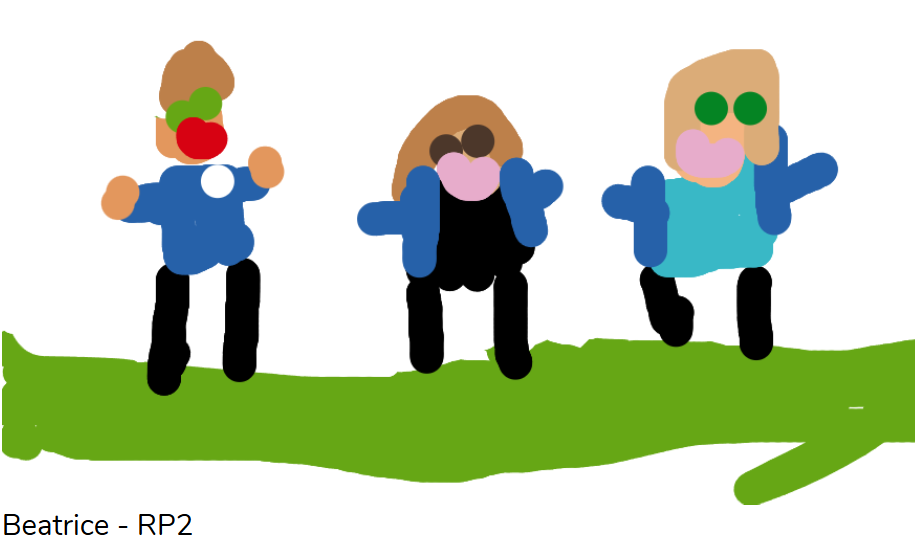
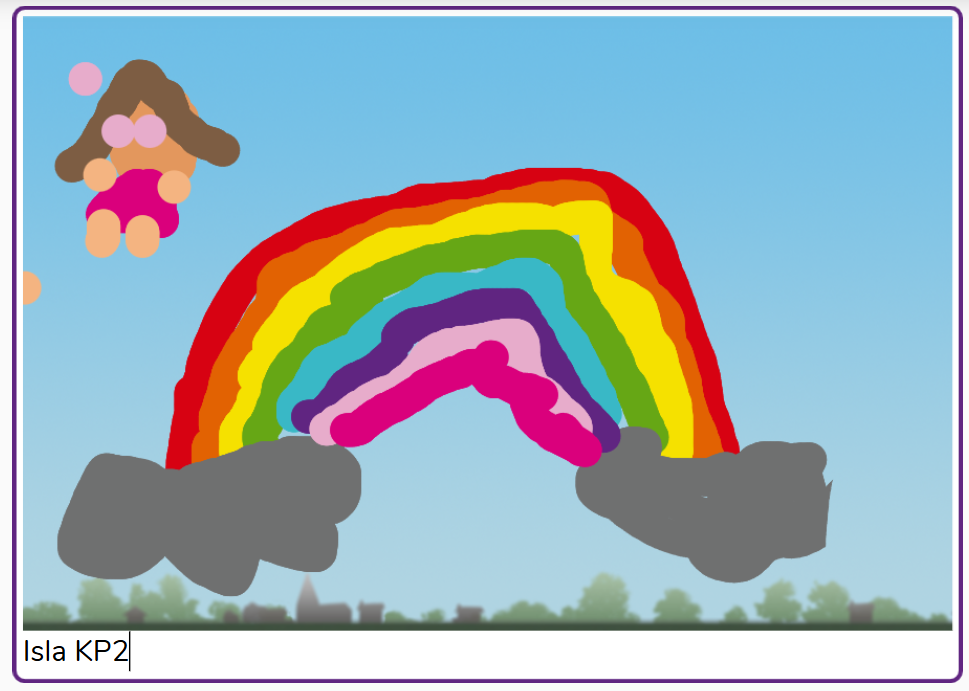
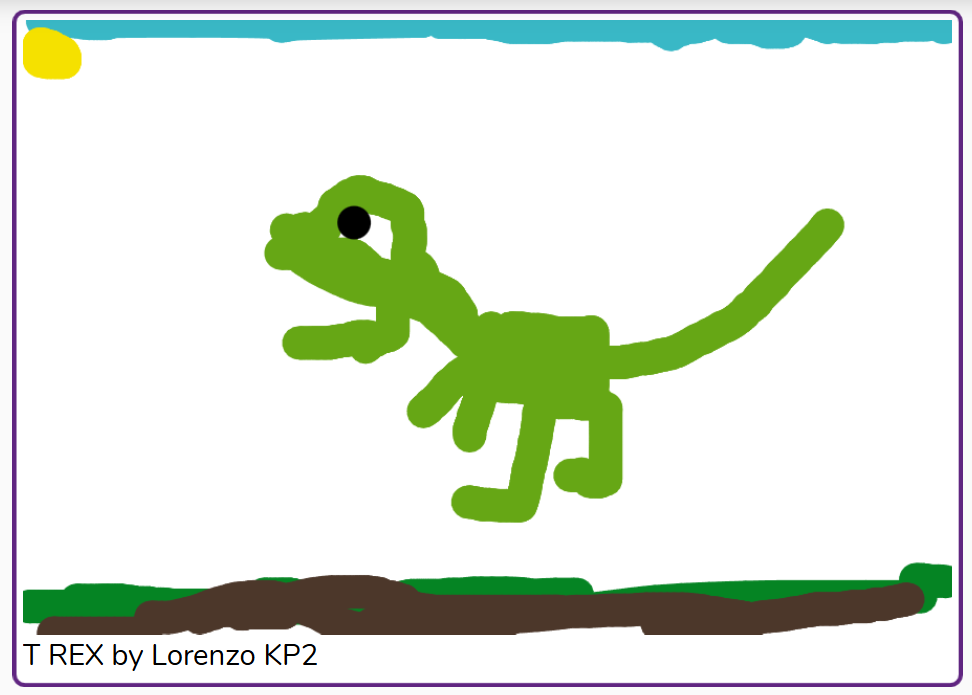
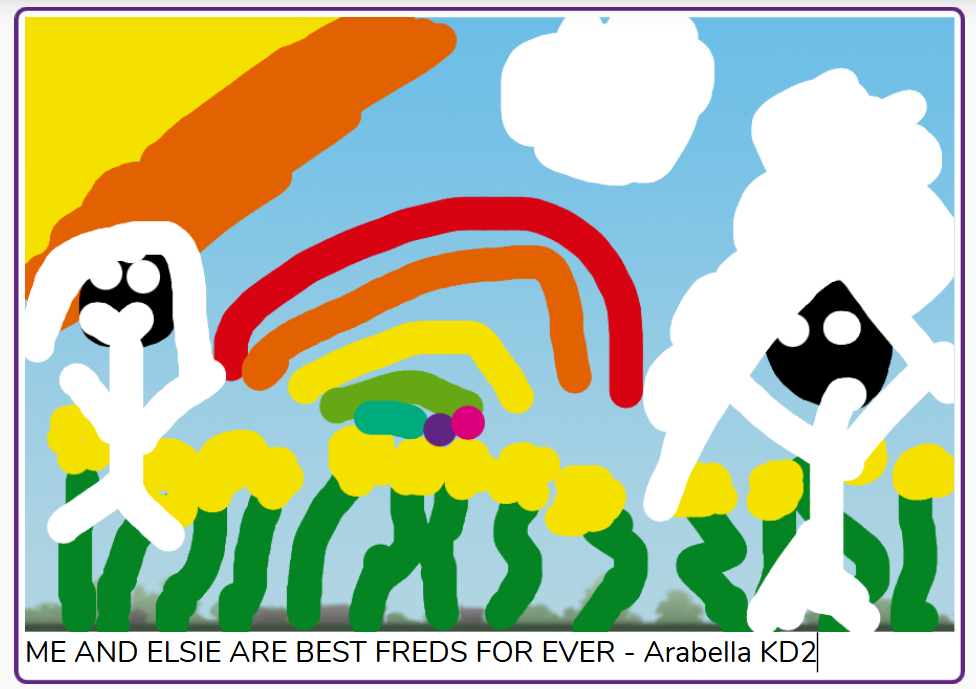
When focusing on Digital Literacy the children have been thinking about computing systems and networks. They begun by using laptops for the first time, learning about the mice and keyboard. The children thought about different digital devices that they have and can use. They drew pictures for the Information Technology strand, typed sentences and even played some typing games on Purple Mash to improve their digital literacy for typing.
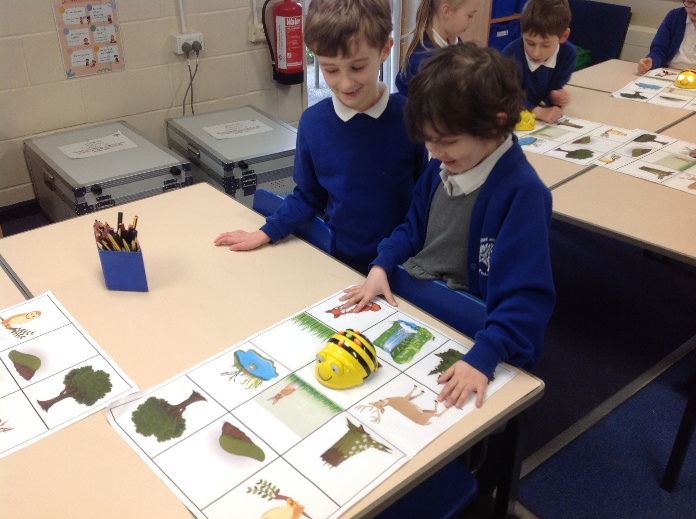
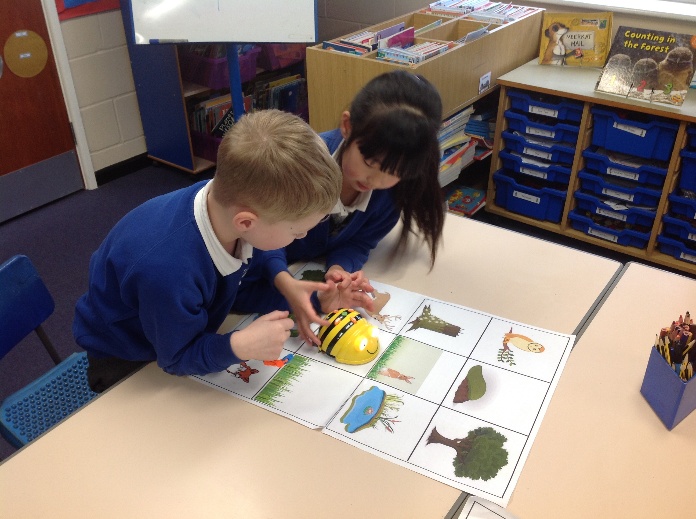
When focusing on Computer Science the children have been retrieving their learning from Year 1. They have used beebots to plan a route, and have even had a go at predicting what their algorithm will lead to. Harrison said that he “found it tricky to predict where he wanted his beebot to go”.
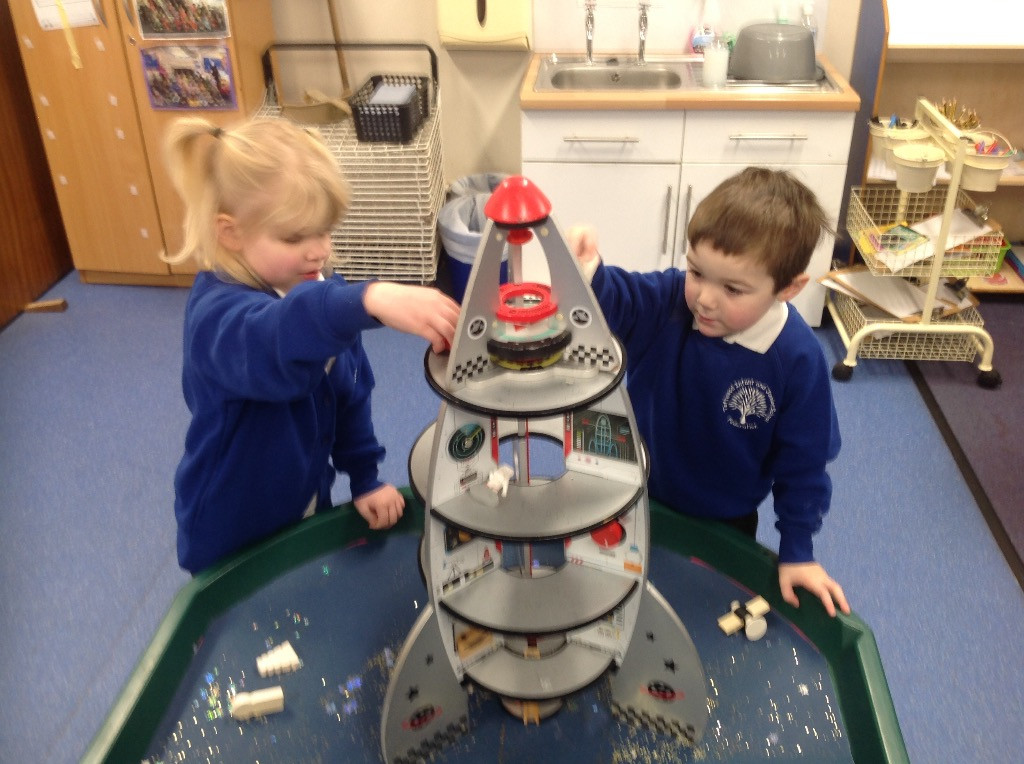
In the spring term, reception classes spent a week focussing on space. They looked at photographs of famous astronauts and shared facts about them, including Tim Peake, Yuri Gagarin, and Mae Jemison. They thought of questions to ask an astronaut and discussed what we would like to take to space. They listened to lots of space stories, including ‘The incredible intergalactic journey home’ read by Tim Peake in space.
Year One
The 1980’s
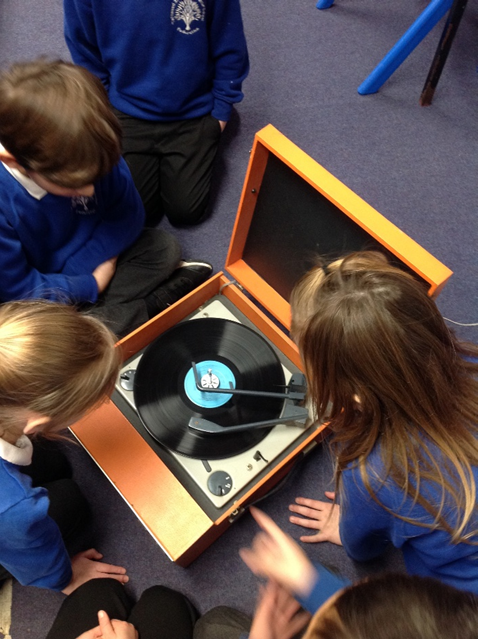
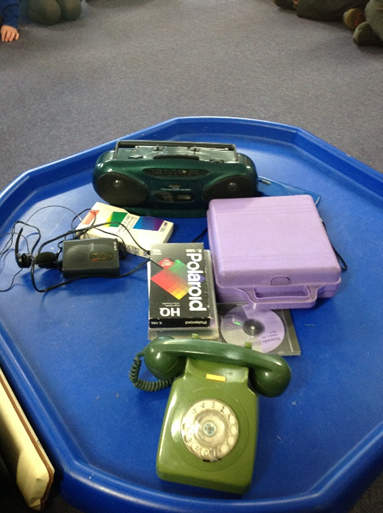
The children stepped back in time to the 1980’s. They learnt about the life of a 6 year old girl who lived back in the 80’s. She showed them the clothes, food, toy’s and tv shows she had back then. The children got to explore a range of real 1980’s toys and watch an episode of Super Ted. They also learnt about school life in the 1980’s. They listened to an assembly song and compared school to that of today. The children explored technology and music from the 1980’s, they matched some real artefacts from the 1980’s to items around the house that we might have today. They discussed how they had changed and had a go at using some of the artefacts. They played some music on the record player and listened to a cassette in a Walkman. The 6 year old girl from the 80’s sent the class some music and dances to learn ready for the 1980’s party!
The children learnt about significant events and people from the 80’s (royal weddings, Live Aid, Band Aid). The children also had a 1980’s party/disco in the school hall. At the disco the children joined in with some 1980’s dance routines and played a 1980’s Four corners game. All the children were invited to dress up in 80’s themed clothing for the afternoon!
“I loved dressing in bright colours and dancing to ‘Agadoo’ and ‘Superman’” Amber
“The record player is very cool, it’s not like listening to music now!” Gracie
“Some of the toys from the 80’s are the same as what we play with now” Henry
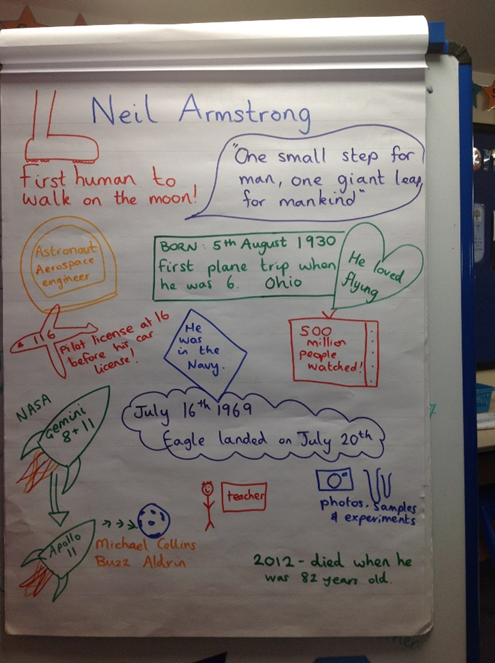
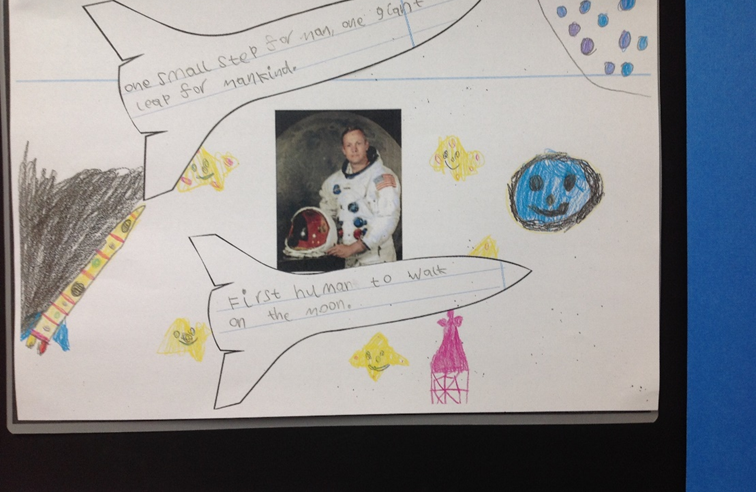
Neil Armstrong
The children travelled back to 1969 to learn about an important person from history. The children learnt all about Neil Armstrong and his significance in the history of space travel. In this first lesson the children found out about his life and added him to their class time line. They also watched some footage of Neil Armstrong from his famous moon landings and imaged they were walking on the moon! The children created rocket writing containing their favourite Neil Armstrong facts. They took part in a Neil Armstrong quiz to see what they could remember.
“It was called the Apollo 11 mission” – Rosie GA1
“Neil Armstong was the first man to walk on the moon and Buzz Aldrin was the second” – Marli
Year Two
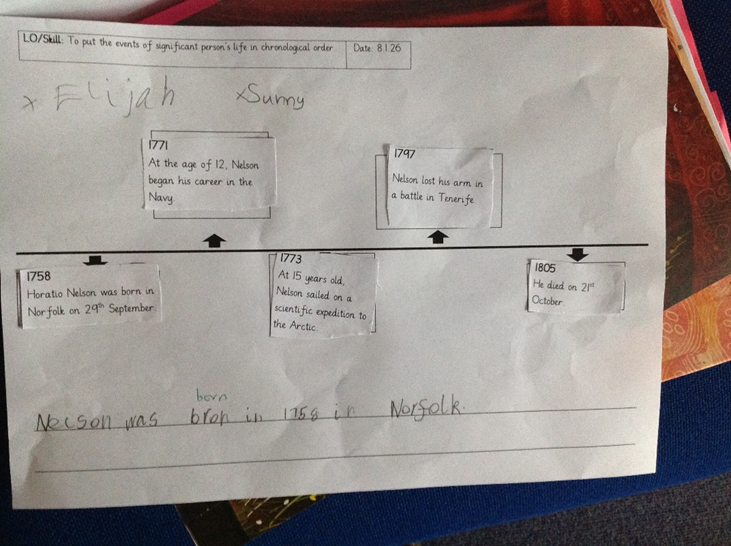
Admiral Nelson
To begin our learning the children looked at two images of Admiral Nelson without being told who it was. They considered and gave their ideas to answer questions such as who it might be, what is job might be, when the image was from, if it was a photograph or a painting. After being told who this man was, the children then learnt about the main events in Admiral Nelson’s life using a timeline. The children worked in partners to order 5 of the main events in the correct order using the years.
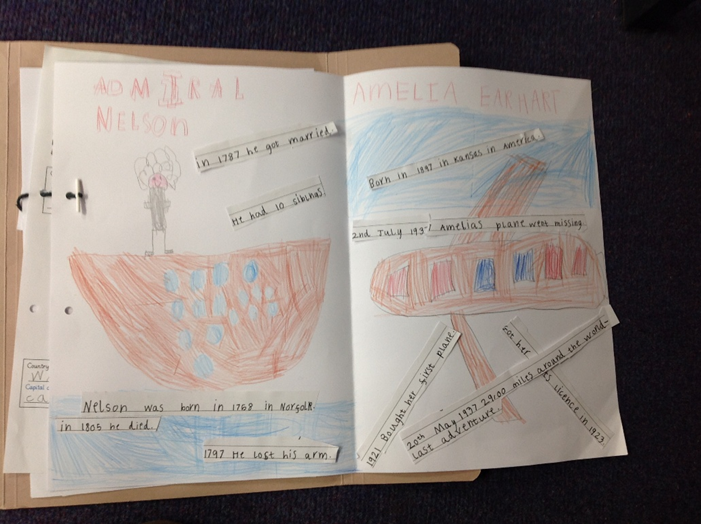
Amelia Earhart
The children also learnt about another famous individual, Amelia Earhart. The children learnt about the significant events in Earhart’s life and again ordered these using their knowledge of timelines from their previous work.
They then compared Amelia Earhart and Admiral Nelson and discussed the similarities and differences of their lives. They created a two page spread about them both.
Reception children have been learning about people who help us in our community. This has included visits from the police force, vets, first responders and a bus driver.
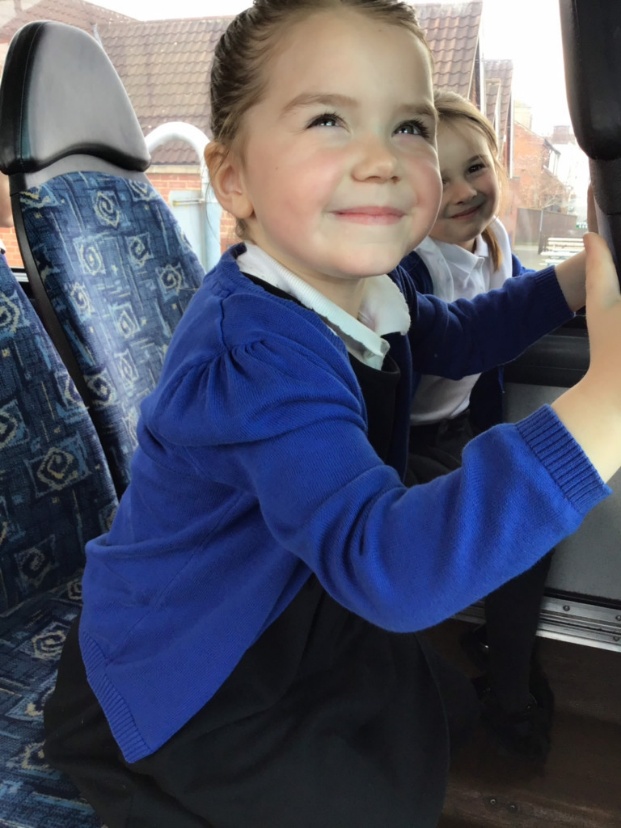
Children took a bus ride around the local area. They played bus bingo in which they had to search for a red car, a person riding a bike and a dog being walked. Children noticed lots of things on their journey.
“We’re going past my grandma’s house” E
“Our bus is bigger than that bus” A
“We’re on the A47!”
“That’s they way to my dad’s haircut”
Year One
The children in year 1 elaborated on their learning on the school grounds and Toftwood/Dereham to discuss the county that we live in Norfolk.
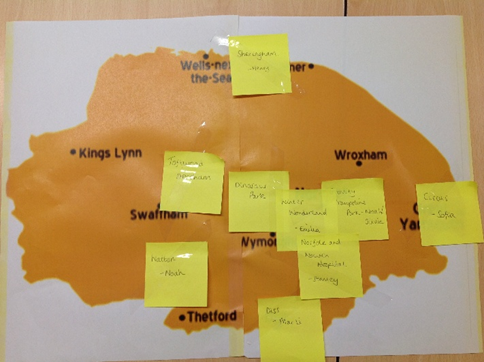
Using a large map, the children discussed places they know or are familiar with in Norfolk. Marli in CM1 said her Granny lived in Diss. Many children talked about how they had visited the beach at Cromer or Sheringham. Lots of children talked about visiting the Dinosaur park.
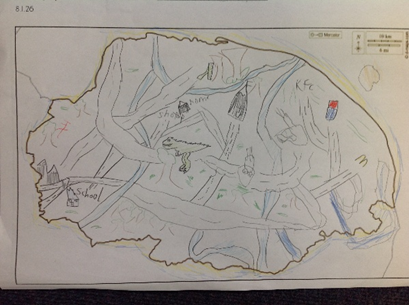
In our second lesson, the children identified human and physical features of Norfolk. We discussed terminology like town, city, coast, roads and rivers, even looking at these on maps. They then made their own maps and added places familiar to them and other points of interest likes shops and restaurants as well as roads, rivers and a coastline.
Year Two
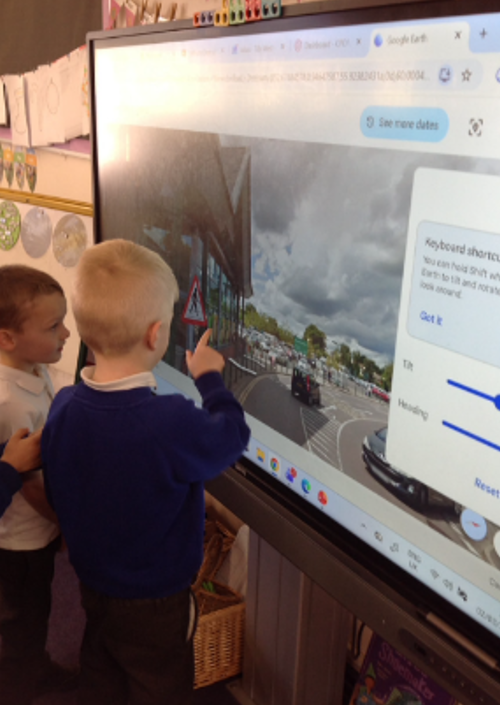
Year two have been learning to compare and contrast the human and physical features of Dereham with Cape Town, South Africa.
We use cookies to ensure that we give you the best experience on our website. If you continue to use this site we will assume that you are happy with it.